27:25
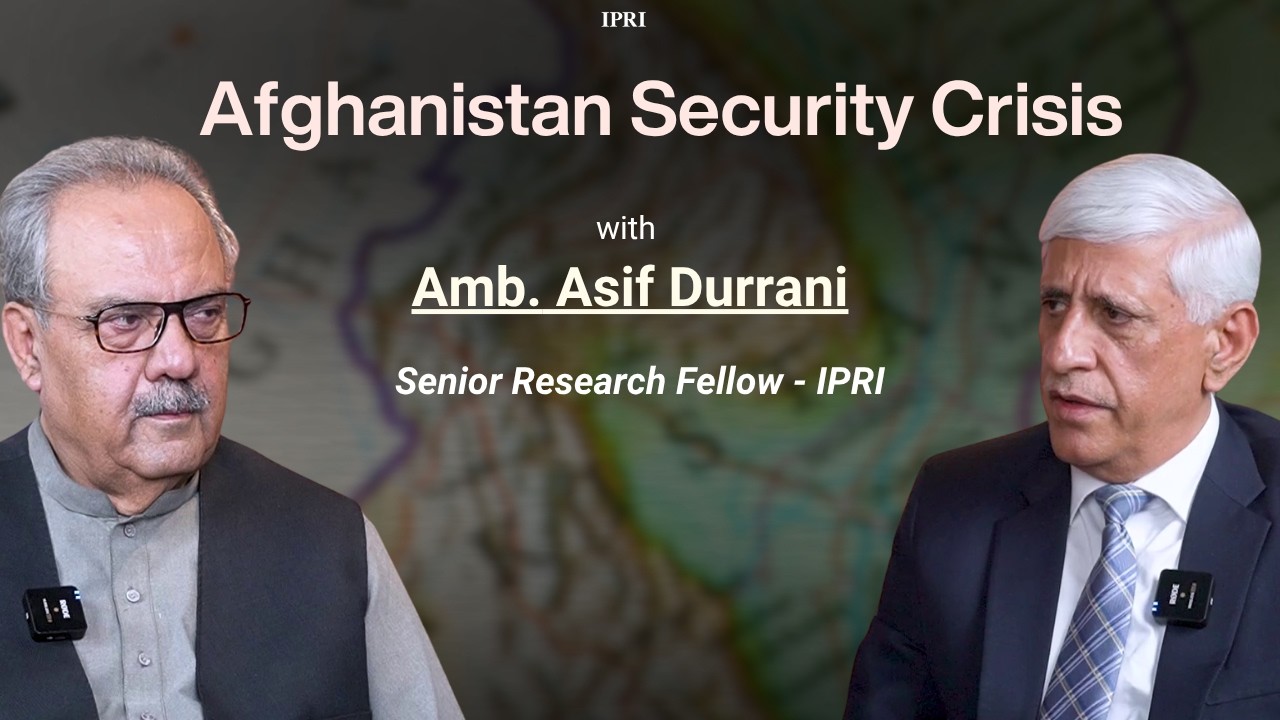
Pakistan–Afghanistan Tensions Explained | Expert Analysis
Islamabad Policy Research Institute
Overview
This video analyzes the escalating tensions between Pakistan and Afghanistan, focusing on the role of the Tehrik-i-Taliban Pakistan (TTP) and the Taliban regime's governance. It explores the historical context, the current security situation, Pakistan's military response, and the underlying drivers of the conflict, including tribalism and external influences. The discussion also touches upon the challenges of governance in Afghanistan, the potential for internal dissent, and the roles of regional powers like China, Russia, and India in the complex geopolitical landscape.
How was this?
Save this permanently with flashcards, quizzes, and AI chat
Chapters
- Pakistan has experienced a significant increase in TTP terror attacks since the Taliban took power in Afghanistan in 2021, resulting in over 5,000 casualties.
- Despite Pakistan's efforts in positive engagement, humanitarian aid, and diplomatic discussions, the Taliban regime has not curbed the TTP, whose network has strengthened within Afghanistan.
- The Taliban regime is accused of actively collaborating with and encouraging the TTP, leading to attacks on Pakistani posts and civilians.
- A major escalation occurred on February 26th when the Afghan Taliban regime attacked Pakistani posts, prompting a self-defense response from Pakistan under Article 51 of the UN Charter.
Understanding the immediate triggers and Pakistan's perspective on the conflict is crucial for grasping the current geopolitical tensions and the rationale behind Pakistan's military actions.
The attack on 53 Pakistani points on February 26th, which Pakistan viewed as the 'last straw' leading to its military response.
- Pakistan's primary strategic objective is to compel the Taliban regime to rein in non-state actors like the TTP operating from Afghan soil.
- The operational aim is to dominate the border regions and degrade the TTP's terror network and support infrastructure.
- Tactical objectives include targeting TTP ammunition dumps, bases, and logistic hubs, and potentially their leadership if they do not cease hostile activities.
This outlines Pakistan's clear goals and the specific actions it is taking, providing insight into its approach to resolving the security crisis.
Pakistan's military operations have destroyed 180 posts, taken control of over 30 posts, and conducted over 75 strikes on TTP ammunition dumps and training facilities.
- The Taliban regime publicly denies the presence of TTP and other terrorist groups in Afghanistan, contradicting UN Security Council reports.
- There is a concern that the conglomeration of terrorist groups in Afghanistan, including TTP, ISKP, and ETM, could pose a global threat, potentially leading to another 9/11-style event.
- The Taliban regime lacks the 'art of governance,' behaving more like a militia and failing to take responsibility for activities within Afghanistan.
- The Taliban are reluctant to act against the TTP, sometimes invoking a misinterpretation of the Pashtunwali code, and are hesitant to hand over TTP members to Pakistan.
This chapter highlights the core governance challenges within Afghanistan and the Taliban's stance, which directly fuels Pakistan's security concerns.
The Taliban's refusal to acknowledge the TTP's presence, despite evidence and international reports, and their invocation of Pashtunwali to justify not acting against them.
- Afghanistan has a history of internal conflict and power struggles, with various ethnic groups and factions vying for control.
- While groups like the National Resistance Front (NRF) are active, their visibility on the ground is currently limited.
- There is underlying resentment among non-Pashtun communities and potentially within Pashtun factions against the current dominance of the Kandahar-based Taliban leadership.
- The current situation presents a power vacuum, which could change rapidly, as has been seen historically in Afghanistan.
Understanding the internal political landscape and potential opposition is key to assessing the long-term stability of Afghanistan and its impact on regional security.
The historical pattern of internecine wars in Afghanistan following the withdrawal of external forces, suggesting a potential for future instability.
- India is seen as actively financing factions within Afghanistan to create insecurity for Pakistan, exploiting the current situation for geopolitical expediency.
- Regional powers like China and Russia are concerned about stability and specific threats (e.g., China's concern over ETIM) but face security challenges that hinder investment.
- Turkey and Iran are also involved as potential investors and regional players.
- The cultural and historical differences between Afghanistan and its neighbors, particularly the impact of Soviet rule on Central Asian states, influence regional dynamics.
This section reveals how external interests and historical rivalries complicate the situation, making a stable resolution more challenging.
India's historical involvement in financing groups to destabilize Pakistan, now potentially using Afghanistan as a proxy battleground.
- Pakistan advocates for a 'carrot and stick' policy towards the Taliban regime, combining military pressure with diplomatic engagement.
- The current military actions are condition-based, aimed at forcing the Taliban to disarm TTP cadres and dismantle their sanctuaries.
- There is a need for a comprehensive approach, avoiding 'cherry-picking' targets, to establish the rule of law.
- The influence of specific factions like the Haqqanis, who have business interests in Pakistan, needs to be considered as a significant factor in the conflict.
This chapter offers potential solutions and strategies for managing the ongoing crisis, emphasizing the need for sustained pressure and clear objectives.
The Taliban's alleged financial support for TTP leadership and the visible presence of TTP cadres with weapons, which Pakistan aims to address through its military actions.
Key takeaways
- The Taliban regime's failure to control terrorist groups like the TTP operating from Afghanistan is the primary driver of current Pakistan-Afghanistan tensions.
- Pakistan's military response is a defensive measure aimed at neutralizing terror threats emanating from Afghan soil.
- The Taliban's governance style, characterized by a lack of accountability and denial of reality, exacerbates regional instability.
- Internal divisions and historical grievances within Afghanistan create a volatile environment susceptible to external manipulation.
- External actors, particularly India, are leveraging the Afghan conflict for their own geopolitical gains, complicating resolution efforts.
- A dual approach of military pressure ('stick') and diplomatic engagement ('carrot') is necessary to influence the Taliban's behavior.
- The presence of powerful factions within the Taliban, like the Haqqanis with their vested interests, adds another layer of complexity to the situation.
Key terms
Tehrik-i-Taliban Pakistan (TTP)Taliban RegimePashtunwaliArticle 51 (UN Charter)UN Security Council Resolution 1373ISKP (Islamic State Khorasan Province)ETIM (East Turkestan Islamic Movement)Haqqani NetworkKandaharNational Resistance Front (NRF)
Test your understanding
- What are the primary reasons for the current escalation of tensions between Pakistan and Afghanistan?
- How does Pakistan's military strategy aim to address the threat posed by the TTP operating from Afghanistan?
- What are the main challenges associated with the Taliban's governance in Afghanistan, and how do they impact regional security?
- What role do external actors, such as India, play in the ongoing Pakistan-Afghanistan conflict?
- What is the proposed 'carrot and stick' approach, and why is it considered a potential strategy for resolving the conflict?