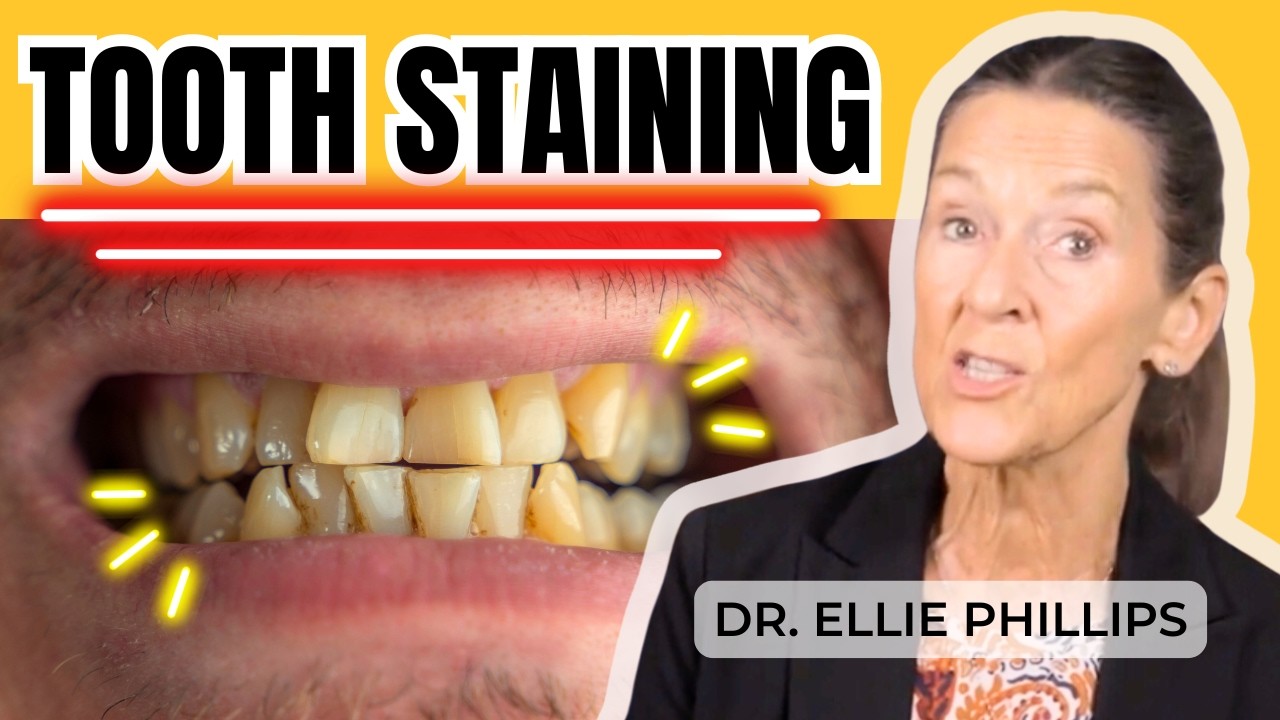
Why You Have Tooth Staining
Dr. Ellie Phillips
Overview
This video explains that tooth staining, often noticed when starting a new oral care system, is not a sign of damage but rather a positive indicator of improved oral health. The speaker clarifies that the staining is typically dead plaque or debris becoming visible on the teeth, especially if enamel has become more porous due to previous harsh treatments. The video emphasizes the importance of using a complete, synergistic oral care system, proper brushing techniques, and allowing the mouth adequate rest periods for recovery. It also touches on how digestive health and lifestyle habits like sipping and snacking can impact oral hygiene and saliva quality, ultimately influencing tooth staining.
Save this permanently with flashcards, quizzes, and AI chat
Chapters
- Tooth staining can appear when starting a new oral care system, but it's often a sign that the system is working to improve oral health.
- The perceived staining is usually dead plaque or debris, not damage to the teeth.
- Improvements in oral health, like reduced cavities and gum disease, are occurring simultaneously.
- Don't stop the new system due to temporary staining; it's a sign of progress.
- Using a complete, synergistic oral care system is crucial because each product is formulated to work with the others.
- Using incorrect or individual products can interfere with the overall effectiveness and desired outcomes.
- The system is designed like a jigsaw puzzle, where only specific pieces fit together correctly.
- Products must be used in the correct order to achieve maximum benefit.
- Vigorous brushing is necessary to remove surface debris and dead plaque, especially in areas where staining is visible.
- Massaging the gums is essential for reversing gum pocketing and improving gum health.
- Brushing should include small circles along the gum line, covering all surfaces of the teeth.
- Aim the toothbrush at stained areas and be firm, as healthy enamel cannot be brushed away.
- The oral care system gradually exchanges bad bacteria for good ones, a process that takes at least six months.
- Bad bacteria feed on xylitol and cannot reproduce, but dying bacteria can appear as gray or darker staining.
- Saliva plays a critical role in oral health, but its flow decreases during sleep.
- Using xylitol, especially after meals or before sleep, helps manage bacteria and maintain oral moisture.
- Teeth, like muscles, need periods of rest and recovery to become stronger and healthier.
- Constant sipping and snacking, even of water, dilutes natural mouth liquids and hinders recovery.
- Aim for at least one to two hours of rest after brushing, eating, or using oral care products.
- These rest periods are as important as the cleaning process itself for overall oral health improvement.
- Digestive health significantly impacts the quality of saliva, which is vital for a healthy mouth.
- Mouth breathing dries out the mouth, creating an environment where harmful bacteria can thrive.
- Nasal breathing, potentially aided by xylitol nasal sprays, can help maintain oral moisture.
- Medications can cause dry mouth; using xylitol and timing oral care appropriately can mitigate this.
- As oral health improves and bad bacteria die off, existing cavities may darken, appearing golden or chocolate brown.
- This darkening is a positive sign that the harmful bacteria are being eliminated.
- Even with staining, a dentist will likely confirm significant improvement in overall oral health.
- Consulting a dentist or hygienist can provide professional validation of progress despite visible staining.
Key takeaways
- Tooth staining when starting a new oral care system is typically dead plaque becoming visible, not enamel damage, and is a sign of progress.
- A complete, synergistic oral care system is essential; individual products may not yield the same results.
- Vigorous brushing and gum massage are critical for removing debris and promoting gum health.
- Xylitol plays a key role in modulating oral bacteria, and its effects become apparent over several months.
- Allowing adequate rest periods (1-2 hours) for the mouth after eating or cleaning is as important as the cleaning itself.
- Oral health is influenced by holistic factors including digestive health, breathing patterns, and medication side effects.
- Darkening of existing cavities is a positive sign of bad bacteria dying off, indicating healing.
- Persistence with the oral care system, proper technique, and patience are key to achieving long-term oral health improvements.
Key terms
Test your understanding
- Why might tooth staining appear when someone starts a new, beneficial oral care system?
- How does the concept of a 'synergistic method' apply to an oral care system?
- What is the dual importance of brushing and gum massage in maintaining oral health?
- Explain the role of xylitol in modulating oral bacteria and how this relates to visible staining.
- Why are rest and recovery periods crucial for oral health, similar to muscle recovery?
- How can factors like digestive health and mouth breathing indirectly affect tooth staining?