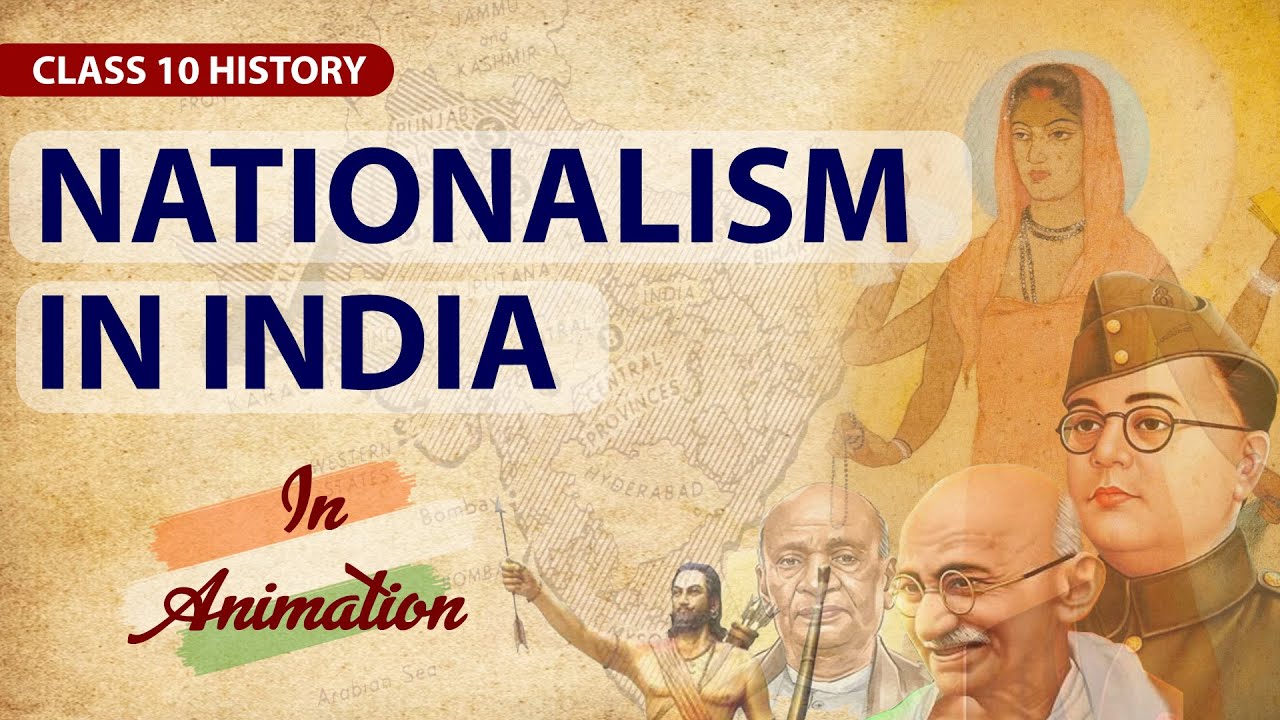
Nationalism in India Full chapter in animation | Class 10 Social studies
Grade booster
Overview
This video explores the rise of modern nationalism in India, focusing on the period from the 1920s to the Quit India Movement. It details how various social groups, despite differing goals and experiences, united against British rule through movements like Non-Cooperation and Civil Disobedience. Key figures like Mahatma Gandhi utilized strategies such as Satyagraha and the boycott of foreign goods to mobilize the masses. The summary also highlights the complexities of this unity, including internal conflicts, the varying interpretations of 'Swaraj' among different communities, and the eventual push for complete independence, culminating in the Quit India Movement during World War II.
Save this permanently with flashcards, quizzes, and AI chat
Chapters
- Modern Indian nationalism grew from the struggle against British rule, uniting diverse groups with varied experiences and ideas of freedom.
- Mahatma Gandhi's return to India in 1915 introduced Satyagraha, a method of fighting injustice through truth and non-violence.
- Gandhi applied Satyagraha to support peasants in Champaran and Kheda, and mill workers in Ahmedabad, addressing local grievances.
- The Rowlatt Act of 1919, which allowed detention without trial, sparked nationwide protests and a brutal crackdown, including the Jallianwala Bagh massacre.
- Gandhi saw an opportunity to unite Hindus and Muslims by supporting the Khilafat issue, defending the Ottoman Khalifa.
- The Non-Cooperation Movement, launched in 1920, aimed to achieve Swaraj (self-rule) by withdrawing Indian cooperation from British institutions.
- Gandhi believed British rule was sustained by Indian cooperation and would collapse if that cooperation ceased.
- The movement was accepted by the Congress in December 1920 and began in January 1921, involving various social groups with their own interpretations of Swaraj.
- The Non-Cooperation Movement extended to rural areas, involving peasant and tribal struggles against landlords and oppressive forest policies.
- In Awadh, Baba Ramchandra led peasants against landlords and forced labor, forming the Kisan Sabha.
- In the Gudem Hills, Alluri Sitarama Raju led a tribal guerrilla movement against British forest laws and forced labor, inspired by Gandhi's ideas but using armed struggle.
- Plantation workers in Assam sought freedom to leave plantations and return to their villages, facing brutal repression when they attempted to do so.
- Gandhi called off the Non-Cooperation Movement in 1922 due to its increasing violence, emphasizing the need for better training.
- The Simon Commission's arrival in 1928, with no Indian members, led to widespread protests and Congress demanding 'Purna Swaraj' (complete independence).
- Gandhi chose the salt tax as a potent symbol of oppression, launching the Salt March to Dandi in March 1930 to break the law.
- The Salt March galvanized the Civil Disobedience Movement, encouraging mass defiance of British laws, boycotts, and protests.
- Different groups, including rich peasants, business communities, and industrial workers, participated in the Civil Disobedience Movement with their own expectations and concerns.
- Women played a significant role in protests and picketing, though their leadership opportunities were limited.
- The movement highlighted deep divisions, particularly concerning Dalits, whom Congress often ignored, leading to clashes between Gandhi and Dr. B.R. Ambedkar over political representation.
- Many Muslims felt alienated from the Congress, leading to limited participation and growing distrust.
- Nationalism was fostered through shared symbols like the Bharat Mata image, folk tales, songs, and flags, promoting a collective identity.
- Indian historians challenged British narratives by highlighting India's past achievements, though this sometimes overlooked non-Hindu contributions.
- The failure of the Cripps Mission and the onset of World War II led to the Quit India Movement in 1942, demanding the immediate withdrawal of the British.
- Gandhi's 'Do or Die' speech at the Quit India Movement's launch inspired widespread participation and a determined struggle for freedom.
Key takeaways
- Modern Indian nationalism was a complex phenomenon forged through diverse struggles against British rule, uniting various social groups with shared and conflicting goals.
- Mahatma Gandhi's philosophy of Satyagraha and non-violent resistance was a powerful tool for mass mobilization, but its application and interpretation varied among different communities.
- The Non-Cooperation and Civil Disobedience movements demonstrated the effectiveness of large-scale boycotts and civil disobedience in challenging British authority.
- The nationalist movement was not monolithic; internal divisions based on class, caste, religion, and differing visions of Swaraj significantly impacted its trajectory and inclusivity.
- Cultural symbols, historical narratives, and shared experiences were crucial in fostering a sense of collective identity and national pride among Indians.
- The struggle for independence evolved from seeking self-rule to demanding complete independence, culminating in movements like Quit India that directly challenged British presence.
- British policies, such as the Rowlatt Act and the salt tax, served as critical catalysts, unifying diverse Indian populations against perceived oppression.
Key terms
Test your understanding
- How did Mahatma Gandhi's concept of Satyagraha differ from traditional forms of protest, and why was it effective in uniting diverse Indian groups?
- What were the primary goals of the Non-Cooperation Movement, and how did the participation of different social groups (peasants, tribals, workers) shape its impact?
- Explain the significance of the Salt March and the Civil Disobedience Movement in challenging British rule.
- What were the main internal divisions and limitations within the Indian nationalist movement, particularly concerning Dalits and Muslims?
- How did symbols, history, and folklore contribute to the development of a collective national identity in India?