1:51:41
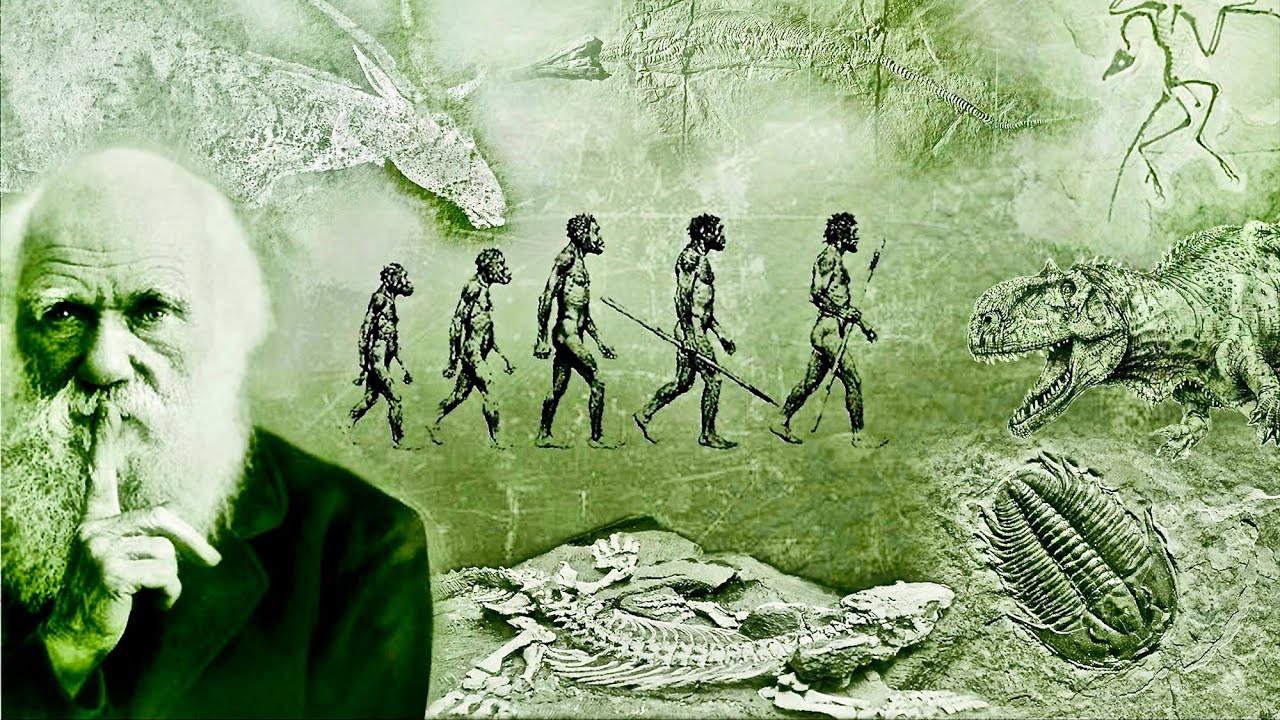
Evolution - What Darwin Never Knew - NOVA Full Documentary HD
Wisdom Land
Overview
This documentary explores the mechanisms of evolution, expanding on Charles Darwin's foundational theories. It delves into how genetic mutations and the regulation of genes, through 'switches,' drive the diversity of life, from the distinct beaks of Galapagos finches to the evolution of limbs from fins. The film also investigates what makes humans unique, examining genetic differences that contribute to our hands and brains, and how these changes, though subtle, have led to our species' remarkable capabilities.
How was this?
Save this permanently with flashcards, quizzes, and AI chat
Chapters
- Life on Earth exhibits incredible diversity, with millions of species.
- Charles Darwin proposed evolution as the explanation for this diversity, focusing on adaptation and change.
- Darwin's theory lacked understanding of the specific mechanisms driving these changes.
- Modern science aims to uncover the 'how' of evolution, revealing hidden biological processes.
Understanding the historical context of Darwin's work highlights the limitations of his time and sets the stage for modern scientific discoveries that fill those gaps.
The vast number of species, like 9,000 bird species or 350,000 beetle species, illustrates the diversity Darwin sought to explain.
- Darwin's early life showed little academic promise, but a passion for nature led him to study natural history.
- His voyage on the HMS Beagle provided extensive observations of fossils and unique species.
- In the Galapagos, variations in finch beaks and tortoise shells across different islands hinted at adaptation.
- Fossils of extinct giant mammals resembling living South American animals suggested species change over time.
- Embryonic development, showing features like gill slits in human embryos, suggested common ancestry with aquatic life.
Darwin's meticulous observations and the patterns he noticed, even without understanding the underlying genetics, formed the empirical basis for his revolutionary ideas.
The observation that finches on different Galapagos islands had distinct beak shapes suited to local food sources.
- Inspired by artificial selection in dog breeding, Darwin proposed 'natural selection' as a mechanism for evolution.
- Nature is a 'battlefield' where organisms compete for survival.
- Individuals with traits better suited to their environment are more likely to survive and reproduce.
- Over generations, these advantageous variations accumulate, leading to adaptation and the formation of new species.
- Darwin's theory challenged the idea of fixed, divinely created species.
Natural selection provides a powerful, testable explanation for how species adapt and diversify without direct human intervention.
The Galapagos finches' beaks, where short, strong beaks are advantageous for cracking seeds, while long, probing beaks are better for accessing nectar.
- Modern science can now investigate the molecular basis of evolution through DNA.
- DNA contains the genetic code (A, T, C, G) that directs the building of proteins and organisms.
- Mutations, changes in DNA sequences, are the source of new variations.
- The rock pocket mouse provides a clear example: a mutation causing darker fur aids camouflage on dark lava rocks.
- Whether a mutation is beneficial, harmful, or neutral depends on the environment.
Understanding DNA and mutation reveals the fundamental source of the variation that natural selection acts upon, providing a mechanism Darwin couldn't see.
Rock pocket mice on dark volcanic rock evolving darker fur through a mutation, making them less visible to predators.
- The number of genes does not directly correlate with organism complexity; humans have a surprisingly similar number of genes to simpler organisms.
- The key to diversity lies not just in having genes, but in *how* they are used.
- Body plan genes (like Hox genes) control the fundamental structure and development of an organism.
- 'Switches' – non-coding DNA regions – regulate when and where these body plan genes are turned on or off.
- Changes in these switches can lead to significant evolutionary changes, such as the development of wing spots in fruit flies or the loss of legs in whales.
This chapter explains how the regulation of existing genes, rather than the creation of entirely new ones, generates the vast diversity of animal forms.
A specific DNA 'switch' near the 'paintbrush gene' in fruit flies determines whether wing spots are produced.
- The transition from aquatic fish to terrestrial four-limbed animals (tetrapods) is a major evolutionary puzzle.
- The fossil Tiktaalik represents a transitional form, possessing both fish-like (scales, fins) and tetrapod-like (flat head, limb-like bones) features.
- Tiktaalik's fin structure contained the basic bone pattern of tetrapod limbs (one upper bone, two lower bones, wrist/ankle bones).
- Hox genes, ancient regulatory genes, play a crucial role in developing these limb structures, controlling timing and placement.
- The evolution of limbs from fins likely involved re-purposing existing genes and regulatory pathways, not creating entirely new ones.
The discovery of Tiktaalik and the understanding of Hox gene function provide a concrete example and genetic explanation for one of the most significant evolutionary transitions.
Tiktaalik's fossilized fin showing the bone structure homologous to the humerus, radius, ulna, and wrist bones in land animals.
- Humans share about 99% of their DNA with chimpanzees, yet exhibit significant differences.
- The key differences lie in regulatory DNA, particularly 'switches' that control gene expression.
- A specific human DNA sequence, when inserted into mouse embryos, activates genes in the thumb and toe, potentially contributing to our unique hand dexterity.
- A mutation in a jaw muscle gene in humans, compared to apes, reduces chewing force.
- This reduction in jaw muscle force may allow human skull plates to remain open longer, facilitating larger brain growth.
This section explores the subtle genetic changes that have led to uniquely human traits like our dexterous hands and large brains, answering questions Darwin couldn't.
A specific human DNA sequence activating genes in the thumb and big toe of a mouse embryo, suggesting a role in forming our opposable thumb.
Key takeaways
- Evolution is driven by variation (primarily from mutations) acted upon by natural selection.
- Modern science, through DNA analysis, has revealed the molecular mechanisms behind evolutionary changes that Darwin could only infer.
- Gene regulation, controlled by 'switches,' is as crucial as the genes themselves in generating biological diversity.
- Major evolutionary transitions, like the development of limbs from fins, often involve the repurposing of ancient genes and regulatory pathways.
- The significant differences between humans and our closest ape relatives stem from relatively small genetic changes, particularly in gene regulation.
- Understanding the genetic basis of human traits like hands and brains helps explain our species' unique capabilities and evolutionary journey.
- Evolutionary science continues to uncover the intricate genetic 'recipes' that build the diversity of life.
Key terms
EvolutionNatural SelectionVariationMutationDNAGenesSwitches (Regulatory DNA)Body Plan GenesHox GenesTransitional FossilTiktaalikCommon Ancestor
Test your understanding
- How did Darwin's observations of finches and tortoises on the Galapagos Islands contribute to his theory of evolution?
- Explain the concept of natural selection and how it differs from artificial selection.
- What role do mutations play in the process of evolution, and how are they detected today?
- How do 'gene switches' contribute to the diversity of animal body plans, even when organisms share similar genes?
- What is the significance of the Tiktaalik fossil in understanding the transition from aquatic to terrestrial life?
- What genetic differences are thought to contribute to the unique characteristics of the human hand and brain compared to other primates?