5:15
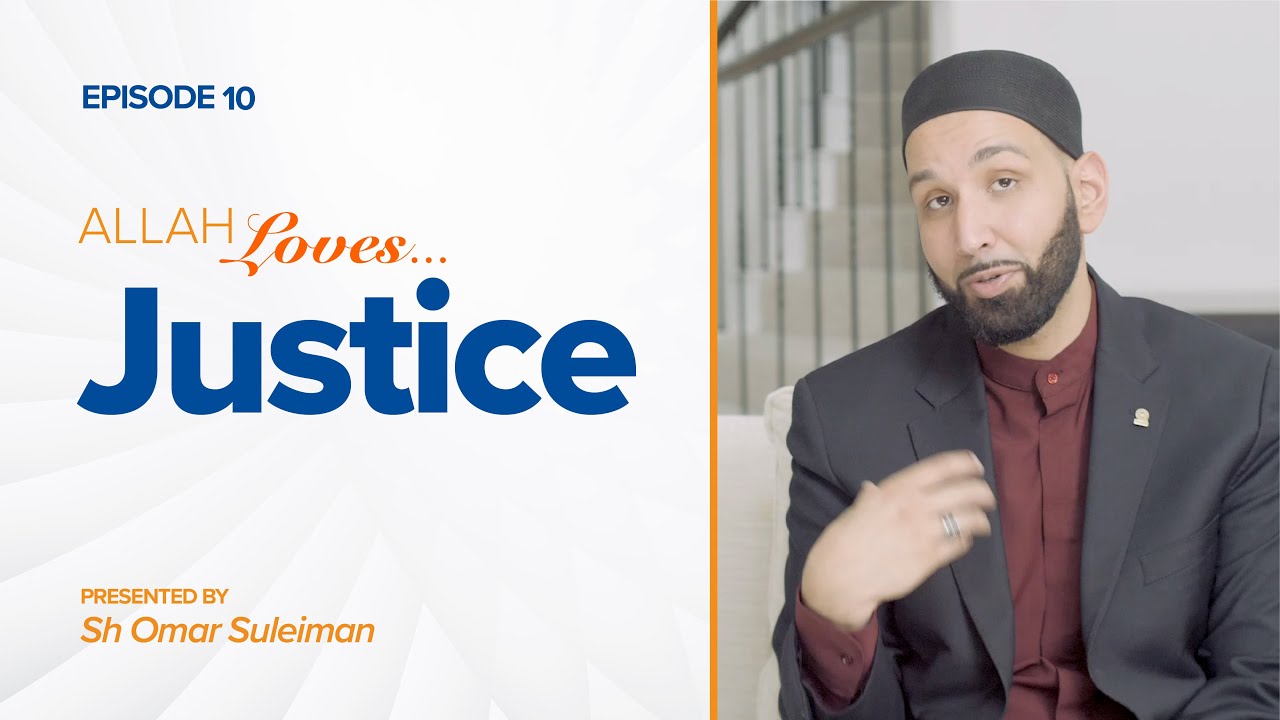
Allah Loves Justice | Episode 10 | Ramadan 2019
Yaqeen Institute
Overview
This video explores the concept of justice ('adl') in Islam, emphasizing that it's not just for rulers but a daily practice for individuals. It highlights Quranic verses stating Allah loves those who are just, even towards those they dislike. The summary stresses the personal responsibility to uphold justice in all interactions, from family to community, and warns against oppression, which disqualifies one from Allah's love. It concludes by reflecting on accountability for injustice on the Day of Judgment, where wrongs against others must be settled, and invokes Allah's mercy.
How was this?
Save this permanently with flashcards, quizzes, and AI chat
Chapters
- The Quran frequently mentions Allah loves the pious ('motakeen') and those who do good ('muhseneen').
- The third most common attribute Allah loves is justice ('mokseteen').
- Justice is often perceived as a large-scale concept involving governments, but the Quran applies it to daily life.
Understanding that Allah loves justice encourages individuals to actively practice it in their personal lives, not just as a societal ideal.
The Quran states Allah loves people who are just, even towards those they dislike, meaning personal animosity should not lead to unfair treatment.
- Allah hates oppression and inequity, which are evident in daily encounters.
- Individuals are called to be agents of justice in their families, workplaces, and communities.
- Reconciling disputes ('islah') requires maintaining a sense of justice between parties.
This chapter shifts the focus from abstract notions of justice to actionable steps individuals can take in their immediate environments.
When mediating a disagreement between two groups, whether in your family or community, the most crucial aspect is ensuring the resolution is just and equitable.
- Oppression is a disqualifier from receiving Allah's love.
- On the Day of Judgment, there will be no tolerance for transgression, even between animals.
- Injustice towards others is a debt that must be repaid, potentially through the transfer of good deeds.
Recognizing the severe consequences of injustice, both in this life and the hereafter, serves as a powerful motivator to avoid it.
Sufyan al-Thouri's saying highlights that while Allah may forgive sins against Him, wrongdoings against other people must be accounted for.
Key takeaways
- Allah's love extends to those who practice justice ('mokseteen') in their daily lives.
- Justice is a personal responsibility, applicable even in interactions with people you dislike.
- Upholding justice in personal relationships and community matters is a direct way to earn Allah's love.
- Oppression and inequity are strongly condemned and can lead to the loss of Allah's favor.
- Accountability for injustice towards others is a certainty on the Day of Judgment.
- Seeking Allah's mercy is essential, as His justice alone for our wrongdoings would be overwhelming.
Key terms
Adl (Justice)Mokseteen (Those who are just)Motakeen (Those who are pious)Muhseneen (Those who do excellence)OppressionInequityIslah (Reconciliation/Rectification)Day of Judgment
Test your understanding
- How does the video redefine the concept of justice beyond large-scale systems?
- What does the Quranic verse 'wala yajnemanakoum shana'ano kouman 'ala al ta'adeloo' teach about practicing justice?
- Why is 'islah' (reconciliation) incomplete without justice?
- What are the potential consequences of personal injustice on the Day of Judgment?
- How can an individual actively be a 'vehicle of justice' in their daily life?