12:51
Life in East Germany | Animated History
The Armchair Historian
Overview
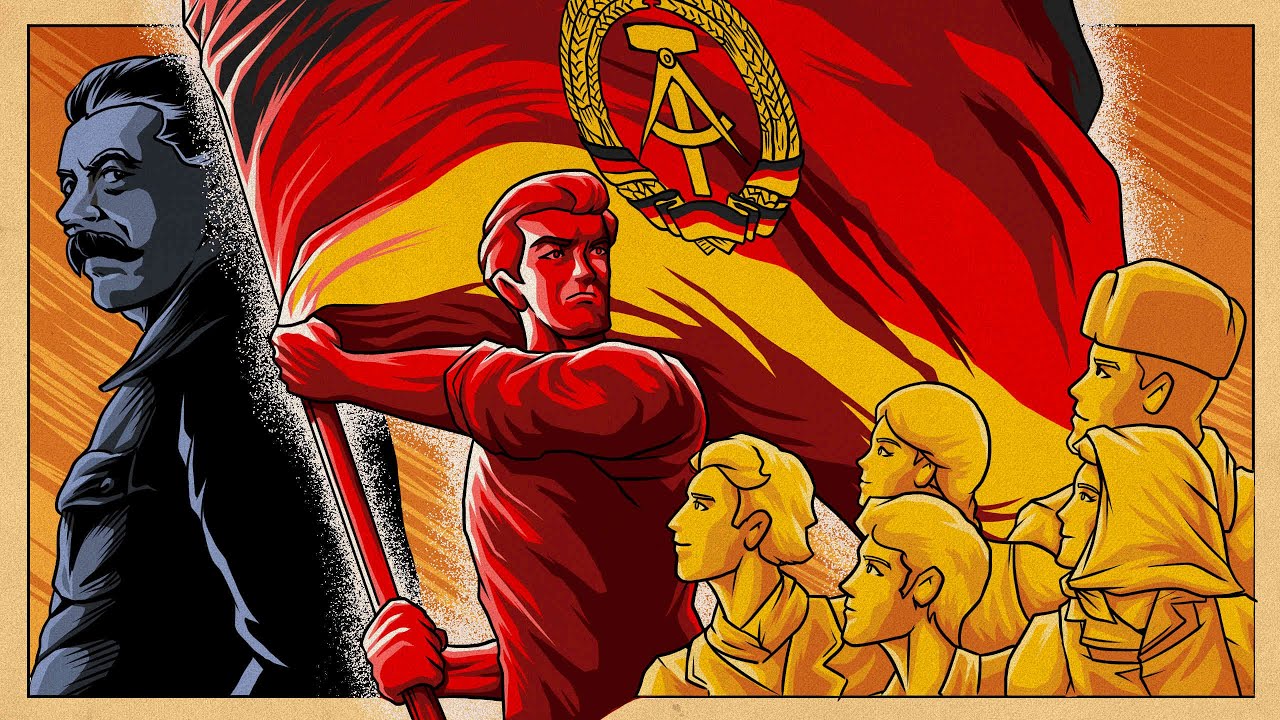
This video explores life in East Germany (GDR), a Soviet-controlled state established after World War II. It details the country's difficult beginnings, marked by industrial collapse, Soviet exploitation, and forced political unification. The summary covers the economic struggles, mass emigration, the construction of the Berlin Wall, and the rise of the Stasi surveillance state. It also touches on the development of a unique East German culture, the eventual loosening of restrictions, and the factors leading to the fall of the Berlin Wall and German reunification, acknowledging the lingering nostalgia and complex legacy of the GDR.
How was this?
Save this permanently with flashcards, quizzes, and AI chat
Chapters
- Following WWII, Germany was divided, with the Soviet Union occupying its eastern half.
- The Soviets dismantled industrial infrastructure and shipped it to Russia.
- Political opposition was suppressed, and the Communist and Social Democratic parties were forcibly merged into the Socialist Unity Party (SED).
- In 1949, the German Democratic Republic (GDR) was established as an independent nation under SED control.
Understanding the forceful establishment of the GDR is crucial to grasping its subsequent economic and social challenges, as well as the inherent political repression from its inception.
The forced merger of the Communist Party and the Social Democratic Party into the SED.
- The loss of the industrial Ruhr Valley left the GDR with minimal industrial capacity, causing severe shortages of essential goods.
- Lack of goods and economic stagnation provided no incentive for workers, leading to widespread malnourishment.
- News of West Germany's recovery under the Marshall Plan spurred a mass exodus of East Germans seeking better opportunities.
- This 'brain drain' of skilled workers and intellectuals further worsened the GDR's economic situation.
This period highlights the immediate consequences of the GDR's economic structure and the powerful pull of Western prosperity, setting the stage for increased state control.
Tens of thousands of desperate people fleeing to the West due to shortages and lack of opportunity.
- Under Walter Ulbricht, the GDR attempted rapid collectivization of agriculture and industry, inspired by Soviet five-year plans.
- These policies led to disastrous food shortages and the disappearance of consumer goods.
- Increased worker quotas to compensate for shortages pushed citizens to their breaking point.
- In 1953, a massive workers' strike and protest demanding reforms erupted, which was brutally suppressed by Soviet tanks.
The 1953 uprising and its suppression demonstrated the deep discontent within East Germany and the Soviet Union's willingness to use force to maintain control.
The 1953 workers' strike that spread across the country, demanding free elections and reforms.
- To halt the continuous emigration through Berlin, the GDR constructed the Berlin Wall in 1961, effectively sealing the border.
- After the wall's construction, quality of life slowly improved as the remaining population had access to housing and jobs.
- Production of consumer goods increased, making the GDR the wealthiest economy in the Eastern Bloc by the late 1960s.
- Despite improvements, shortages persisted due to state control of production, leading to long lines and hoarding.
The Berlin Wall physically separated East and West Germans, symbolizing the division of Europe, while the subsequent economic improvements offered a semblance of stability.
The construction of the 156 km Berlin Wall in 1961 to prevent citizens from fleeing to the West.
- The Ministry for State Security (Stasi) employed a vast network of informants and sophisticated surveillance to suppress dissent.
- The Stasi used psychological warfare ('Zersetzung' or decomposition) to instill fear and suspicion.
- Despite repression, a distinct East German culture emerged, emphasizing socialist values and opposing Western influence.
- Women experienced greater autonomy in marriage and the workplace compared to West Germany.
The pervasive surveillance by the Stasi created a climate of fear that maintained political stability, while a unique cultural identity developed in response to these restrictions.
The Stasi's use of over 170,000 informants to monitor the civilian population.
- Western cultural influences, like punk music and video games, gained popularity among East German youth, creating a generational divide.
- Growing discontent, fueled by economic stagnation and political repression, erupted into widespread protests in 1989.
- The fall of the Berlin Wall in November 1989 marked the beginning of the end for the GDR.
- East and West Germany reunified in 1990, but economic disparities and a sense of lost identity persisted in the East.
This chapter explains the final unraveling of the GDR, the symbolic fall of the Berlin Wall, and the complex, ongoing process of German reunification.
The fall of the Berlin Wall in November 1989, leading to the abolition of communist control.
Key takeaways
- The GDR was founded on Soviet imposition, not popular will, leading to immediate economic and political instability.
- Economic hardship and the allure of Western prosperity were primary drivers of mass emigration from East Germany.
- The Berlin Wall was a physical manifestation of the Iron Curtain, designed to stop the 'brain drain' and solidify state control.
- The Stasi's extensive surveillance created a pervasive atmosphere of fear, effectively suppressing widespread dissent for decades.
- Despite repression, a unique East German cultural identity developed, often in opposition to the West.
- Younger generations in the GDR were increasingly drawn to Western culture, contributing to the growing discontent that led to the regime's collapse.
- German reunification was a complex process, leaving lingering economic and social divisions between the former East and West.
Key terms
German Democratic Republic (GDR)Socialist Unity Party (SED)Soviet UnionMarshall PlanBrain DrainCollectivizationBerlin WallMinistry for State Security (Stasi)ZersetzungGerman Reunification
Test your understanding
- What were the primary reasons for the GDR's initial economic struggles?
- How did the Stasi maintain control over the East German population?
- What role did the Berlin Wall play in the history of East Germany?
- Why did Western cultural influences become increasingly appealing to East German youth in the 1970s and 80s?
- What were the immediate and long-term consequences of German reunification for the former East Germany?