7:45
The Secret Charlie Campbell Told Me About Zara Spook Fishing…
Intuitive Angling With Randy Blaukat
Overview
This video shares fishing secrets from Charlie Campbell, a legendary topwater angler, focusing on the "spook" lure. The speaker recounts a conversation where Campbell explained advanced techniques for "walking" the spook lure around cover and how to use it to attract bass from deep water, particularly in clear conditions. The video also briefly touches on specific spook lure models and color patterns that have proven effective. The core message emphasizes mastering lure control and understanding bass behavior to maximize success with topwater fishing.
How was this?
Save this permanently with flashcards, quizzes, and AI chat
Chapters
- Charlie Campbell is a renowned angler famous for popularizing the "spook" topwater lure.
- Campbell's expertise led him to win a major tournament in 1974 using a spook, solidifying its effectiveness.
- The "walk-the-dog" action of the spook remains a highly effective technique for catching bass.
- The speaker learned crucial spook fishing techniques from Campbell during a conversation after a tournament.
Understanding the legacy and foundational techniques of a master angler like Charlie Campbell provides context and credibility to the advanced strategies that follow.
Charlie Campbell won the Bassmaster Federation Tournament in 1974 on Table Rock Lake using a Zara Spook.
- Mastering the "walk-the-dog" action involves precise rod tip movements to make the spook lure move side-to-side.
- Instead of uniform twitches, vary the intensity: a hard twitch followed by a subtle one can make the spook turn or 'walk' around obstacles.
- This controlled movement is key to enticing strikes from bass hiding near shallow cover, like submerged sticks or logs.
- Practice is essential to develop the feel for rod tip motion needed to achieve precise lure control.
Learning to precisely control the spook's movement allows anglers to present the lure effectively in complex shallow-water environments, increasing the chances of triggering a strike.
By twitching the rod tip hard, then barely twitching it, the angler can make the spook turn a corner around a stick in the water.
- Spooks can be used to draw bass out of deep water, especially in clear conditions.
- The technique involves casting the spook as far as possible and reeling it back very fast with no added action.
- After the fast retrieve, 'kill' the lure, letting it sit dead in the water until ripples disappear.
- A single twitch after the pause often triggers a strike from investigating bass, especially on calm days.
This strategy expands the utility of topwater lures beyond surface-feeding scenarios, enabling anglers to effectively target bass holding in deeper, less obvious locations.
Reeling a spook back extremely fast in clear water, then pausing it, can draw bass up from 20-50 feet to investigate before a twitch triggers a bite.
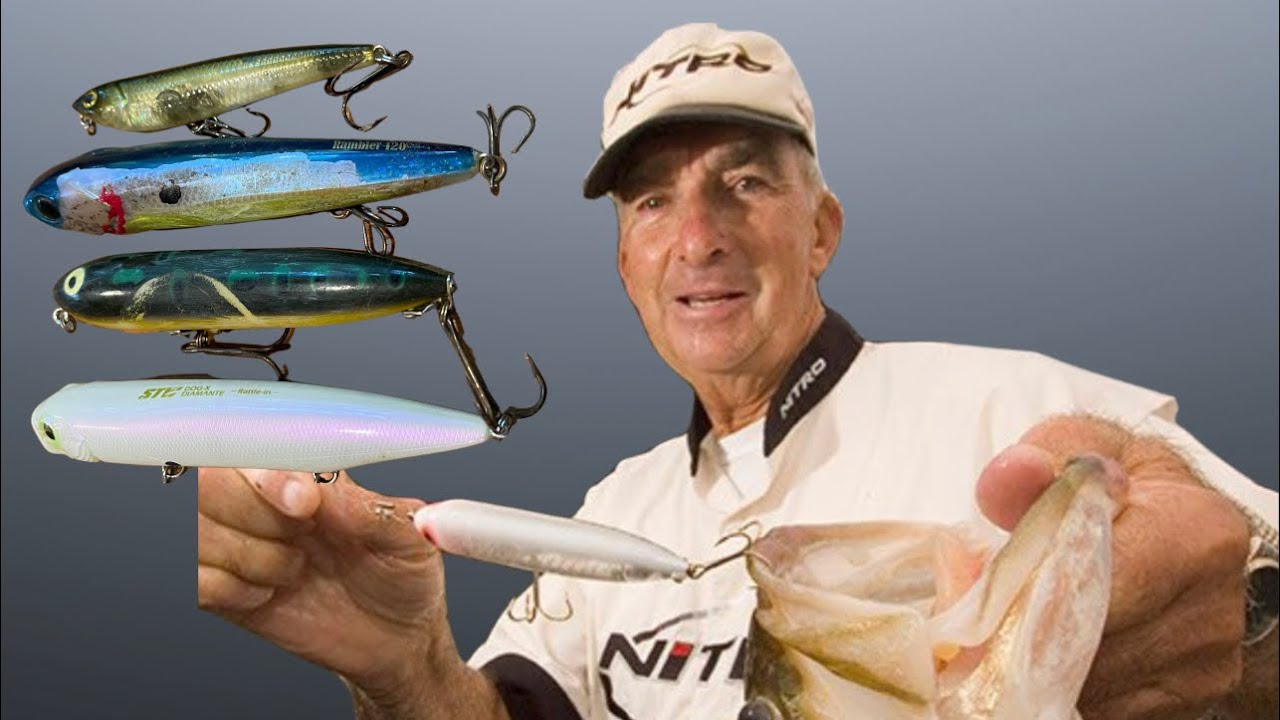
- Specific spook lure models offer different actions and are suited for various conditions.
- The original Zara Spook in a bullfrog pattern is a proven fish-catcher, historically significant.
- The Megabass Diamonte offers a tighter wobble, effective for more aggressive fish or faster retrieves.
- The Megabass Dog-X, a smaller lure, excels in tough conditions or when there's no wind, mimicking a baitfish.
- Color choice, like bone for cloudy days, can also influence effectiveness.
Selecting the right lure and color can significantly improve success rates by matching the lure's action and appearance to the specific fishing conditions and fish behavior.
The bullfrog pattern Zara Spook was the lure Charlie Campbell used to win his 1974 tournament.
Key takeaways
- Mastering the 'walk-the-dog' action requires precise, varied rod tip control, not just uniform twitches.
- Anglers can strategically 'walk' a spook lure around cover by adjusting the force and timing of their twitches.
- A fast retrieve followed by a dead pause can effectively draw bass from deep, clear water to investigate a spook.
- The pause and subsequent twitch after a fast retrieve is often the moment a deep-water bass will strike.
- Different spook lure models and colors are suited for different conditions, from aggressive fish to tough, calm days.
- Charlie Campbell's techniques demonstrate how subtle lure manipulation can unlock aggressive strikes.
- Effective topwater fishing often relies on understanding how to make the lure act erratically yet predictably.
Key terms
Spook fishingTopwater fishingWalk-the-dog actionLure controlCover (fishing)Twitch (fishing)Retrieve (fishing)Clear water conditionsBaitfishZara Spook
Test your understanding
- How can an angler manipulate their rod tip to make a spook lure 'walk' around an obstacle like a stick?
- Why is varying the intensity of rod twitches important for advanced spook fishing?
- What is the recommended retrieve and pause strategy for using a spook to target bass in deep, clear water?
- How does the action of a lure like the Megabass Diamonte differ from a standard spook, and when might it be more effective?
- What role does lure presentation play in triggering strikes from bass that are actively investigating a topwater lure?