35:43
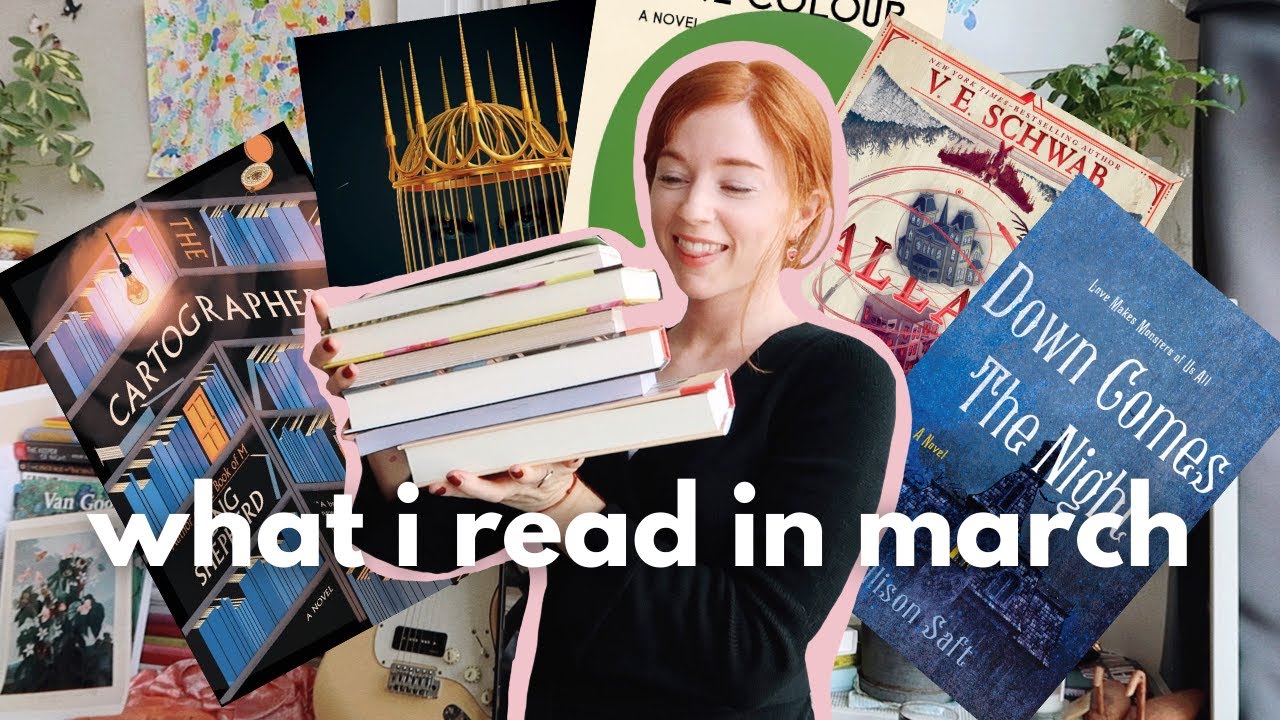
march wrap up | my favorite fantasy series ruined itself 😭 what i read in march | gallant, gilded
cari can read
Overview
This video summarizes the books read by the creator in March, featuring a mix of genres including fantasy, mystery, memoir, and non-fiction. The creator discusses their personal reactions to each book, highlighting what they enjoyed and what fell short of expectations. The summary includes a sponsored segment for Book of the Month, offering a discount code. The books reviewed range from young adult fantasy to adult literary fiction, with a particular focus on the narrative structure, character development, and thematic elements of each story. The creator also touches on the impact of controversy on a series and expresses disappointment with certain plot resolutions.
How was this?
Save this permanently with flashcards, quizzes, and AI chat
Chapters
- March felt like a long reading month with a mixed bag of books.
- Book of the Month (BOTM) is a service that curates new release hardcover books at a low price.
- The creator's BOTM picks for April include 'The Good Left Undone' (family drama/historical), 'Bittersweet' (non-fiction about sorrow), 'True Biz' (contemporary about a school for the deaf), 'Like a Sister' (mystery), and 'Kaikeyi' (fantasy/mythology).
This section introduces the video's purpose and highlights a book subscription service that can help viewers discover new releases, setting the stage for the subsequent book reviews.
Using the code CARI for the first BOTM book at $9.99.
- This young adult fantasy standalone helped the creator out of a reading funk.
- The story features a world with warring magic countries and a non-magic country, focusing on a healer protagonist named Wren.
- Wren, who struggles with empathy and helping prisoners, is sent to a convent but escapes to a mysterious house in the non-magic country.
- The book blends magic, mystery, political intrigue, and an enemies-to-lovers trope.
This review demonstrates how a book can serve as a 'palate cleanser' and provide a satisfying reading experience even if it doesn't become a favorite, offering a potential solution for readers in a slump.
Wren, a healer with empathy, is sent to a convent but flees to a creepy house where she must heal a patient amidst secrets and a looming war.
- Marissa Meyer's 'Gilded' is a retelling of Rumpelstiltskin, focusing on a girl cursed with storytelling/lying.
- The protagonist struggles to make friends due to her unusual nature and finds solace in entertaining children.
- The story involves Fae mythology, a 'Hunt' on full moons, and the protagonist becoming entangled with the Fae king who believes she can spin straw into gold.
- The book starts slow, picks up around the 50% mark with a romance and mystery, but is not a standalone and ends with a cliffhanger.
This review highlights the challenges of fairy tale retellings and the pacing issues that can arise, offering insight into how familiar stories can be reinterpreted and the potential pitfalls of non-standalone novels.
The main character, cursed with an inability to tell the truth, gets caught up in Fae politics because the king believes she can spin straw into gold, a direct nod to the Rumpelstiltskin fairy tale.
- The Black Witch series faced controversy, with the creator defending it against accusations of racism.
- The first book follows a sheltered, prejudiced protagonist attending college and confronting her biases.
- The first two books were praised for their 'yearning' romance and exploration of prejudice, though some nuance was noted as lacking.
- The third book introduced a disliked love triangle, and the fourth book, 'The Demon Tide,' felt like a stretched-out mess with too many characters and repetitive forbidden love plots.
This section explores how external controversies can impact a book's reception and how a series can lose its way, particularly when it feels artificially extended, leading to reader disappointment.
The fourth book, 'The Demon Tide,' is criticized for having every character involved in a forbidden love story, making the narrative feel repetitive and drawn out.
- 'The Chronology of Water' is a powerful memoir by Lidia Yuknavitch detailing struggles with addiction and finding solace in writing.
- The writing style in 'Chronology of Water' is highly praised for its beauty and depth, reminiscent of college-level literary works.
- 'Gallant' by V.E. Schwab is a quick, atmospheric Victorian-style story about a mute orphan girl who sees ghouls and inherits a mysterious family home.
- While 'Gallant' has Schwab's signature imagery, it felt less impactful than her other works, serving as a simple, contained story.
This chapter contrasts two distinct reading experiences: a deeply personal and impactful memoir focused on prose, and a atmospheric but less profound fictional tale, showcasing the breadth of literary styles and emotional resonance.
In 'The Chronology of Water,' the author's journey through addiction and trauma is conveyed through incredibly impactful prose, leading the reader to underline extensively.
- 'The Cartographers' had a promising premise involving a murdered cartographer father and a mysterious map.
- The story delves into the world of cartography and libraries, initially creating intriguing vibes.
- The narrative became convoluted with unnecessary details about characters' love lives and a twist that felt unbelievable upon further revelation.
- The ending was a significant letdown, detracting from the book's strong initial concept and making the creator feel 'betrayed'.
This review serves as a cautionary tale about how a compelling premise can be undermined by poor execution, particularly in its plot resolution and character focus, emphasizing the importance of a satisfying conclusion.
The creator felt the plot became bogged down by irrelevant details about characters' affairs, detracting from the central mystery of the father's murder and the significance of the map.
- Patti Smith's memoir 'Just Kids' was reread and found to be beautiful, honoring small moments and the deep love between the author and Robert Mapplethorpe.
- 'Reckless Girls' is a deserted island thriller that helped the creator out of a reading slump.
- The plot involves a couple taking a lucrative job to transport two girls to a mysterious, allegedly cursed island.
- While it served its purpose as a quick read, the thriller's suspense and twist were not as impactful as hoped.
This section highlights the value of rereading beloved books for comfort and inspiration, while also showcasing how a genre read like a thriller can be effective for breaking through reading slumps, even if not critically acclaimed.
The memoir 'Just Kids' is described as making the reader want to call friends and express love due to the profound sense of connection and appreciation for life's small moments.
- 'Pure Color' is a recently started book praised for its writing and philosophical ideas, where plot is secondary.
- The book explores concepts like the world being God's 'first draft' and humans creating their own 'second drafts' through stories and art.
- The creator finds the book highly quotable and plans to underline extensively, enjoying its meditative quality.
- This book is presented as a potential first read for April.
This preview of a new read emphasizes the value of books that prioritize prose and philosophical exploration over plot, offering a different kind of reading engagement that focuses on ideas and language.
The concept of the world as 'the first draft of existence' and humans creating 'second drafts' through art and stories is a key idea from 'Pure Color' that the creator found particularly interesting.
Key takeaways
- Reading slumps can be overcome with books that 'check the boxes' or offer a change in genre, even if they aren't favorites.
- Fairy tale retellings can be hit or miss; while offering new perspectives, they may also fall short if the core elements aren't reimagined effectively.
- Series can lose their appeal if they feel artificially extended with repetitive plot devices like numerous forbidden love stories.
- Memoirs focused on powerful writing and personal struggle can be deeply impactful, offering profound insights beyond mere plot.
- A book's premise is crucial, but a weak or unsatisfying ending can significantly detract from its overall value and leave a reader feeling disappointed.
- The quality of writing and exploration of abstract ideas can be as rewarding as a strong plot, offering a different, more meditative reading experience.
- Book subscription services like Book of the Month can be a convenient way to discover new releases across various genres.
Key terms
Reading funkStandalone novelFairy tale retellingRumpelstiltskinFaeForbidden loveYearning (romance trope)Love triangleMemoirCartographyTwist endingBook of the Month (BOTM)
Test your understanding
- What strategies can a reader employ to overcome a reading slump, based on the video's examples?
- How can the controversy surrounding a book affect a reader's perception, and how did the creator address this for 'The Black Witch' series?
- What are the potential pitfalls of extending a book series, as illustrated by the creator's experience with 'The Black Witch' series?
- Why might a reader prefer a book focused on prose and philosophical ideas over one with a strong plot, and what examples were given?
- How can a book with a strong premise ultimately disappoint a reader, and what specific elements contributed to this disappointment in 'The Cartographers'?