50:37
Pakistan’s Auto Industry Is Changing | Podcast With Muhammad Aqib Zulfiqar
PakWheels.com
Overview
This podcast episode discusses the evolving automotive industry in Pakistan, focusing on the impact of new policies, the rise of Chinese manufacturers, and the transition towards New Energy Vehicles (NEVs). The conversation highlights the challenges and opportunities faced by local and international players, the importance of consistent government policy, and the economic implications of localization versus imports. It explores how the industry is shifting from a seller's to a buyer's market, driven by increased competition and technological advancements, and emphasizes the need for a forward-looking approach to secure Pakistan's automotive future.
How was this?
Save this permanently with flashcards, quizzes, and AI chat
Chapters
- Nishat Group introduced Omoda and Jaecoo (OJ) to Pakistan, marking a significant expansion into the automotive market.
- The group invested approximately $100 million in fixed infrastructure, working capital, and skill development.
- OJ launched three models within a year, including the locally manufactured J7 and J4, demonstrating rapid product rollout.
- The company established 20 dealerships across 14 cities, indicating a swift expansion of its sales and service network.
This chapter sets the stage by introducing a new major player and their significant investment, signaling a shift in Pakistan's automotive landscape and the potential for increased competition and technological adoption.
The rapid rollout of the J7, the first locally made car by OJ, within months of their market entry.
- Customer response to OJ vehicles has been overwhelmingly positive, exceeding initial sales projections significantly.
- The company observed global trends and the rapid growth of the Chinese automotive market, leading to a strategic partnership with Omoda and Jaecoo.
- This move represents a deliberate choice to be part of the market disruption rather than be disrupted by it.
- Chinese vehicles, initially met with skepticism, have gradually proven their worth and gained market acceptance.
Understanding the market's positive reception to Chinese brands and the strategic rationale behind this shift is crucial for grasping the current dynamics and future direction of Pakistan's auto industry.
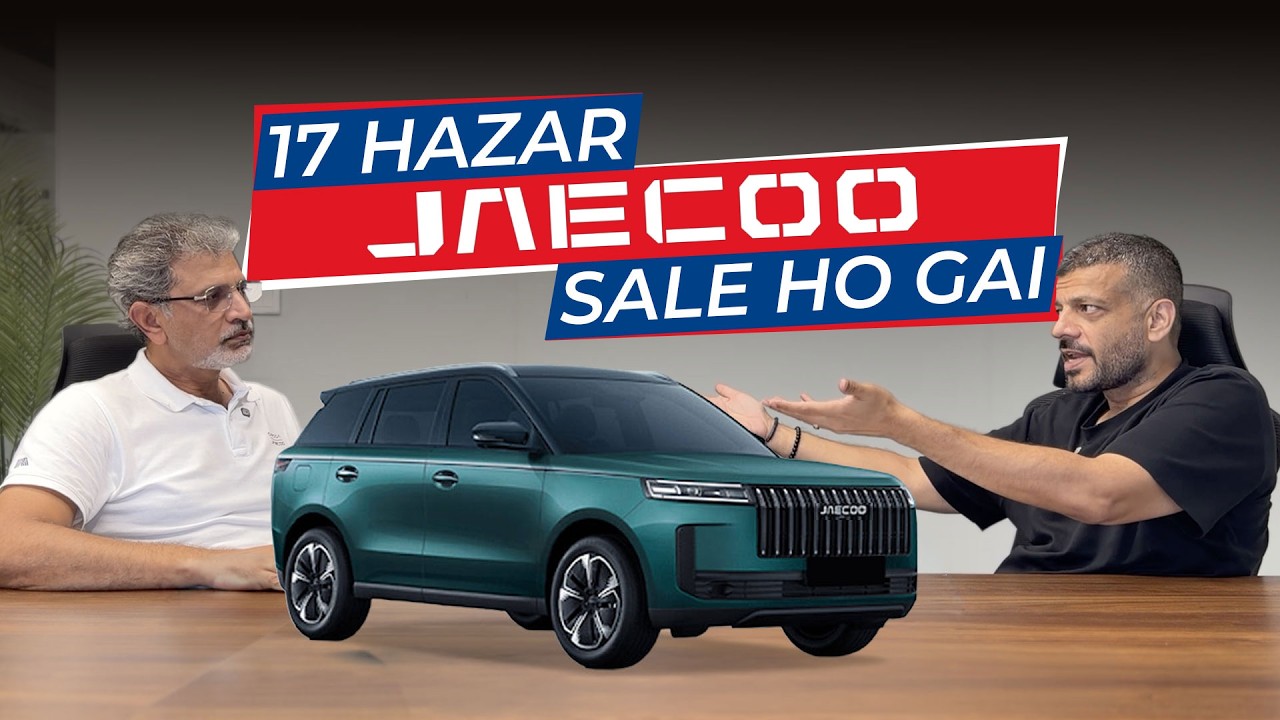
Initial sales estimates for OJ were 2,000-3,000 vehicles per year, but they achieved bookings of over 17,000 units in their first year.
- Nishat Group manages both Hyundai and OJ brands, positioning them in different market segments to avoid direct cannibalization.
- Hyundai vehicles are positioned across luxury (Palisade, Santa Fe), C-segment (Tucson), and commercial segments.
- The introduction of OJ, a Chinese brand, has helped utilize excess manufacturing capacity, improving the profitability of the group's backend operations.
- While Hyundai has introduced New Energy Vehicles (NEVs), the market response to OJ's NEVs has been particularly strong.
This section explains how a large conglomerate navigates a multi-brand strategy, leveraging different market dynamics and technological offerings to optimize resource utilization and profitability.
The group uses its excess factory capacity from OJ's high sales to offset underutilized capacity in its Hyundai operations, improving overall financial performance.
- Global trends indicate a clear shift towards future technologies like NEVs, mirroring past transitions in industries like telecommunications (analog to digital).
- Technological advancements, economies of scale, and evolving consumer preferences, particularly among younger generations (Gen Z, Alpha), drive the adoption of new technologies.
- NEVs offer significant advantages, including reduced reliance on imported fuel, lower emissions, and potential cost savings.
- Hybrid and Plug-in Hybrid Electric Vehicles (PHEVs) address range anxiety while offering electric driving capabilities in urban settings.
This discussion highlights the inevitable technological evolution in the automotive sector and the strategic imperative for Pakistan to embrace NEVs to remain competitive and address national economic and environmental concerns.
The speaker shares personal experience driving NEVs for city commutes without using petrol since the start of a recent war, demonstrating practical benefits.
- Pakistan's auto policies from '16-'21 and '21-'26 have successfully increased competition and consumer choice, shifting the market from a seller's to a buyer's market.
- These policies have led to a significant reduction in vehicle delivery times, with most cars now readily available.
- The transition to NEVs is crucial for Pakistan to reduce fuel import dependency and mitigate currency fluctuations.
- The policies have encouraged investment and the establishment of new players beyond the traditional 'Big Three'.
Understanding the effectiveness and outcomes of past auto policies provides context for current industry challenges and informs future policy decisions necessary for sustained growth and technological advancement.
Previously, car buyers faced waiting times of 12-16 months; now, 95% of the market is available immediately, with popular models having a maximum 2-3 month wait.
- Lack of consistent, long-term government policies is a major impediment to industry growth and investment.
- The current debate around CBU (Completely Built Unit) versus CKD (Completely Knocked Down) duties risks undermining local manufacturing.
- Localization efforts are hampered by the small scale of Pakistan's automotive market, making it difficult to achieve economies of scale for producing advanced components.
- A narrative is being built against local manufacturers, questioning their contribution and suggesting they are exploiting the country.
This section delves into the critical issues of policy uncertainty and the economic realities of localization, explaining why consistent government support and a realistic approach to manufacturing scale are vital.
The duty structure has shifted, making CBUs cheaper to import than CKDs, which discourages local assembly and manufacturing.
- Local manufacturing, even at a smaller scale, contributes significantly to the national GDP through value addition, job creation, and skill development.
- Shutting down local plants would lead to job losses, reduced economic activity, and a potential surplus of electricity with no buyers.
- The automotive industry fosters a vendor base that can produce diverse components, contributing to a broader engineering and manufacturing ecosystem.
- Skills acquired in Pakistan's auto industry enable individuals to find employment internationally, bringing foreign exchange back to the country.
This emphasizes the broader economic benefits of local auto manufacturing beyond just car production, highlighting its role in national development, employment, and technological capability building.
A local bumper manufacturer, employing 100-150 people, can also produce AC covers, missile parts, or tank parts, showcasing the versatility and broader impact of the vendor industry.
- Concerns about Chinese manufacturers 'dumping' unsold vehicles in Pakistan are largely unfounded due to the small size of the right-hand drive market and production being primarily on-demand.
- The focus should be on increasing national revenue and export potential rather than shutting down existing industries.
- Key policy recommendations include developing consistent, long-term, and forward-looking policies with clear objectives and milestones.
- Urgent clarity is needed on NEV definitions and tariff structures to prevent the industry from stagnating and to encourage adoption of future technologies.
This chapter addresses common fears and provides actionable recommendations for policymakers, stressing the importance of a stable, clear, and future-oriented approach to automotive policy.
The speaker advises policymakers to maintain the existing NEV definition or provide an interim model with a clear deadline for finalization, rather than leaving the industry in uncertainty for extended periods.
Key takeaways
- Consistent and long-term government policies are crucial for attracting and sustaining investment in Pakistan's automotive sector.
- The rise of Chinese automotive brands presents both opportunities and challenges, necessitating strategic adaptation by local players.
- Embracing New Energy Vehicles (NEVs) is essential for Pakistan's energy security, environmental sustainability, and global competitiveness.
- Local manufacturing, even with challenges in achieving economies of scale, provides significant economic benefits, including job creation and skill development.
- The shift from a seller's to a buyer's market, driven by increased competition and policy reforms, has improved consumer choice and delivery times.
- Focusing on increasing national revenue and export potential through industrial growth is more beneficial than dismantling existing industries.
- Clear definitions and stable tariff structures for NEVs are vital to encourage their adoption and prevent the automotive industry from becoming obsolete.
Key terms
Omoda & Jaecoo (OJ)Nishat GroupNew Energy Vehicles (NEVs)Completely Built Unit (CBU)Completely Knocked Down (CKD)LocalizationEconomies of ScaleAuto PolicyVendor BaseCapital Flight
Test your understanding
- How has the introduction of Omoda & Jaecoo by the Nishat Group impacted Pakistan's automotive market in terms of investment and competition?
- What are the primary reasons for Pakistan's auto industry to transition towards New Energy Vehicles (NEVs), considering both global trends and national priorities?
- Explain the significance of consistent government policies for the automotive sector and the potential consequences of policy uncertainty.
- How does local manufacturing, including CKD operations, contribute to Pakistan's economy beyond just vehicle assembly?
- What are the main arguments for and against relying on CBU imports versus promoting CKD assembly in Pakistan's automotive industry?