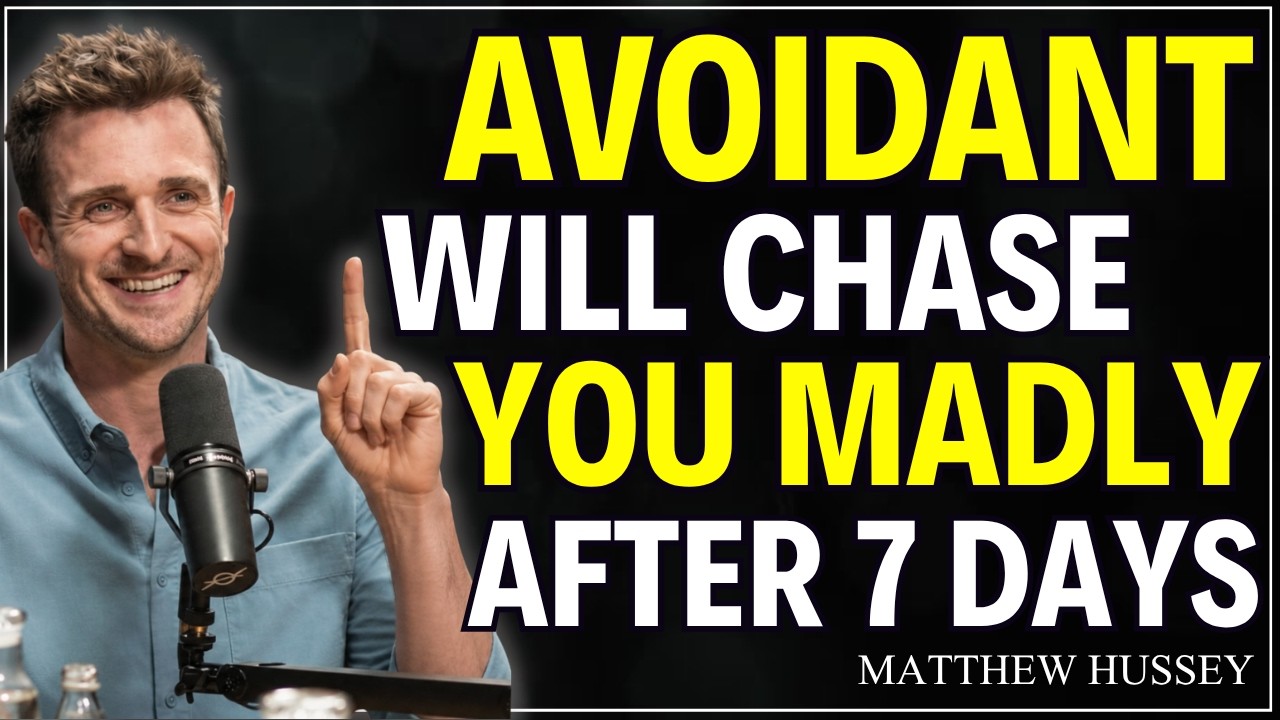
26:46
Stop Doing These 4 Thing and Watch an Avoidant Chase You Within 7 days | Matthew Hussey
Relationship Coach
Overview
This video explains how to attract someone with an avoidant attachment style by stopping specific behaviors that trigger their defense mechanisms. Instead of chasing or playing games, the focus is on understanding the psychology of avoidance and shifting your own actions. By ceasing emotional flooding, over-explaining, collapsing your life, and rewarding inconsistency, you can create a more secure and attractive dynamic, fostering genuine connection rather than pushing them away. The ultimate goal is not just to make an avoidant chase you, but to rebuild your own sense of self-worth and independence.
How was this?
Save this permanently with flashcards, quizzes, and AI chat
Chapters
- Avoidant attachment often stems from childhood experiences where expressing needs led to disappointment or punishment.
- When intimacy feels overwhelming, an avoidant's nervous system signals danger, prompting them to pull back to maintain independence.
- This pulling away is a reaction to the feeling of being overwhelmed, not necessarily a rejection of the individual.
- The natural urge to chase or fix the situation when an avoidant pulls back actually intensifies their need to escape.
Understanding the root cause of avoidant behavior helps you depersonalize their actions and avoid reacting in ways that perpetuate the cycle.
An avoidant person goes quiet after a period of closeness, leading the other person to panic and send multiple texts, which further triggers the avoidant's need for space.
- Emotional flooding occurs when you express anxiety and need for reassurance, making the other person feel pressured.
- Avoidants are highly perceptive of emotional need and can sense desperation, even in carefully worded messages.
- Expressing intense or frequent anxiety activates their defense mechanisms, making them want to run rather than connect.
- Process your feelings privately (journaling, talking to friends) before interacting, and approach the avoidant from a place of calm and groundedness.
By managing your own emotional expression, you create a safer space for connection and become a source of calm, which is attractive to avoidants.
Instead of sending a text like 'I feel like you're pulling away from me,' process that anxiety through journaling and then approach the person from a more stable emotional state.
- The urge to over-explain when an avoidant seems distant comes from a desire for validation and fear of misunderstanding.
- Excessive explanation communicates a need for their approval and an inability to tolerate discomfort.
- This behavior is overwhelming to someone already feeling pressured by emotional intensity.
- Communicate clearly and directly once, then allow space for them to process without managing their thoughts for them.
Concise, confident communication shows self-respect and allows the other person to engage without feeling overwhelmed, fostering genuine understanding.
Saying 'I need you to understand where I'm coming from' repeatedly in a long text exchange is over-explaining; instead, state your point calmly and let it be.
- Making an avoidant the center of your universe, where your mood and plans revolve around them, makes you less attractive.
- Avoidants are drawn to people who have their own passions, goals, and independent lives.
- When you collapse your life, you inadvertently signal that your value is dependent on their attention.
- Re-engage with your own interests, friends, and goals to regain magnetic attraction and emotional independence.
Maintaining your own life demonstrates self-worth and makes you a more compelling partner, rather than someone solely focused on securing their attention.
Continuing to pursue your hobbies and see friends even when an avoidant is being distant, rather than canceling plans to wait for their text.
- Tolerating inconsistent behavior and rewarding brief moments of warmth trains the person that they can come and go as they please.
- This dynamic often involves accepting less than you deserve because any connection feels better than withdrawal.
- Maintain standards for how you wish to be treated, not as a tactic, but because you deserve respect.
- Respond to inconsistency with continued engagement with your own life and dignity, rather than immediate availability.
Establishing and holding standards communicates your value and encourages consistent effort, leading to either genuine investment or clarity about the relationship's limitations.
If someone is distant for a week and then sends a casual text, instead of immediately responding with full enthusiasm, continue with your plans and respond a bit later.
- The common thread in the behaviors to stop is communicating that your emotional well-being is dependent on them.
- Genuine attraction comes from demonstrating that you are a whole, interesting person whose happiness doesn't rely on them.
- The goal is to become the most grounded, attractive version of yourself, not just to play a game.
- This work rebuilds your relationship with yourself, reinforcing that you are worthy of consistent, respectful treatment.
Focusing on your own growth and self-respect is the most powerful way to foster healthy connection, whether with an avoidant or anyone else.
When you no longer need someone to chase you to feel whole, that's when they are most likely to move closer, because your secure, grounded energy is magnetic.
Key takeaways
- Avoidant behavior is a defense mechanism triggered by perceived pressure, not a personal rejection.
- Expressing your own anxiety and neediness directly to an avoidant will push them further away.
- Processing your emotions independently and approaching interactions from a place of calm is crucial.
- Maintaining your own life, passions, and friendships makes you more attractive and resilient.
- Rewarding inconsistency trains others to treat you as an option rather than a priority.
- The most attractive quality is genuine self-sufficiency and a happiness that doesn't depend on another person's validation.
- This process is about self-growth and rebuilding your relationship with yourself, not just a dating strategy.
Key terms
Avoidant attachment styleEmotional floodingDefense mechanismIntimacyOverwhelmValidationInconsistencySelf-worthGroundednessSelf-respect
Test your understanding
- What is the underlying psychological reason an avoidant person pulls away when intimacy increases?
- How does emotional flooding, as described in the video, trigger an avoidant's defense mechanisms?
- Why is over-explaining oneself counterproductive when dealing with an avoidant attachment style?
- What is the connection between collapsing your own life and attractiveness to an avoidant?
- How can stopping the reward of inconsistency lead to either a stronger connection or necessary clarity in a relationship?