AI-Generated Video Summary by NoteTube
YouTube Video TFX4zwEnlBU
Overview
This video discusses seizures in children, defining them as the most common pediatric neurologic disorder caused by excessive neuronal discharges. It explores various causes, including epilepsy, febrile seizures, meningitis, strokes, tumors, and metabolic alterations. The video differentiates between partial and generalized seizures, focusing on generalized tonic-clonic seizures and their three phases: tonic, clonic, and post-ictal. It outlines crucial nursing interventions during and after seizures, emphasizing safety, airway management, and monitoring. The diagnostic evaluation process, including history, physical exams, labs, imaging, and EEG, is detailed. Finally, the video covers management strategies like anti-epileptic drug therapy, the ketogenic diet, vagus nerve stimulation, and surgery, along with essential patient and family education regarding triggers, medication adherence, and safety precautions to promote a normal life for children with seizures.
This summary expires in 30 days. Save it permanently with flashcards, quizzes & AI chat.
Chapters
- •Seizures are the most common pediatric neurologic disorder, affecting 4-10% of children.
- •They result from excessive and disorderly neuronal discharges in the brain.
- •Causes are numerous, including epilepsy, febrile seizures, meningitis, strokes, brain tumors, and metabolic imbalances.
- •Febrile seizures are common in children under 3, associated with sudden high fevers.
- •Seizures are classified based on observed signs and symptoms.
- •Partial seizures originate in a small brain area with localized effects.
- •Generalized seizures involve both hemispheres and tend to be more severe.
- •Tonic-clonic seizures are a type of generalized seizure characterized by stiffening and rhythmic jerking.
- •The tonic phase involves eye rolling, loss of consciousness, body stiffening, and potential apnea/cyanosis.
- •The clonic phase features rhythmic jerking movements, increased saliva, and potential incontinence.
- •The post-ictal phase is the recovery period, characterized by lethargy, sleepiness, and confusion.
- •Status epilepticus is a medical emergency defined by prolonged seizures (>30 minutes) or recurrent seizures without recovery.
- •Immediate management includes airway, breathing, and circulation (ABC) support.
- •Benzodiazepines like diazepam or lorazepam are the first-line medications to stop seizures.
- •Non-IV routes (buccal, rectal, nasal) are used if IV access is unavailable.
- •During a seizure, protect the child from injury by removing hazards and not restraining them.
- •Position the child on their side, loosen clothing, and administer oxygen if safe.
- •Document seizure onset, duration, and observed behaviors meticulously.
- •After a seizure, maintain side-lying position, check vital signs, reorient the child, and initiate seizure precautions if necessary.
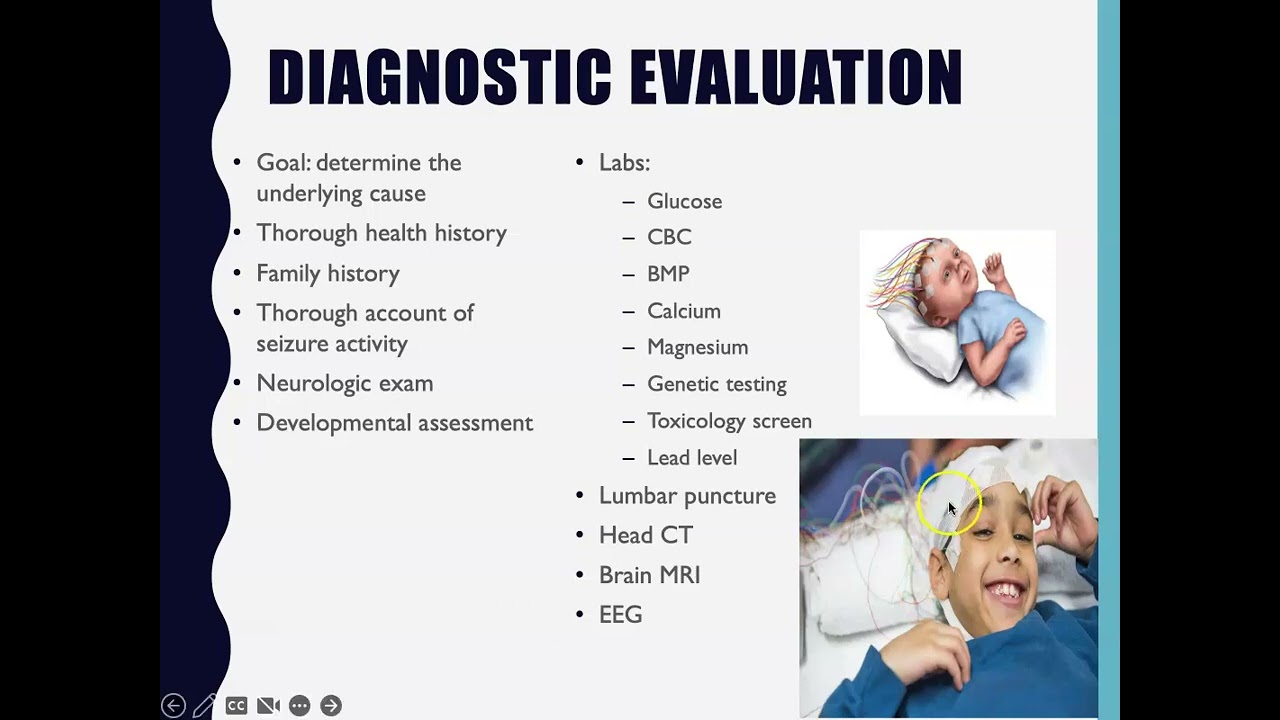
- •The goal is to identify the underlying cause of the seizure.
- •Evaluation includes a thorough health and family history, neurological exam, and developmental assessment.
- •Laboratory tests include glucose, CBC, electrolytes, calcium, magnesium, toxicology, and lead levels.
- •Imaging (CT, MRI) and EEG are crucial for detecting structural abnormalities and electrical activity.
- •The primary goal is seizure control through anti-epileptic drugs (AEDs).
- •The ketogenic diet is an option for medically refractory seizures.
- •Vagus nerve stimulation and brain surgery are less common but effective treatments.
- •Medication adherence and regular monitoring are critical for effective management.
- •Identify and avoid seizure triggers like fatigue, stress, and flashing lights.
- •Emphasize strict medication adherence and regular lab testing.
- •Advise on safety precautions, including wearing a medical alert bracelet and water safety.
- •Discuss driving restrictions and the importance of a normal life despite the condition.
Key Takeaways
- 1Seizures are a symptom of an underlying issue, not a disease itself, and require thorough investigation.
- 2Generalized tonic-clonic seizures have distinct tonic, clonic, and post-ictal phases requiring specific nursing care.
- 3Status epilepticus is a critical emergency demanding rapid intervention with benzodiazepines.
- 4Protecting the child from injury during a seizure is paramount, avoiding restraint and insertion of objects into the mouth.
- 5A comprehensive diagnostic workup, including history, exams, labs, imaging, and EEG, is essential for accurate diagnosis.
- 6Anti-epileptic medications are the cornerstone of seizure management, requiring consistent adherence and monitoring.
- 7Lifestyle modifications and patient/family education are vital for managing triggers and ensuring safety.
- 8The ultimate goal is to control seizures and enable children to live as normal a life as possible.