this strange habit SKYROCKETS your charisma.
SpoonFedStudy
Overview
This video introduces a powerful brain training regimen focused on enhancing charisma and focus through deliberate attention control. It explains the interplay between the Task Positive Network (TPN) and the Default Mode Network (DMN) in the brain, highlighting how an overactive DMN leads to self-consciousness and anxiety. The core practice involves training the TPN by focusing intensely on neutral stimuli, gradually progressing through levels of increasing complexity and real-world application. This method aims to improve decision-making, emotional intelligence, and overall presence by reducing internal noise and enhancing the ability to engage with the external world, ultimately leading to greater confidence and effectiveness in various life situations.
Save this permanently with flashcards, quizzes, and AI chat
Chapters
- The brain has two main attentional networks: the Task Positive Network (TPN) for focused, goal-oriented tasks, and the Default Mode Network (DMN) for internal thought, mind-wandering, and self-reflection.
- When the TPN is active, attention is directed outward and focused on a specific task, like a basketball player shooting a free throw.
- The DMN, often called the 'me network,' becomes active during mind-wandering and can lead to 'woe is me' thoughts, anxiety, and self-consciousness, hindering performance.
- An overactive DMN, characterized by excessive 'I' and 'me' thoughts, is linked to ego, impostor syndrome, and perfectionism.
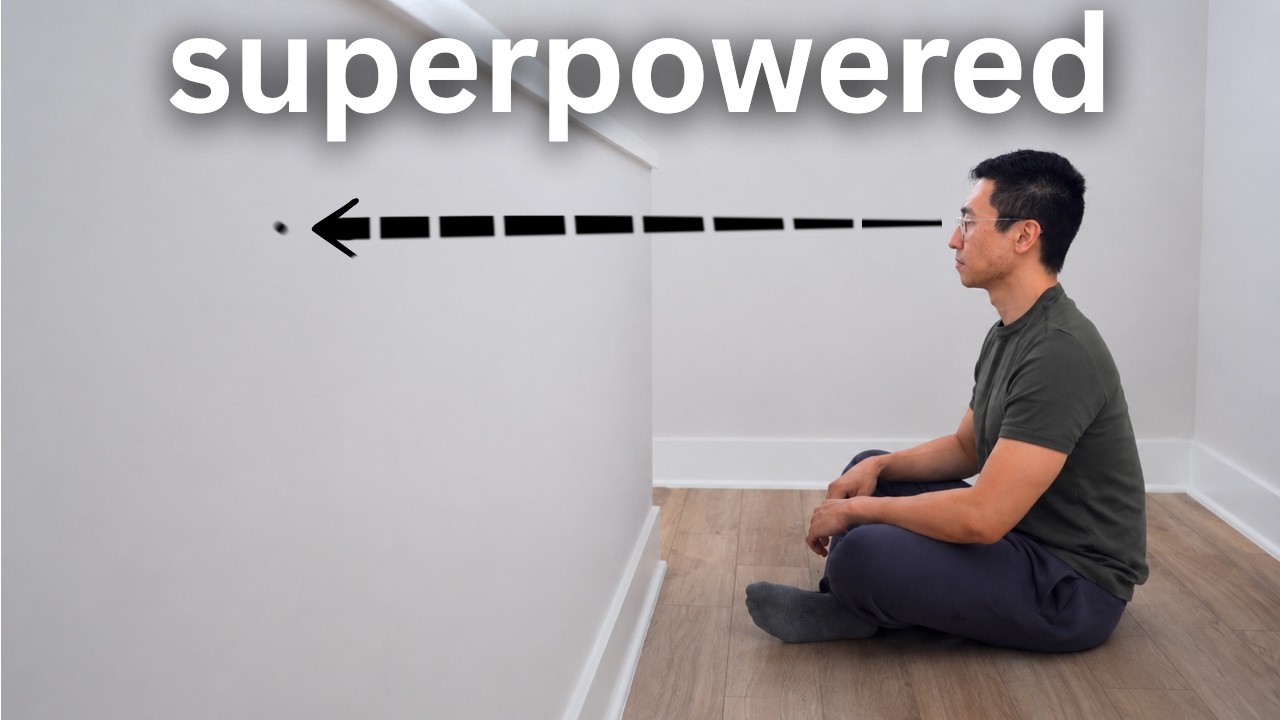
- The core training involves deliberately directing attention to a neutral stimulus, like a dot on the wall, to strengthen the TPN.
- This practice helps metabolize neurotransmitters associated with emotional centers, weakening negative thought loops and reducing the impact of 'woe is me' thinking.
- The goal is to increase the 'signal-to-noise ratio' of the mind, meaning a higher percentage of thoughts are focused on the task at hand.
- This level emphasizes sustained, boring focus without external aids like caffeine, building a baseline ability to concentrate.
- Level two progresses to applying focused attention to more complex, everyday tasks, like brushing teeth or drinking water.
- The objective is to achieve a state of 'flow' or 'the zone,' where attention is fully locked onto the activity.
- Entering the zone leads to more accurate information processing, better pattern recognition, and consequently, superior decision-making.
- This level trains the brain to enter a state of hyperfocus on command, improving overall effectiveness.
- Level three involves applying hyperfocus in high-stakes social situations, such as conversations with attractive individuals.
- Instead of succumbing to DMN-driven anxiety and self-consciousness, one focuses on minute details of the interaction, like eye color or vocal tone.
- This intense focus quiets the ego, increases brain capacity for processing social cues, and enhances listening skills.
- The result is improved charisma, better pattern recognition in social dynamics, and increased emotional intelligence, making one appear more attractive and fearless.
- Level four integrates focus training with physiological regulation techniques, such as the 'cyclic sigh,' to manage stress.
- This involves maintaining TPN focus even when faced with intense pressure or frightening situations, treating them as training opportunities.
- The goal is to stay out of fear centers by observing stressful events with calm, detailed attention, increasing one's 'frame rate' of perception.
- This highest level allows for clear decision-making and effective action amidst chaos, leveraging heightened awareness.
Key takeaways
- The battle between the Task Positive Network (TPN) and the Default Mode Network (DMN) significantly impacts our focus, performance, and self-perception.
- Deliberately training the TPN through sustained focus on neutral stimuli is a powerful method for strengthening concentration and reducing anxiety.
- Increasing the 'signal-to-noise ratio' of the mind allows for greater presence and effectiveness in all aspects of life.
- Mastering focus enables individuals to enter a state of 'flow' or 'the zone' on command, leading to better decision-making and pattern recognition.
- Enhanced focus directly boosts charisma and emotional intelligence by reducing self-consciousness and improving the ability to perceive social cues.
- Advanced focus training involves integrating physiological regulation techniques to maintain composure and effectiveness under extreme stress.
- Every moment can be approached as a 'painting' to focus on, transforming perception and enhancing appreciation for the present experience.
Key terms
Test your understanding
- What are the primary functions of the Task Positive Network (TPN) and the Default Mode Network (DMN)?
- How does an overactive Default Mode Network contribute to anxiety and self-consciousness?
- Describe the process of Level 1 focus training and why focusing on 'boring' tasks is beneficial.
- What are the key benefits of achieving 'the zone' or flow state, as described in Level 2?
- How can the focus training techniques discussed be applied to improve charisma and social interactions (Level 3)?
- Explain the concept of Level 4 training and how physiological calibration aids in managing stress.