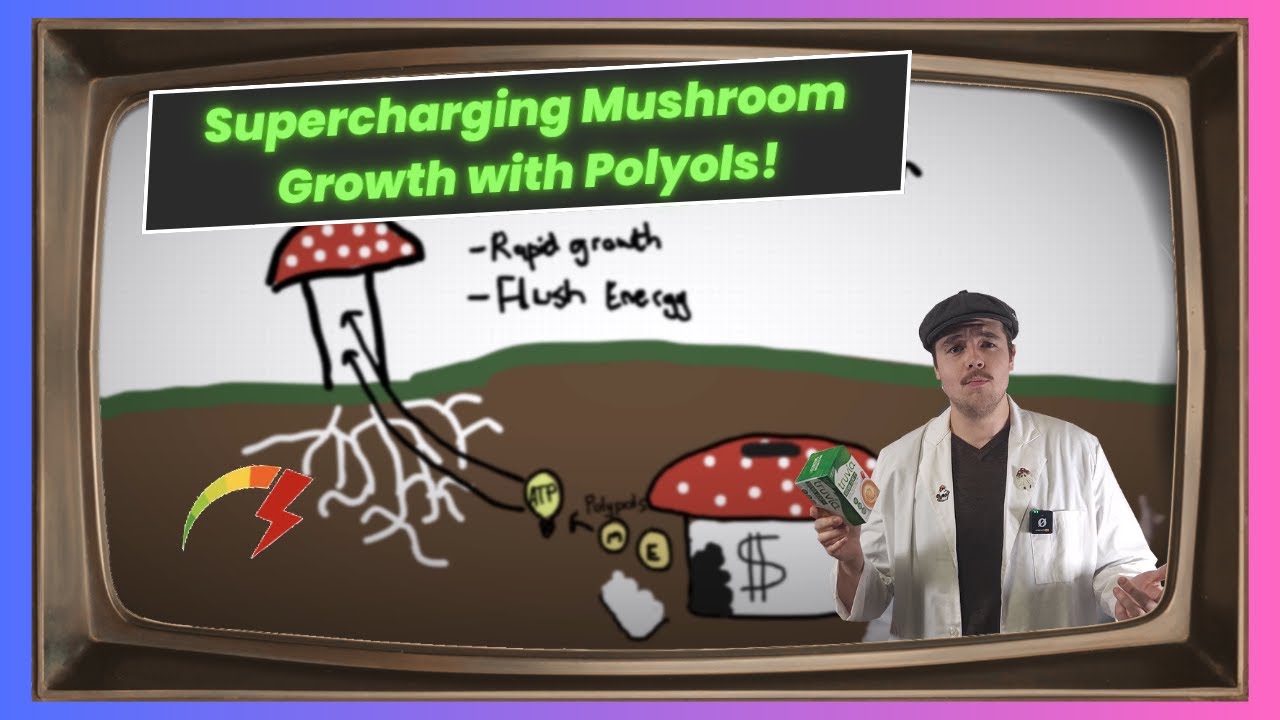
Supercharging Mushrooms with Sugar Alcohols: Erythritol Experiments & Polyol Breakdown
The Fungi Files
Overview
This video explores how mushrooms store and utilize energy, focusing on a class of compounds called polyols (sugar alcohols). Unlike plants and animals, fungi use polyols for energy storage and transport. The video details the fungal digestive process, energy production via glycolysis and the TCA cycle, and the conversion of sugars into polyols for later use, akin to a savings account. It then proposes and demonstrates an experiment using erythritol (a sugar alcohol) to supplement mushroom growth, hypothesizing that it will speed up colonization and enhance fruiting by providing a readily available energy source. Finally, it introduces the concept of recycling spent mushroom blocks to extract these valuable polyols for future cultivation, promoting sustainability.
Save this permanently with flashcards, quizzes, and AI chat
Chapters
- Mushrooms store and transport energy using polyols (sugar alcohols), differing from plants and animals.
- Fungi digest external organic matter by secreting enzymes, then absorbing the broken-down nutrients.
- Absorbed sugars are converted into ATP (energy currency) through glycolysis and the TCA cycle.
- Excess energy is stored as polyols, acting as a 'piggy bank' for later use, especially during fruiting.
- Supplementing with polyols like erythritol can bypass initial energy conversion steps for the fungus.
- This provides a 'shortcut' energy source, potentially accelerating mycelial colonization and enhancing fruiting.
- The experiment involves creating a solution of erythritol (using Truvia packets) and using it to hydrate grain spawn and liquid culture media.
- A control group (no sweetener) and an experimental group (with sweetener) are set up for comparison.
- Spent mushroom blocks still contain significant amounts of valuable polyols and nutrients.
- These water-soluble compounds can be extracted by boiling the spent blocks in water, potentially with pH modifiers like baking soda or citric acid.
- The resulting liquid can be sterilized and used as a nutrient-rich medium for liquid cultures or as a hydrating agent for new substrates.
- This recycling method offers a sustainable way to reuse resources and reduce waste in mushroom cultivation.
Key takeaways
- Fungi uniquely utilize polyols for energy storage and transport, acting as a reserve fuel source.
- Supplementing with readily available polyols like erythritol may accelerate mushroom growth cycles.
- The fungal digestive process involves external enzyme secretion followed by nutrient absorption.
- Energy production in fungi relies on metabolic pathways like glycolysis and the TCA cycle.
- Polyols can be directly used or converted to ATP to fuel rapid growth, such as during fruiting.
- Recycling spent mushroom blocks offers a sustainable method to recover valuable nutrients and polyols.
- Understanding fungal metabolism allows for innovative cultivation techniques to enhance yields and efficiency.
Key terms
Test your understanding
- How do mushrooms store energy differently from plants and animals, and what compounds are involved?
- Describe the external digestive process used by fungal mycelium.
- What are the two main metabolic pathways mentioned for converting sugars into usable energy within the fungus?
- Explain the concept of polyols acting as a 'piggy bank' for fungal energy reserves.
- What is the hypothesis behind supplementing mushroom grows with erythritol, and how was it tested in the video?
- How can spent mushroom blocks be repurposed to benefit future cultivation efforts?