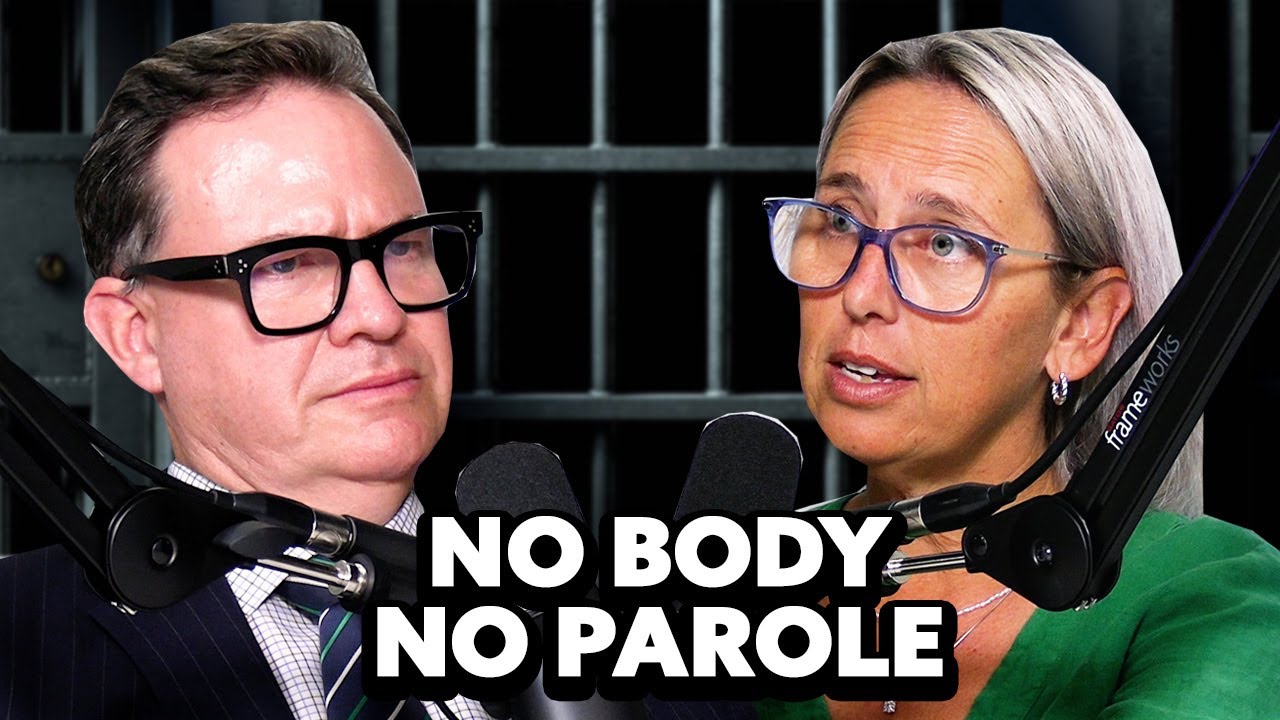
No Body, No Parole | Episode 23 | Justice Matters Podcast
Justice Matters Podcast
Overview
This episode of Justice Matters Podcast discusses the 'no body, no parole' legislation, a law that prevents offenders convicted of homicide from being eligible for parole if the victim's body or remains have not been located, and if the offender has not cooperated satisfactorily in their recovery. The hosts, Joe and Lizzy, explore the origins, purpose, and problematic aspects of this law, examining several high-profile cases in Australia where it has been applied or debated. They highlight the tension between providing closure for victims' families and the potential for wrongful convictions or unfair sentencing, ultimately questioning the efficacy and fairness of the legislation.
Save this permanently with flashcards, quizzes, and AI chat
Chapters
- The 'no body, no parole' law states that individuals convicted of homicide offenses (murder or manslaughter) are ineligible for parole if the victim's body or remains are not found, and they haven't cooperated satisfactorily in locating them.
- Parole eligibility is a standard consideration for most prison sentences, allowing for supervised release into the community after a portion of the sentence is served.
- This legislation effectively acts as a 'never to be released' provision for some offenders, as parole eligibility is removed.
- The law was introduced partly in response to victim advocacy groups seeking greater closure, such as in the Palmerville Station murders where the victim's body was never found.
- Legislators argue the law minimizes the suffering of victims' families by encouraging offenders to reveal the location of remains, aligning with the retributive aspect of punishment.
- Critics argue that withholding body location is already considered during sentencing and that this law imposes an additional, potentially indefinite punishment.
- A key issue is defining 'satisfactory cooperation,' as parole boards rely on police assessments, which can be subjective.
- The law may unfairly penalize offenders who genuinely do not know the location of the remains, or whose cooperation is hampered by circumstances beyond their control.
- Haley Dodd, a 17-year-old, disappeared in 1999, and her body was never found.
- Frank Walk was convicted of her murder, with DNA evidence found in his car seat linking him to the crime.
- The 'no body, no parole' law in WA was a significant factor in the case, driven by Haley's mother's campaign for closure.
- Walk was convicted of manslaughter on retrial and sentenced to 18 years, making him subject to the 'no body, no parole' provisions.
- Matthew Armitage and co-accused were convicted of murder, torture, and interfering with a body in relation to the death of Shawn Barker.
- Appeals reduced murder convictions to manslaughter, and torture charges were dropped.
- Armitage was denied parole under the 'no body, no parole' law because the victim's hands, feet, and part of a shin bone were missing.
- The Court of Appeal later ruled the law did not apply as all existing remains had been located, and the missing parts were likely lost to animal predation, leading to his release pending High Court review.
- Kelly Lane was convicted of murdering her two-day-old daughter, Teegan, in 1999, with no body or direct evidence found.
- Her conviction was based on circumstantial evidence, her inconsistent statements, and the disappearance of the infant.
- Lane was sentenced to 18 years, with parole eligibility in 2023, after NSW introduced 'Lind's Law' (no body, no parole).
- Her parole was refused because she maintained her daughter might be alive and thus could not cooperate in locating a body, and the original sentencing judge expressed reservations about the law's application.
- The 'no body, no parole' law is present in most Australian states, with Tasmania and New Zealand being notable exceptions.
- A significant criticism is its potential to punish wrongfully convicted individuals indefinitely.
- The law can interfere with a sentencing judge's intention by extending actual prison time beyond what was originally contemplated.
- The case of Shawn Dennis, who received parole despite his victim's body not being found, suggests that cooperation and guilty pleas can influence parole decisions even without body recovery.
Key takeaways
- The 'no body, no parole' law is a significant departure from standard parole eligibility, creating a potential for indefinite detention for homicide offenders.
- The law aims to provide closure for victims' families but faces criticism for potentially punishing the wrongfully convicted and undermining judicial sentencing intentions.
- Defining 'satisfactory cooperation' and 'remains' are critical legal challenges within the application of this legislation, as seen in the Matthew Armitage case.
- Circumstantial evidence and inconsistent statements can lead to convictions in 'no body' cases, raising concerns about the risk of wrongful convictions being subject to indefinite parole ineligibility.
- The effectiveness and fairness of 'no body, no parole' laws are debated, with some cases showing successful application and others highlighting significant injustices.
- The law's application can be influenced by factors like guilty pleas and the perceived level of cooperation, as demonstrated by contrasting cases.
- The ongoing legal challenges and differing interpretations suggest that the 'no body, no parole' legislation is a complex and evolving area of law.
Key terms
Test your understanding
- What are the core conditions under which the 'no body, no parole' legislation prevents an offender from being eligible for parole?
- Why do legislators argue that the 'no body, no parole' law is a necessary component of punishment, and what are the main criticisms of this justification?
- How does the definition of 'satisfactory cooperation' and 'remains' create legal challenges in the application of 'no body, no parole' laws, as illustrated by the Matthew Armitage case?
- What are the potential consequences of applying 'no body, no parole' laws in cases where there is a risk of wrongful conviction or where the victim's body is genuinely undiscoverable?
- How can the 'no body, no parole' legislation potentially conflict with the sentencing intentions of a judge, and what does this imply about the balance of power in the justice system?