12:44
No, L Can't Catch Epstein
Nucha
Overview
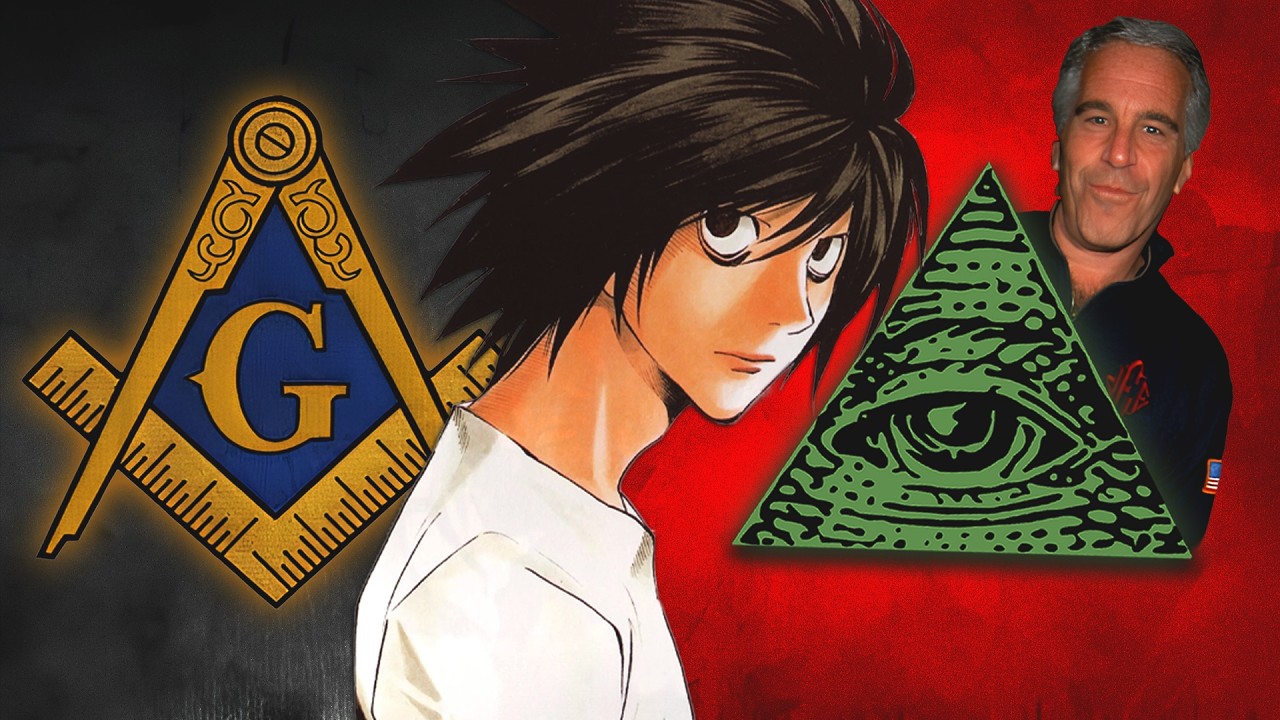
This video critically analyzes a hypothetical scenario where the detective L from Death Note attempts to catch Jeffrey Epstein. The presenter argues against the premise that L could succeed, citing misconceptions about L's character, Epstein's likely behavior, and the systemic power structures involved. The core argument is that L's motivation is the thrill of victory, which wouldn't be present in a case where the true culprits are untouchable and Epstein is merely a scapegoat. The video also touches on the differences between the Kira case and the Epstein case, highlighting L's strategic approach based on the nature of the adversary.
How was this?
Save this permanently with flashcards, quizzes, and AI chat
Chapters
- The video critiques a hypothetical scenario where L catches Epstein in under 5 minutes.
- The original video's claims about L solving a World War III scenario as a child are based on an alternate timeline, not the main anime/manga continuity.
- The '5-minute reading' claim is misinterpreted; it likely refers to prior knowledge, not rapid reading.
- The premise of Epstein inviting L to his island is highly improbable due to Epstein's need for control and L's anonymous nature.
Understanding these initial misconceptions is crucial because they form the flawed foundation upon which the original video's entire scenario is built, making it logically unsound from the start.
The claim that L solved World War III as a child is attributed to an alternate Death Note timeline, not the primary L from the anime and manga.
- Epstein's operations relied on controlling individuals through their identities and connections to systems.
- L's anonymous and untraceable nature makes him a threat Epstein would likely avoid inviting, as he cannot be controlled or manipulated.
- Inviting L would be too reckless for Epstein, as L has no 'strings attached' to the system that Epstein exploits.
- Even if L used a proxy, inviting him directly to the island would be a liability Epstein would not risk.
This highlights the fundamental mismatch between Epstein's modus operandi of control through manipulation and L's unique, unmanipulable identity, making the proposed interaction highly unlikely.
Epstein's web of connections was maintained by having control over people's identities and their ties to various systems, a method that would be ineffective against the anonymous L.
- The idea of L secretly accompanying Watadi to the island via helicopter is improbable, as Epstein's pilots would likely control access.
- The proposed motive for L to record Epstein for evidence is questionable, as L gains little and risks much.
- L's strategy of leaking information to journalists and using rivals to pressure Epstein's clients is a plausible tactic but overlooks systemic protection.
- The scenario assumes Epstein would be the ultimate fall guy, with more powerful figures remaining untouched.
This section dissects the proposed plan of action, revealing its logistical weaknesses and its failure to account for the deeper, systemic powers protecting individuals like Epstein.
The scenario suggests L would record Epstein, but the presenter questions L's ability to gain access to the helicopter and the overall benefit L would derive from such a risky maneuver.
- L's primary motivation is the thrill of victory and intellectual challenge, not altruistic justice.
- The Epstein case lacks a clear 'victory' for L because the true culprits are untouchable and operate within a system that protects them.
- If there's no scope for a definitive win, L would likely not engage with the case, as it doesn't fulfill his core drive.
- L, despite his brilliance, is not omniscient or omnipotent and can make mistakes, especially against powerful, unseen adversaries.
Understanding L's specific motivations is key to realizing why he would or would not pursue a case, and why the Epstein situation, with its untouchable masterminds, wouldn't appeal to him.
L's drive is the 'taste of victory'; if a case offers no clear path to winning against the ultimate powers, he wouldn't be motivated to take it.
- The Kira case involved a supernatural element (Death Note) and a clear, albeit powerful, adversary (Light Yagami).
- L knew the Kira case, while dangerous, had a solvable aspect and a clear opponent he could strategize against.
- The Epstein case involves powerful, influential individuals operating within a corrupt system, making the 'true culprits' effectively untouchable.
- L would recognize that Epstein is a scapegoat, and pursuing him alone wouldn't lead to the ultimate victory he seeks.
This comparison clarifies why L's approach to the supernatural Kira case, where he saw a path to victory, differs fundamentally from how he would likely perceive the Epstein case, which is mired in systemic corruption and hidden powers.
In the Kira case, L faced a singular, identifiable antagonist (Light Yagami) and a supernatural tool, allowing for a strategic battle. In the Epstein case, the adversaries are diffuse, powerful, and protected by the system itself.
Key takeaways
- L's participation in any case is driven by the intellectual challenge and the pursuit of victory, not by a desire for justice.
- Epstein's power structure relied on controlling individuals through their identities and systemic ties, making him vulnerable to manipulation.
- L's anonymity is a double-edged sword; it makes him hard to control but also means he has no leverage or 'strings' that can be pulled by adversaries.
- The hypothetical scenario of L inviting Epstein to his island is flawed because Epstein would not risk interacting with an uncontrollable, anonymous entity.
- The systemic protection surrounding powerful figures like Epstein means that even if one individual is caught, the larger network remains intact.
- L would likely recognize Epstein as a scapegoat and deem the case unwinnable in terms of achieving ultimate victory, thus avoiding it.
- The nature of the adversary and the potential for a definitive win are critical factors in L's decision-making process for taking on a case.
Key terms
L (Death Note)Jeffrey EpsteinHypothetical ScenarioAlternate TimelineBeyond BirthdayNaomi MisoraFBI DirectorEpstein IslandSystemic ControlAnonymityScapegoatKira CaseModus OperandiIntellectual Challenge
Test your understanding
- What is the primary motivation behind L's decision to take on a case, according to the video?
- Why would Epstein's control-based operations make him hesitant to interact with an anonymous figure like L?
- How does the presenter differentiate between the solvability of the Kira case and the Epstein case from L's perspective?
- What systemic factors would prevent L from achieving a definitive victory even if he managed to expose Epstein?
- Explain why the presenter believes L would likely not engage with the Epstein case at all, despite his detective skills.