7:55
How a Car Engine Works
Animagraffs
Overview
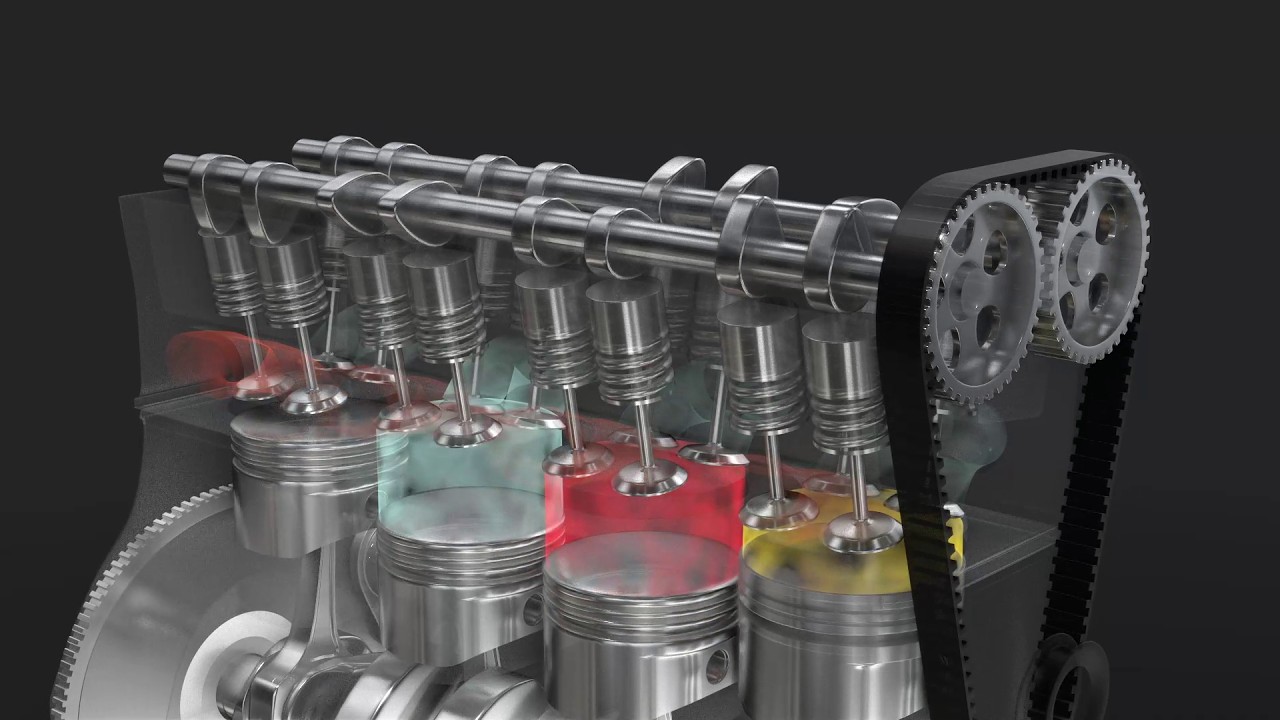
This video explains the fundamental workings of a car engine, focusing on the four-stroke combustion cycle that powers most vehicles. It details the roles of key components like pistons, crankshafts, valves, and camshafts. The explanation extends to the supporting systems essential for engine operation, including fuel delivery, air intake, cooling, lubrication, electrical systems (ignition and charging), and exhaust management. The video emphasizes how these parts and systems work together to generate and transfer power, ultimately driving the vehicle.
How was this?
Save this permanently with flashcards, quizzes, and AI chat
Chapters
- The engine operates on a four-stroke cycle: intake, compression, power, and exhaust.
- During intake, the piston moves down, drawing an air-fuel mixture into the cylinder.
- During compression, the piston moves up with valves closed, squeezing the mixture for a more powerful explosion.
- The power stroke occurs when a spark ignites the compressed mixture, forcing the piston down and generating power.
- During exhaust, the piston moves up, pushing burnt gases out of the cylinder.
Understanding the four-stroke cycle is crucial because it's the core process by which internal combustion engines convert fuel into the mechanical energy needed to move a vehicle.
The cycle begins with the piston descending (intake), then rising to compress the mixture (compression), followed by an explosion pushing it down (power), and finally rising again to expel exhaust (exhaust).
- Multiple pistons fire in a specific sequence (e.g., 1-3-4-2) to ensure smooth and continuous power delivery.
- Camshafts, with their specially shaped cams, precisely open and close the engine valves.
- A timing belt or chain synchronizes the camshafts and crankshaft, ensuring all components work together.
- The crankshaft converts the up-and-down motion of the pistons into rotational motion, which is then transferred out of the engine.
- Crankshafts have counterweights to balance the force of the pistons, leading to smooth operation and defining RPM (revolutions per minute).
This mechanism explains how the chaotic up-and-down motion of individual pistons is transformed into the smooth, rotational force needed to turn the car's wheels.
The connecting rod links each piston to the crankshaft, translating the piston's powerful downward thrust during the power stroke into the crankshaft's rotation.
- The engine block houses the cylinders and crankshaft, while the cylinder head contains the valves, ports, and camshafts.
- A flywheel connects to the crankshaft, smoothing out power delivery and providing a point for the transmission and starter motor to attach.
- Engines come in various cylinder configurations, such as inline (four or six cylinders in a row) or V-shaped (six or eight cylinders angled in a 'V').
- Despite different arrangements, the fundamental components and operating principles remain consistent.
Knowing the basic structure and common configurations helps in understanding how engines are physically built and why different designs exist, even if their core function is the same.
A common setup is a four-cylinder engine with all cylinders arranged in a single line within the engine block.
- The air intake system filters incoming air and directs it to the intake manifold, where it mixes with fuel.
- Fuel is delivered from the tank by a pump, filtered, and precisely injected into the intake port by fuel injectors.
- The cooling system uses a mixture of coolant (anti-freeze) circulated through channels in the engine block and head to absorb heat.
- A radiator, with fins and tubes, cools the hot coolant by passing air over it, facilitated by a fan.
- A water pump maintains coolant flow and pressure, while a thermostat regulates temperature by controlling coolant circulation to the radiator.
These systems are vital because they ensure the engine receives the correct mixture of air and fuel, prevents overheating, and maintains optimal operating temperatures for efficiency and longevity.
Coolant flows through passages in the engine block and cylinder head, absorbing heat, and then circulates to the radiator where air passing over its fins cools the liquid down.
- Spark plugs provide the electrical spark needed to ignite the air-fuel mixture, triggered by the Engine Control Module (ECM).
- The ECM acts as the engine's computer, managing critical functions like ignition timing and fuel mixture.
- The alternator converts mechanical engine energy into electrical energy to charge the battery and power systems while the engine runs.
- The battery supplies the initial power needed for the starter motor to begin the engine's rotation.
- Motor oil lubricates moving parts, cleans the engine, prevents corrosion, improves sealing, and carries heat away.
- Oil is circulated through oil galleries by an oil pump, filtered by an oil filter, and stored in the oil pan.
The electrical system ignites the fuel and manages engine operations, while the lubrication system prevents catastrophic wear and tear on the engine's many moving parts.
The ECM tells the ignition coil pack exactly when to send a high-voltage pulse to the spark plug, creating the spark that ignites the fuel-air mixture.
- The exhaust manifold collects burnt gases from all cylinders into a single pipe.
- The catalytic converter treats the exhaust gases, reducing harmful pollutants.
- The muffler reduces the noise produced by the escaping exhaust gases.
- The entire exhaust system directs waste gases away from the engine and vehicle occupants.
The exhaust system safely removes harmful combustion byproducts from the engine and vehicle, while also minimizing noise pollution.
After combustion, the waste gases are funneled through the exhaust manifold, then treated by the catalytic converter, and finally quieted by the muffler before exiting the vehicle.
Key takeaways
- The four-stroke cycle (intake, compression, power, exhaust) is the fundamental process for generating power in most car engines.
- The crankshaft is essential for converting the linear motion of pistons into the rotational motion required to drive a vehicle.
- Synchronized timing between the crankshaft and camshafts, managed by a timing belt/chain, is critical for efficient engine operation.
- Supporting systems like fuel delivery, air intake, cooling, lubrication, electrical, and exhaust are as important as the core combustion process.
- The ECM (Engine Control Module) acts as the brain of the engine, precisely controlling key functions for optimal performance and emissions.
- Lubrication is vital to prevent friction and wear between moving engine parts, extending the engine's lifespan.
- The cooling system prevents the engine from overheating, which could cause severe damage.
Key terms
Four-stroke cyclePistonCylinderIntake valveExhaust valveSpark plugCrankshaftCamshaftTiming belt/chainEngine blockCylinder headFlywheelIntake manifoldFuel injectorCoolantRadiatorThermostatECM (Engine Control Module)AlternatorBatteryMotor oilOil panOil filterExhaust manifoldCatalytic converterMuffler
Test your understanding
- What are the four distinct stages of the internal combustion cycle, and what happens during each stage?
- How does the engine convert the up-and-down motion of the pistons into the rotational motion needed to power the car?
- Why is precise timing between the crankshaft and camshafts essential for engine operation?
- What role does the Engine Control Module (ECM) play in managing the engine's functions?
- Explain the importance of the cooling and lubrication systems for the longevity and performance of a car engine.