Investment Banking Case Competition Pitch Deck Template - Full Breakdown
Chief Analyst
Overview
This video provides a comprehensive breakdown of an investment banking case competition pitch deck template, designed to help students excel in these competitions and boost their resumes. The presenter, who has experience as both a participant and organizer, details the structure and content of a typical pitch deck, emphasizing storytelling and clear analysis. The video covers different types of case competitions, provides examples of situation overviews, and walks through each slide of a template, offering practical advice on design, content, and presentation. The ultimate goal is to equip learners with the knowledge to effectively analyze companies, present strategic recommendations, and communicate their findings in a professional, investment-banking-standard format.
Save this permanently with flashcards, quizzes, and AI chat
Chapters
- Case competitions offer a quick and effective way to enhance a resume, providing relevant experience and talking points for investment banking interviews.
- Participation demonstrates practical application of technical finance concepts, aiding in memorization and interview performance.
- Experience in case competitions provides a significant advantage over peers, especially those from less finance-focused academic backgrounds.
- The resume bullet points generated from case competitions use industry-specific terminology that resonates with investment banking recruiters.
- Student organizations (e.g., university finance clubs, business fraternities) offer introductory case competitions, often with guidance.
- Bank-sponsored competitions are typically more exclusive, often hosted by banks for students within specific programs or academies.
- Off-campus competitions, like the now-discontinued NIBC or the Harvard Global Case Comp, offer broader participation but can vary in focus (e.g., buy-side vs. sell-side).
- Regardless of the type, any case competition involving business problem-solving, research, and valuation is valuable.
- Sell-side advisory cases (e.g., Crocs) require pitching to a company's board to be hired as an advisor for a potential sale, focusing on industry positioning, growth, risks, and valuation.
- Bank-sponsored cases for private companies (e.g., Stormcat) often involve a specific seller motivation (like retirement) and require analysis of strategic/financial buyers, emphasizing priorities like maximizing value and preserving culture.
- Buy-side advisory cases (e.g., Ferrari acquiring Pirelli) involve recommending whether to pursue a target acquisition or identify alternatives, focusing on strategic fit, synergies, and valuation.
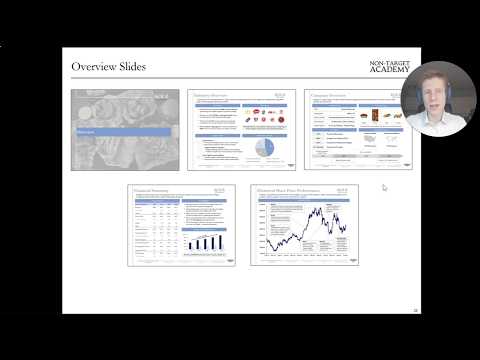
- A standard pitch deck follows a narrative flow: Industry Overview -> Company Overview -> Investment Highlights -> Growth Opportunities -> Risks/Mitigations -> Valuation -> Recommendation.
- Consistent design is crucial: use a 4:3 slide ratio, employ 'Garamond' font, and maintain a clean, professional aesthetic.
- Utilize the 'Slide Master' feature in PowerPoint for standardization of logos, page numbers, and formatting.
- Visuals like charts, icons, and high-quality images enhance clarity and engagement, but should be used judiciously and professionally.
- The Executive Summary previews the entire narrative, highlighting key findings and the final recommendation.
- Industry and Company Overviews establish context, detailing market dynamics, key players, business models, and differentiators.
- Investment Highlights and Growth Opportunities articulate the company's current attractiveness and future potential for buyers.
- Risks and Mitigations address potential challenges and how they can be managed, demonstrating thorough analysis.
- Valuation sections (Comparables, Precedent Transactions, DCF) provide a range of potential deal values, supported by rigorous analysis.
- The 'Football Field' chart summarizes valuation ranges from various methodologies (Comparables, Precedent Transactions, DCF, LBOs) to establish a potential deal price.
- Comparable Company Analysis involves selecting similar public companies and benchmarking their financial metrics and valuation multiples.
- Precedent Transaction Analysis examines recent M&A deals involving similar companies to gauge market pricing.
- Discounted Cash Flow (DCF) analysis projects future cash flows and discounts them back to present value, often including sensitivity analyses.
- The final recommendation synthesizes the analysis, considering potential strategic and financial buyers, their motivations, and the optimal sale process.
- Differentiating between strategic buyers (seeking synergies, market share) and financial buyers (e.g., private equity, seeking financial returns) is crucial.
- Identifying specific potential buyers involves assessing their financial capacity, strategic fit, and past investment activity.
- The recommended sale process (e.g., broad auction, limited outreach, single-party engagement) depends on the company's priorities, market conditions, and the number of interested parties.
- A clear timeline for the proposed sale process demonstrates a structured approach to execution.
Key takeaways
- Investment banking case competitions are invaluable for resume building, practical skill development, and interview preparation.
- A well-structured pitch deck tells a compelling story, moving logically from industry context to a data-driven recommendation.
- Professional presentation design and consistent formatting are as important as the analytical rigor in investment banking.
- Thorough valuation analysis, using multiple methodologies, is essential to support any strategic recommendation.
- Understanding the motivations and capabilities of potential strategic and financial buyers is key to structuring a successful deal process.
- Clearly articulating risks and proposing mitigation strategies demonstrates a comprehensive understanding of the business.
- Tailoring the pitch deck and recommendation to the specific case prompt and client priorities is paramount.
Key terms
Test your understanding
- What are the primary benefits of participating in investment banking case competitions for a student's career development?
- How does the structure of a pitch deck facilitate the storytelling required in investment banking analysis?
- What are the key differences between strategic and financial buyers, and why is this distinction important in a pitch?
- Describe the purpose of the 'Football Field' valuation summary and how it informs a final recommendation.
- How can attention to detail in slide design and formatting impact the perception of an investment banking pitch?