3:59
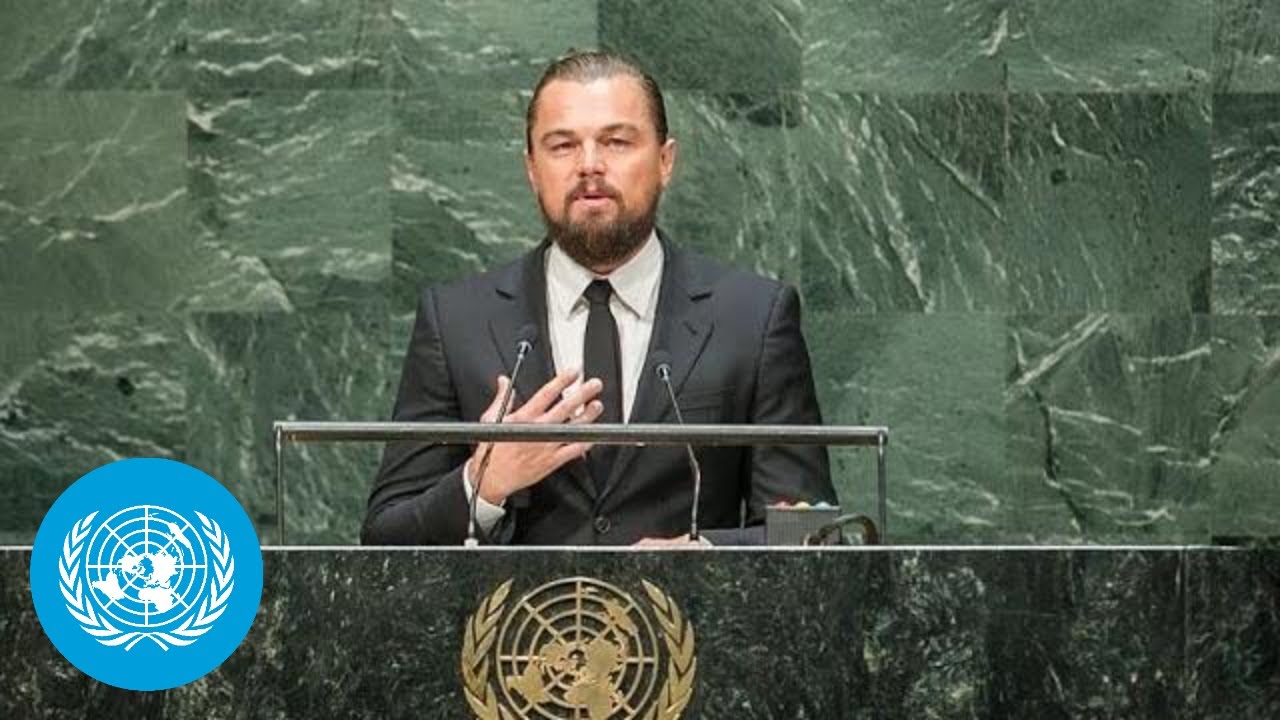
Leonardo DiCaprio (UN Messenger of Peace) at the opening of Climate Summit 2014
United Nations
Overview
Leonardo DiCaprio, appointed UN Messenger of Peace, addresses the Climate Summit 2014, emphasizing that climate change is a present reality, not a distant threat. He highlights the urgency of the crisis, citing scientific evidence and the growing consensus among various sectors, including the military. DiCaprio calls for large-scale governmental and industrial action, advocating for policies like carbon pricing and the elimination of fossil fuel subsidies, arguing that economic prosperity is intrinsically linked to ecosystem health. He frames climate action as a matter of human survival and a fundamental right, urging world leaders to act decisively and courageously.
How was this?
Save this permanently with flashcards, quizzes, and AI chat
Chapters
- Climate change is not a future problem or a fictional issue, but a present and undeniable reality.
- Evidence of accelerated climate change includes intensifying droughts, ocean acidification, extreme weather, and rapid melting of ice sheets.
- The scientific community, industry, governments, and even the US military recognize climate change as a significant threat.
Understanding the immediate and observable impacts of climate change shifts the perspective from a theoretical concern to an urgent crisis requiring action.
The melting of the West Antarctic and Greenland ice sheets decades ahead of scientific projections serves as a concrete indicator of accelerated climate change.
- Addressing the climate crisis requires more than individual lifestyle changes like reducing energy consumption or buying hybrid cars.
- The scale of the disaster necessitates decisive, large-scale action from industries and governments worldwide.
- Ending the "free ride" for industrial polluters through subsidies is crucial for environmental and economic sustainability.
This distinction clarifies that systemic problems demand systemic solutions, shifting the focus from personal guilt to collective responsibility and policy change.
Eliminating government subsidies for oil, coal, and gas companies is presented as a necessary large-scale industrial policy change.
- Investing in renewable energy is not only achievable but also represents sound economic policy.
- Economic survival is dependent on the health of our ecosystems; collapsing ecosystems will lead to economic collapse.
- Access to clean air and a livable climate are fundamental human rights, making climate action a matter of survival, not just politics.
Framing climate action as both an economic opportunity and a human right underscores its critical importance and broad appeal beyond partisan divides.
The argument that the economy will die if ecosystems collapse links environmental health directly to economic well-being.
- The momentum for climate action, demonstrated by public marches, must be met by leaders' decisive action.
- World leaders have a historic opportunity to address humankind's greatest challenge.
- Courage and honesty are required to confront the climate crisis effectively.
This concluding call to action emphasizes the critical juncture humanity faces and the responsibility of leaders to respond to the urgency.
The mention of 400,000 people marching in New York on Sunday illustrates the public's demand for action.
Key takeaways
- Climate change is a present, scientifically validated crisis with observable, severe impacts.
- Effective climate solutions require systemic changes in government policy and industrial practices, not just individual efforts.
- Economic prosperity is fundamentally linked to environmental health; ecosystem collapse threatens economic stability.
- Transitioning to renewable energy offers both environmental and economic benefits.
- Clean air and a livable climate are basic human rights essential for survival.
- World leaders must act with courage and honesty to address the urgent challenge of climate change.
- Public demand for climate action is growing and creates momentum for policy change.
Key terms
Climate CrisisMessenger of PeaceAccelerated Climate ChangeOcean AcidificationExtreme Weather EventsCarbon EmissionsFossil Fuel SubsidiesRenewable EnergyEcosystem CollapseHuman Rights
Test your understanding
- What are the key pieces of evidence presented that demonstrate climate change is happening now?
- Why are individual actions insufficient to solve the climate crisis, according to the speaker?
- How does the speaker connect economic stability to environmental health?
- What specific policy changes does DiCaprio advocate for to address climate change?
- What does the speaker mean by framing climate action as a matter of human rights and survival?