18:50
The urgency of intersectionality | Kimberlé Crenshaw | TED
TED
Overview
This video introduces the concept of intersectionality, a framework for understanding how various social identities like race, gender, and class overlap and create unique experiences of discrimination and privilege. The speaker, Kimberlé Crenshaw, uses real-life examples, including cases of police brutality against Black women, to illustrate how existing social justice frameworks often fail to account for individuals who fall at the intersection of multiple marginalized identities. The talk emphasizes the urgency of recognizing and addressing these overlapping oppressions to achieve true social justice.
How was this?
Save this permanently with flashcards, quizzes, and AI chat
Chapters
- Many people are unaware of the extent of police violence against Black women, despite widespread awareness of police brutality against Black men.
- This lack of awareness stems from a 'framing problem': existing social and media narratives do not adequately capture the experiences of Black women.
- When facts don't fit current frames, they are difficult for people to process and remember, leading to their exclusion from public consciousness.
- This exclusion means that policymakers and the public often fail to address the specific injustices faced by this group.
This chapter highlights how dominant narratives can obscure the experiences of marginalized groups, demonstrating the need for broader perspectives in understanding social issues.
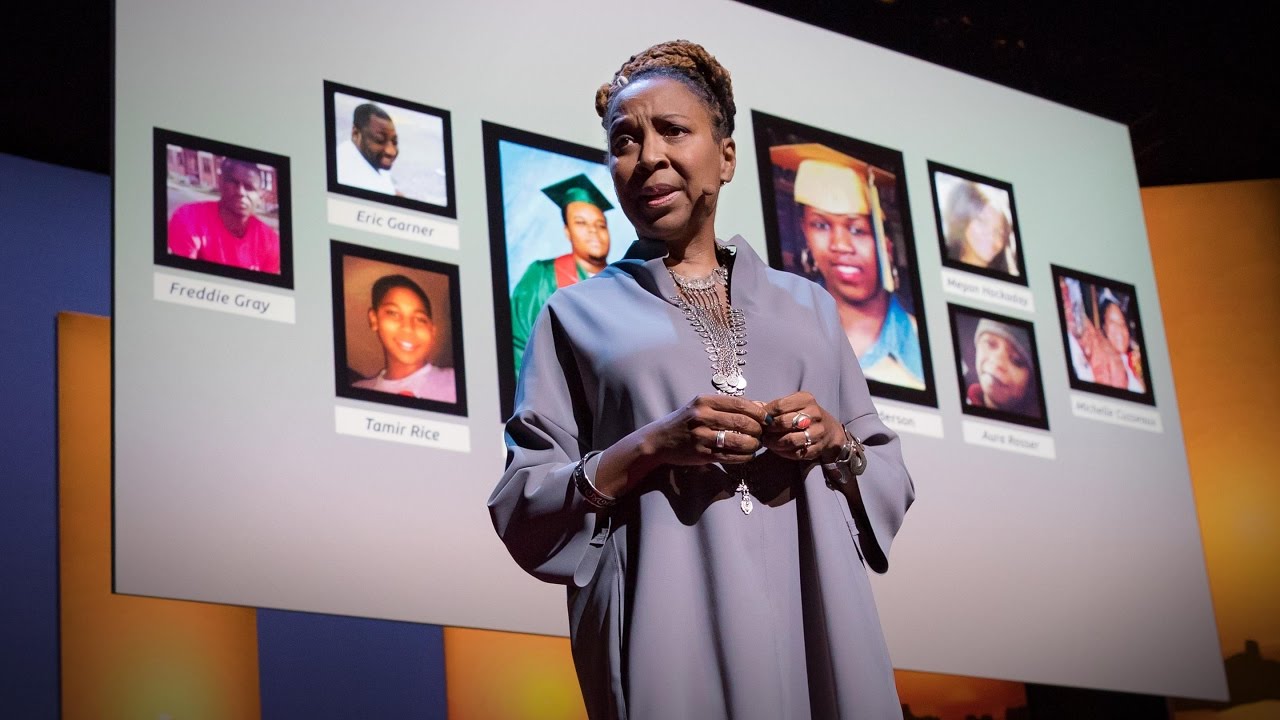
An exercise where audience members recognize names of Black men killed by police but not Black women killed by police, illustrating the differential awareness.
- Intersectionality is a term coined to describe how social justice problems like racism and sexism can overlap, creating compounded forms of injustice.
- The 'trickle-down' approach to social justice, where addressing one form of discrimination (e.g., racism) is assumed to benefit all members of a targeted group, often fails.
- Without specific frames to see how social problems impact all members of a group, many individuals fall through the cracks.
- Intersectionality provides a lens to understand these overlapping dynamics and the unique challenges they create.
Understanding intersectionality is crucial for developing more inclusive and effective social justice movements that address the complex realities of discrimination.
The concept is introduced as a way to deal with overlapping social justice problems like racism and sexism.
- Emma DeGraffenreid, a Black woman, faced discrimination when a car manufacturing plant hired Black men for industrial jobs and white women for secretarial roles, but not Black women for any role.
- A judge dismissed her discrimination lawsuit because the employer hired both Black people and women, failing to recognize the combined race and gender discrimination.
- The legal system's refusal to acknowledge discrimination against Black women because their experience wasn't identical to Black men or white women left them unprotected.
- This case lacked a name and a frame, making the injustice invisible and unsolvable within the existing legal structures.
This legal case exemplifies how anti-discrimination laws, when narrowly applied, can fail to protect individuals facing compounded discrimination, underscoring the need for intersectional legal analysis.
Emma DeGraffenreid's lawsuit against a car manufacturing plant for race and gender discrimination, which was dismissed because the employer hired both Black people and women.
- The analogy of a road intersection helps visualize how multiple forces (race, gender) converge.
- Individuals at the intersection experience the simultaneous impact of traffic (hiring policies) from both roads.
- Existing legal frameworks act like an ambulance that only treats injuries occurring on one road (race or gender), ignoring harm at the intersection.
- Intersectionality names and frames this experience of being impacted by multiple forces and potentially abandoned.
This analogy provides a concrete and memorable way to understand how different forms of discrimination can intersect and create unique vulnerabilities.
The metaphor of a road intersection where traffic represents hiring policies based on race and gender, and individuals at the intersection are subject to both.
- Intersectionality applies not only to race and gender but also to other social dynamics like heterosexism, transphobia, xenophobia, and ableism.
- These intersecting social dynamics create unique challenges for marginalized individuals globally.
- The framework also exposes the tragic circumstances of police violence against Black women, which often goes unrecognized.
- The 'Say Her Name' movement aims to bring visibility to Black women and girls killed by police, countering the lack of awareness.
Recognizing the intersectionality of various oppressions is essential for a comprehensive understanding of social injustice and for developing effective advocacy and policy.
The 'Say Her Name' campaign, which emerged to highlight the overlooked issue of police violence against Black women and girls.
- Bearing witness to the experiences and lost lives of marginalized individuals is a crucial first step.
- However, witnessing alone is insufficient; it must lead to action and transformation.
- The failure to see a problem, often due to a lack of appropriate frames, prevents its solution.
- Collective action, like collectively saying the names of victims, can help bring these issues into the light and drive change.
This chapter emphasizes that awareness and empathy must be translated into concrete actions to dismantle systemic injustices and create meaningful social change.
The audience participation in shouting the names of Black women killed by police, symbolizing a collective act of bearing witness and demanding recognition.
Key takeaways
- Dominant social narratives often fail to capture the experiences of individuals at the intersection of multiple marginalized identities.
- Intersectionality is a critical framework for understanding how overlapping systems of oppression create unique forms of discrimination.
- Legal and social justice systems can inadvertently perpetuate injustice by failing to recognize compounded discrimination.
- The lack of visibility for certain groups' experiences is often a 'framing problem' that requires new conceptual tools.
- Bringing overlooked issues into public consciousness requires deliberate efforts, such as naming movements and collective witnessing.
- Effective social justice requires moving beyond awareness to concrete action and systemic transformation.
- The experiences of Black women, particularly regarding police violence, have been historically underrepresented and demand greater attention.
Key terms
IntersectionalityFraming problemSocial justiceDiscriminationRaceGenderOppressionMarginalized identitiesPolice violenceSay Her Name movement
Test your understanding
- What is intersectionality and why is it important for understanding social justice issues?
- How does a 'framing problem' contribute to the invisibility of certain groups' experiences, using the example from the video?
- Explain how the legal dismissal of Emma DeGraffenreid's case illustrates the limitations of anti-discrimination law without an intersectional lens.
- What is the significance of the 'Say Her Name' movement in addressing overlooked forms of violence?
- How can understanding intersectionality help in developing more effective strategies for social change?