1:03:27
Not Racist, But …: The Media and Racism
The Wheeler Centre
Overview
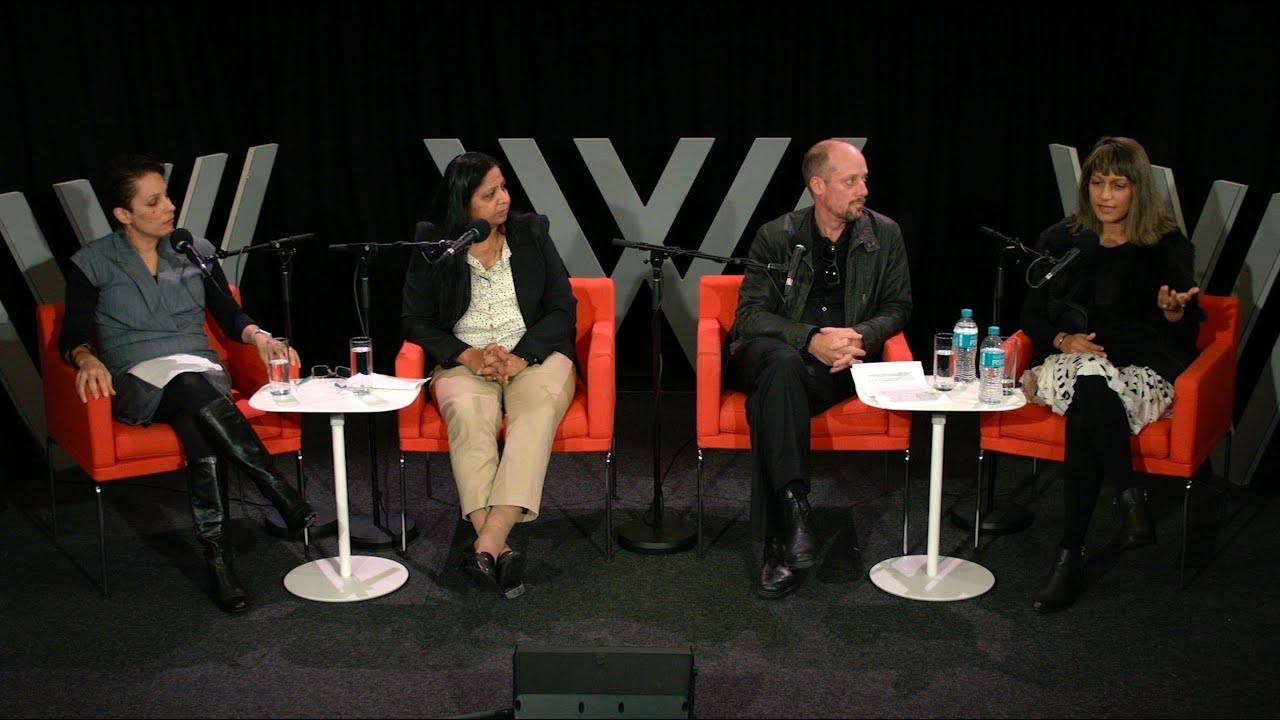
This video discusses the media's role in perpetuating racism through its portrayal of race and religion. Experts analyze how certain groups are racialized in news narratives, leading to harmful stereotypes and societal divisions. The discussion highlights the economic drivers behind sensationalized reporting, the lack of diversity in newsrooms, and the significant real-world consequences for marginalized communities. It explores how media framing can create fear, influence public perception, and impact the willingness of individuals from targeted groups to engage with society.
How was this?
Save this permanently with flashcards, quizzes, and AI chat
Chapters
- Media often frames certain groups, particularly Muslims and people of African descent, through negative stereotypes related to crime, terrorism, or deviance.
- Positive portrayals of these groups are often framed as exceptional, reinforcing the idea that negativity is the norm.
- Muslim women are sometimes portrayed as victims of Muslim men, or as complicit in creating violent men.
- Headlines rarely identify perpetrators as 'European Australian' when committing crimes, unlike 'African Australian' or 'Muslim Australian' headlines, highlighting a double standard in racialization.
Understanding how race and religion are framed in media is crucial because these portrayals shape public perception and can lead to prejudice and discrimination against entire communities.
The absence of headlines like 'European Australian commits crime' compared to the prevalence of 'African Australian commits crime' or 'Muslim Australian commits crime'.
- A content analysis revealed that many news stories on multicultural issues lacked diverse sources, with a significant portion quoting only government officials or no one at all.
- This omission of representation or lack of diverse voices contributes to a sense that media does not adequately cover stories from multicultural backgrounds.
- Certain controversial topics, like Section 18C of the Racial Discrimination Act, receive disproportionate attention, further shaping public discourse.
The way news is produced, including who is quoted and which stories are emphasized, directly impacts the accuracy and fairness of media representation, affecting how diverse communities are understood.
A content analysis of 1,366 news stories found that 40% had no quoted sources, and another 30% only quoted government sources, indicating a lack of diverse perspectives.
- Terms like 'Apex gang' become code words for 'ethnic' or 'African' gangs, allowing commentators and politicians to discuss racialized crime without explicitly using racial descriptors.
- Media descriptors like 'thugs' and 'terrorizing' amplify the sense of an existential crisis, particularly when linked to specific ethnic groups.
- This pattern echoes historical racialized crime panics, such as those focused on Muslim communities in the context of terrorism or African communities in the context of crime and violence.
The use of coded language and sensationalized scripts in media can create and perpetuate harmful associations between race and crime, leading to unfair targeting and fear.
The media's use of 'Apex gang' as a code word to discuss crime involving young people of African descent in Melbourne.
- Reporting on crime, especially when racialized, generates a distorted perception of safety and can be amplified into 'crime panics' for political gain.
- Racialized crime panics tap into deeply entrenched cultural biases, such as the 'black crime' association, which journalists can easily exploit.
- Political actors use law and order narratives to gain traction, particularly during election cycles, by portraying opponents as 'soft on crime'.
Understanding the political and economic motivations behind media coverage helps explain why certain narratives, even if inaccurate, are amplified and sustained.
Politicians using racialized crime narratives to criticize opposing parties and gain electoral advantage.
- Journalistic news values like conflict and crime naturally lend themselves to sensationalized reporting, which can be a strategy to maintain ratings and revenue.
- News organizations, driven by profit, may prioritize stories that attract clicks and views, sometimes by tapping into racial tropes and stereotypes.
- A lack of diversity in newsrooms, stemming from specific educational and lived experiences, can lead to unconscious biases and a failure to represent a broad range of perspectives.
The commercial pressures on media outlets and the homogeneity within newsrooms can inadvertently lead to biased reporting that reinforces societal prejudices.
Newsrooms monitoring real-time online story performance to identify and run with popular, often sensationalized, content that drives advertising revenue.
- Negative media portrayals can force individuals from targeted communities to constantly 'perform' as 'good' or 'moderate' to counteract stereotypes.
- This burden can lead to disengagement from public conversations, as individuals feel boxed into categories and unwilling to condemn actions of unknown others.
- Positive representation, even if limited, can be deeply impactful, but the scarcity of such portrayals often results in one-dimensional characters in popular media.
Harmful media narratives have profound psychological and social effects on individuals from marginalized groups, influencing their self-perception and willingness to participate in society.
Muslim communities initially responding to negative media by trying to prove they are 'good Muslims,' later shifting to a stance of not wanting to be called upon to condemn random acts.
- Challenging media practices is difficult due to the scale of mainstream media reach compared to counter-narratives.
- Solutions include increasing representation in newsrooms, developing codes of practice for ethical reporting on cultural diversity, and supporting alternative media.
- Audience responsibility is also key; the consumption patterns of the public, favoring sensational or biased content, contribute to the problem.
- Racialization in reporting means that crimes committed by individuals from minority groups are remembered longer and linked to their entire community, unlike crimes by white individuals.
Disrupting harmful media practices requires a multi-faceted approach involving media producers, policymakers, and the audience to foster more equitable and accurate representation.
The sustained community resistance and protests against a Channel 7 morning show's insensitive segment on the removal of Indigenous children, leading to some backtracking by the network.
Key takeaways
- Media narratives often racialized certain groups by disproportionately linking them to crime and deviance, while rarely applying the same scrutiny to majority groups.
- Economic incentives and journalistic news values can drive sensationalized reporting, leading media outlets to prioritize clicks and ratings over accuracy and fairness.
- A lack of diversity within newsrooms contributes to unconscious biases and a failure to adequately represent the experiences of multicultural communities.
- Negative media portrayals can impose a significant burden on individuals from targeted communities, impacting their self-esteem and willingness to engage publicly.
- The use of coded language and sensationalized scripts allows for the perpetuation of racial stereotypes without explicit mention of race, making it harder to challenge.
- While challenging dominant media narratives is difficult, solutions involve increasing newsroom diversity, ethical reporting guidelines, and audience awareness of their consumption habits.
- The racialization of crime in media has real-world consequences, including increased fear, discrimination, and even violence against targeted communities.
Key terms
RacializationIslamophobiaMedia RepresentationNews ValuesContent AnalysisCoded LanguageCrime PanicsStereotypesDiversity in NewsroomsBurden of Representation
Test your understanding
- How does the media's framing of crime differ when perpetrators are from majority versus minority groups?
- What are the economic and journalistic factors that contribute to the perpetuation of racial stereotypes in news reporting?
- In what ways do negative media portrayals impact the psychological and social well-being of individuals from targeted communities?
- What concrete steps can be taken by media organizations and audiences to foster more equitable and accurate media representation?
- Why is the concept of 'coded language' significant in understanding how media perpetuates racial bias?