11:16
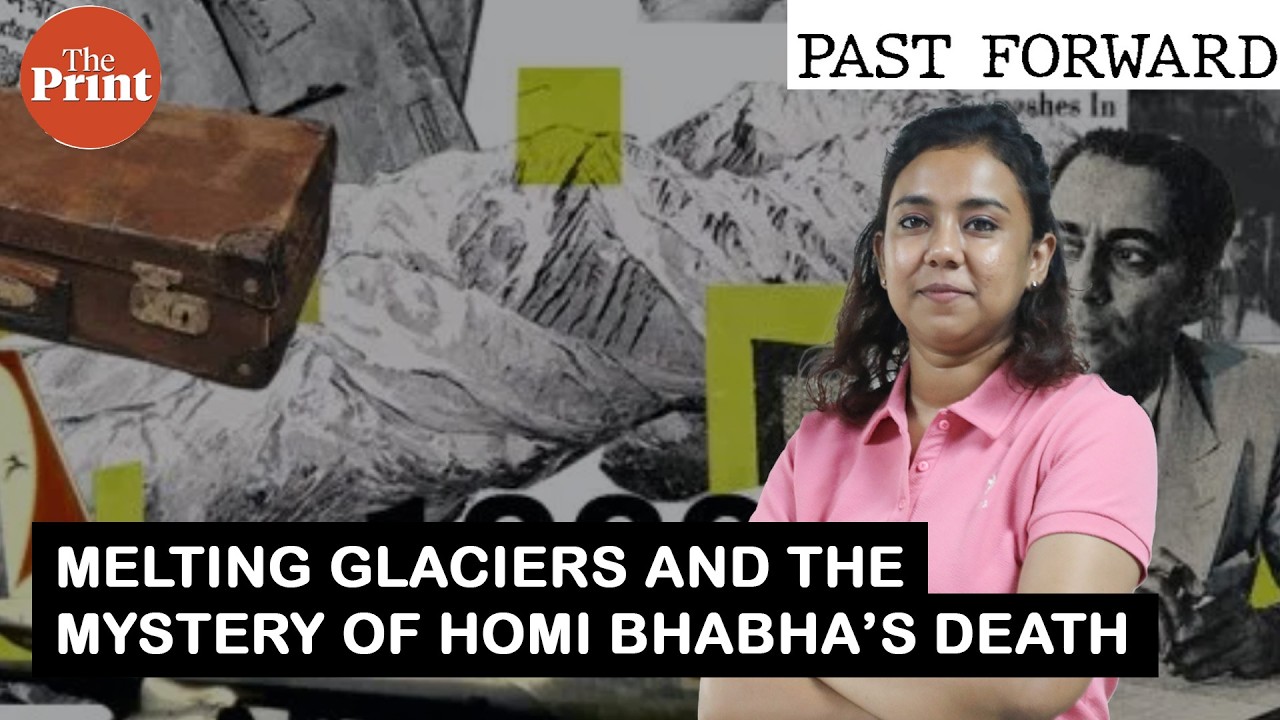
Homi Bhabha’s death: How melting glaciers are now revealing clues to India’s most mysterious crash
ThePrint
Overview
This video explores the mysterious 1966 crash of an Air India flight in the Alps, which killed Homi Bhabha, the father of India's nuclear program. As glaciers in the Alps melt due to climate change, they are revealing fragments of the crash, including aircraft wreckage, diplomatic bags, and even human remains. The discoveries offer a glimpse into a past event while also serving as a stark visual reminder of the dramatic changes occurring in these mountain environments.
How was this?
Save this permanently with flashcards, quizzes, and AI chat
Chapters
- An Air India Boeing 707, known as the Kanchenjunga, crashed into Mont Blanc on January 24, 1966, with 117 people on board, including Homi Bhabha.
- Homi Bhabha was a pivotal figure in establishing India's nuclear program.
- The crash site was extremely difficult to access due to poor visibility, harsh weather, and challenging terrain, leading to the early termination of rescue operations.
- For decades, the ice of Mont Blanc concealed the aircraft and its contents.
This chapter sets the stage for the mystery by detailing the tragic event and the initial challenges in recovering any evidence, highlighting how the mountain preserved the crash site for decades.
The initial rescue operation was called off within 24 hours due to bad weather, leaving the wreckage buried in ice.
- Beginning in 2008, melting glaciers started to expose pieces of the Kanchenjunga wreckage.
- In 2012, a diplomatic bag from India's Ministry of External Affairs was found, containing newspapers and documents remarkably preserved despite over 50 years in ice.
- These recovered newspapers from January 1966 provided context, reporting on Indira Gandhi's impending prime ministership and the recent death of Lal Bahadur Shastri.
- In 2016, another diplomatic bag, marked 'type A' and containing classified foreign affairs documents from late 1965 and early 1966, surfaced.
This section explains how environmental changes are actively uncovering evidence from the past, providing tangible links to the crash and the historical period it occurred in.
Newspapers from January 1966, found preserved in the ice, reported on Indira Gandhi becoming India's new Prime Minister, a significant political event.
- The emergence of crash debris is directly linked to the significant retreat of glaciers in the Alps, a phenomenon driven by global warming.
- Comparative photography, such as comparing 1919 images with 2019 images of Mont Blanc, visually demonstrates the dramatic shrinking of ice and snow cover.
- Landmarks like the Mer de Glace glacier have receded significantly, transforming once-frozen landscapes into greener terrains.
- Historical artistic depictions of the Alps show a stark contrast to their current state, with less pristine snow and more exposed rock and dirt.
This chapter connects the historical mystery to a pressing contemporary issue: climate change, illustrating its tangible impact on iconic landscapes.
Researchers used historical photographs from 1919 and re-photographed the same locations in 2019, revealing that the mountain peaks had shrunk and the ice had retreated considerably.
- The increasing frequency of discoveries has led to the creation of exhibitions dedicated to the crash remnants.
- In 2013, a box containing precious stones (emeralds, diamonds, sapphires) valued at thousands of euros was found and is now housed in the Mont Blanc Museum.
- The Mont Blanc Museum and its new branch in Chamonix now display many artifacts from the Kanchenjunga crash, alongside remnants from another Air India crash, the Malabar Princess (1950).
- Locals in Chamonix have become accustomed to finding pieces of the past, with items like stacks of Indian newspapers from 1966 being discovered regularly.
This highlights how the physical remnants are becoming part of local history and culture, serving as a constant reminder of both the past tragedy and the ongoing environmental changes.
A metal box containing emeralds, diamonds, and sapphires, found by a trekker in 2013, is now part of the Mont Blanc Museum's collection.
- The melting glaciers act as natural time capsules, preserving objects for decades, but their opening signifies environmental loss.
- While many items have been recovered, including aircraft parts, documents, and human remains, the black box of the Kanchenjunga is believed to still be hidden in the ice.
- Homi Bhabha's legacy as the architect of India's nuclear program is clear, despite the lingering mystery surrounding his death.
- A memorial was erected in the Alps in 2019 to honor Bhabha and the crash victims, underscoring the event's significance.
This chapter emphasizes the ongoing nature of these discoveries and the potential for future revelations, while also reflecting on the enduring legacy of Homi Bhabha and the broader implications of glacial melt.
It is speculated that the aircraft's black box may still be hidden within the ice, potentially holding further answers to the crash's mysteries.
Key takeaways
- Melting glaciers, driven by climate change, are revealing historical artifacts and human remains from past events, acting as 'time capsules' that are now opening.
- The 1966 crash of the Air India Kanchenjunga, which killed Homi Bhabha, is a historical mystery being pieced together by discoveries emerging from melting Alpine ice.
- The condition of recovered documents and newspapers, preserved for decades in ice, highlights the remarkable preservation capabilities of glacial environments.
- The physical changes in the Alps, evidenced by receding glaciers and altered landscapes, serve as a visible indicator of global warming's impact.
- The Kanchenjunga crash is not an isolated incident; the Alps have been the site of other aviation tragedies, with remnants also displayed in local museums.
- Homi Bhabha's significant contributions to India's nuclear program are a lasting legacy, distinct from the unresolved questions surrounding his death in the crash.
Key terms
Homi BhabhaKanchenjungaMont BlancAir India crashMelting glaciersClimate changeDiplomatic bagTashkent DeclarationMer de GlaceTime capsule
Test your understanding
- How are melting glaciers contributing to the uncovering of historical secrets from the 1966 Air India crash?
- What makes the discovery of documents and newspapers from the Kanchenjunga crash particularly significant?
- In what ways do the physical changes in the Alps, as described in the video, serve as evidence of climate change?
- What is the broader significance of the Kanchenjunga crash discoveries beyond solving a historical mystery?
- Why is Homi Bhabha's legacy considered important in the context of India's scientific development?