42:26
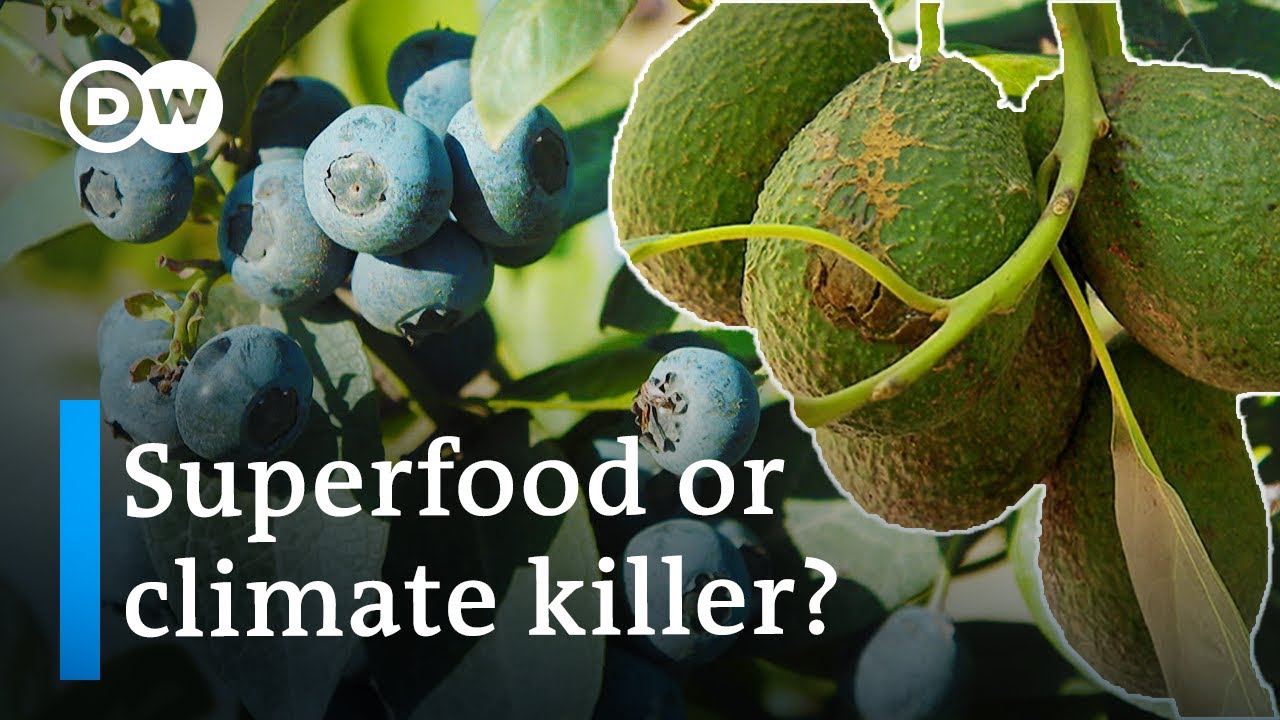
Superfoods and the environment - Avocados and blueberries from South America | DW Documentary
DW Documentary
Overview
This video explores the environmental and social costs associated with the production of popular "superfoods" like avocados and blueberries, primarily focusing on their cultivation in South America. It highlights how the immense global demand for these fruits leads to severe water scarcity in regions like Chile, impacting local communities and small farmers. The documentary contrasts the economic benefits for large producers with the struggles of those deprived of water, while also touching upon the environmental footprint of transporting these goods and the growing resistance and activism demanding fairer water rights and sustainable practices.
How was this?
Save this permanently with flashcards, quizzes, and AI chat
Chapters
- Avocado cultivation in Chile, particularly in regions like Petorca, consumes vast amounts of water, leading to severe shortages for local communities.
- Large-scale avocado plantations divert water resources, leaving rivers dry and wells depleted, impacting small farmers and residents who rely on these sources.
- The demand for avocados, driven by global trends and marketing, has turned them into 'green gold,' incentivizing monoculture farming over diverse agriculture.
- Activists like Rodrigo Mundaca are fighting for water rights, facing threats and challenging the privatization of water resources that benefits large corporations.
This chapter illustrates how the demand for a popular food item can have devastating consequences for local environments and vulnerable populations, demonstrating the real-world impact of consumer choices.
In the Petorca region, small farmers like Ricardo Sangüesa have seen their irrigation canals dry up due to water diversion for avocado plantations, forcing them to abandon their livelihoods.
- Peru is experiencing a rapid expansion of blueberry plantations, transforming arid desert landscapes into agricultural fields.
- To meet the water demands of these plantations, significant infrastructure projects are diverting glacial meltwater, raising concerns about future water availability.
- The blueberry industry provides jobs, offering employment opportunities for individuals like Reyna Espinoza, but often involves intensive labor and reliance on hybrid, high-yield plant varieties.
- While currently abundant, the long-term sustainability of this water diversion for export-oriented agriculture is questioned, especially as plantations are set to triple in size.
This section shows how another popular superfood's production in Peru mirrors some of the water-related issues seen in Chile, highlighting a pattern of resource exploitation driven by global demand.
In Peru, tunnels are being built to divert glacial water towards blueberry plantations, creating an 'artificially created wonderland' in the desert to meet export demands.
- Both avocados and blueberries are transported long distances in refrigerated containers, contributing to a significant carbon footprint.
- To meet consumer expectations for ripeness and availability, avocados undergo artificial ripening processes in temperature-controlled chambers.
- The demand for year-round availability of these fruits drives intensive farming practices and global trade, often at the expense of local resources.
- European consumers, accustomed to readily available superfoods, may be unaware of the environmental and social costs incurred in their production.
This chapter connects consumer habits in wealthy nations to the environmental consequences in producer countries, emphasizing the global interconnectedness of food systems.
Avocados are shipped green and then artificially ripened in huge chambers with simulated humidity and heat to ensure they are ready to eat upon arrival in European kitchens.
- Social movements and activists are actively campaigning for water as a fundamental human right, challenging powerful agricultural industries.
- Protests in Chile, such as the mass demonstrations in 2019, have led to political reforms and a push for a new constitution that could redefine water ownership.
- Individuals like Rodrigo Mundaca and Ivanna Olivares, formerly activists, have entered politics to advocate for water rights and social justice from within institutions.
- Despite political advancements, activists continue to face threats, and the influence of powerful economic interests makes systemic change challenging.
This section demonstrates how grassroots activism and political engagement can emerge in response to environmental and social injustices, offering a path toward potential solutions.
Following widespread protests for social justice and water rights in Chile, a constitutional convention was formed, including activists elected to advocate for the fundamental right to water.
- The cultivation of avocados and blueberries is a significant economic driver for Chile and Peru, creating jobs and export revenue.
- Despite new political roles, figures like Governor Rodrigo Mundaca have limited direct power over water legislation and resource allocation.
- The 'gold rush' mentality persists, with producers planning further expansion and seeking new markets like China for avocados.
- The core conflict remains: balancing the economic benefits of superfood production with the urgent need for sustainable water management and equitable resource distribution.
This chapter highlights the ongoing tension between economic development driven by superfood exports and the imperative for environmental sustainability and social equity, suggesting the fight for water is far from over.
Even with his new role as governor, Rodrigo Mundaca has limited control over water rights and agricultural policies, illustrating the institutional challenges in enacting change.
Key takeaways
- The global demand for 'superfoods' like avocados and blueberries has significant environmental and social consequences in their regions of origin, particularly concerning water resources.
- Intensive monoculture farming for export can lead to severe water scarcity, impacting local communities, small farmers, and ecosystems.
- Consumer choices and demand for year-round availability of certain foods contribute to unsustainable production practices and long, carbon-intensive supply chains.
- Activism and political engagement are crucial for challenging powerful economic interests and advocating for the right to water as a public good.
- While economic benefits are undeniable, the long-term sustainability of superfood production hinges on addressing water management, environmental impact, and social equity.
- The fight for fair water distribution and environmental protection often involves personal risk and ongoing struggle against entrenched systems.
- Understanding the origin and production methods of our food is essential for making informed and responsible consumption choices.
Key terms
SuperfoodsAvocado MonocultureWater ScarcityBlueberry PlantationsGlacial MeltwaterWater RightsPrivatization of WaterCarbon FootprintSocial MovementConstitutional ReformGroundwater DiversionArtificial Ripening
Test your understanding
- How does the global demand for avocados contribute to water scarcity in regions like Chile?
- What are the primary environmental concerns associated with large-scale blueberry cultivation in Peru?
- Explain the concept of 'green gold' in relation to avocado production and its impact on local communities.
- What role have social movements and political reforms played in the fight for water rights in South America?
- How does the transportation and processing of superfoods like avocados add to their environmental impact?