18:49
Here's what you need to know about gut health
Ben Winney
Overview
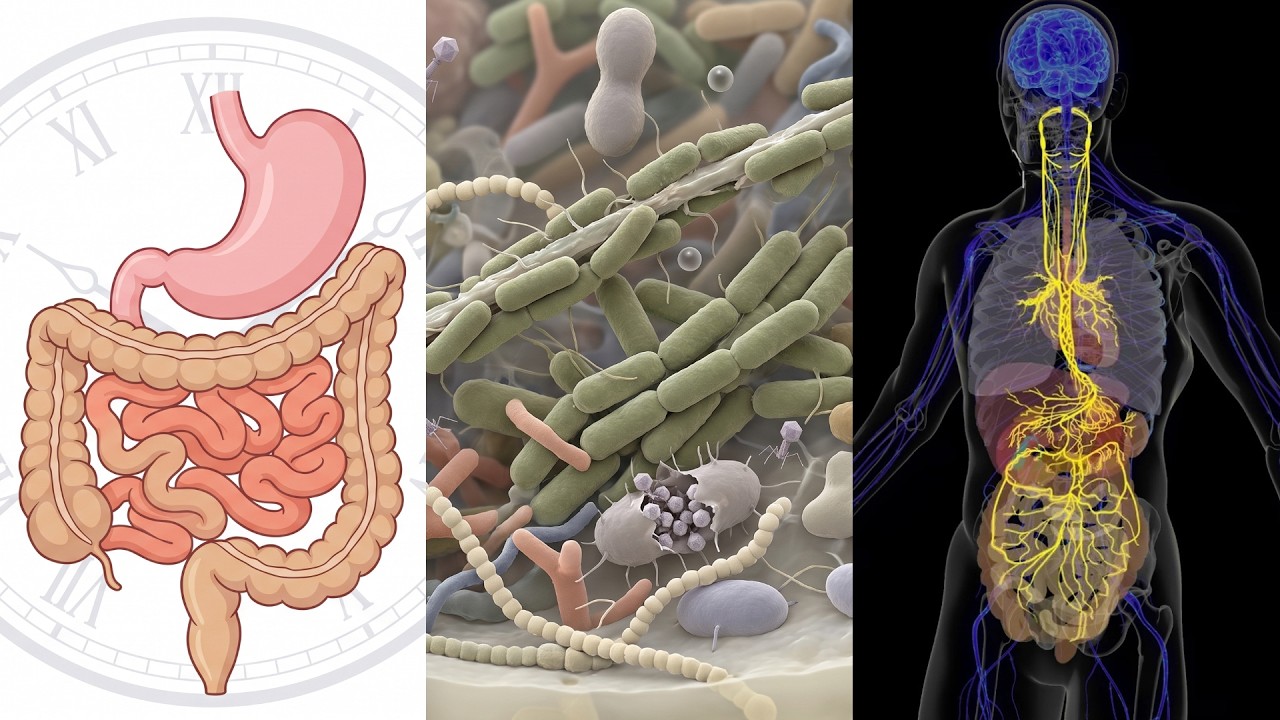
This video explains the gut as a crucial external interface and a complex system, not just a digestive tube. It details the gut's four-layered barrier, the importance of the microbiome and its diverse functions, and the gut-brain axis. The video also covers the roles of different fiber types, the migrating motor complex for gut cleaning, stomach acid's functions, and the impact of circadian rhythms and inflammation on gut health. Ultimately, it emphasizes that many common gut issues stem from a single, self-reinforcing inflammatory loop that requires a holistic approach to address.
How was this?
Save this permanently with flashcards, quizzes, and AI chat
Chapters
- The gut is essentially a tube running from mouth to anus, making it an external environment. What enters the body only does so after crossing the intestinal lining.
- A robust, four-layered gut barrier (mucus, epithelium, tight junctions, lamina propria with immune cells) is vital for preventing harmful substances from entering the bloodstream.
- Damage to these layers from factors like low fiber, alcohol, NSAIDs, gluten, dysbiosis, or stress can lead to a 'leaky gut,' allowing toxins to enter the body.
Understanding the gut as an external system highlights the critical role of the gut barrier in protecting the body from the outside world and explains how its compromise can lead to widespread health problems.
Low fiber damages the mucus layer, alcohol and NSAIDs damage the epithelial cells, gluten and dysbiosis loosen tight junctions, and chronic stress weakens the immune layer, all contributing to a compromised gut barrier.
- The gut microbiome, composed of trillions of microbes, functions as an organ due to its structure, outputs, communication, and the diseases associated with its disruption.
- Microbes produce essential compounds like short-chain fatty acids (e.g., butyrate for colon cells) and vitamins (K2, B vitamins), and influence neurotransmitters and bile acids.
- Microbial diversity is crucial; a diverse microbiome occupies all niches, preventing pathogens from colonizing, while low diversity impairs essential functions and increases susceptibility to infections.
The microbiome is essential for nutrient production, immune function, and protection against pathogens, making its health directly linked to overall well-being.
Antibiotics can indiscriminately clear out microbial niches, allowing opportunistic pathogens like C. difficile to colonize and cause infection, illustrating the importance of maintaining a diverse microbiome.
- The enteric nervous system, often called the 'second brain,' has 500 million neurons and can operate independently of the brain.
- The vagus nerve is the primary communication link between the gut and brain, with most signals traveling from the gut to the brain, informing it about the gut's state.
- Communication occurs via neural (vagus nerve), endocrine (gut hormones), and immune (cytokines) pathways, all of which are influenced by the gut microbiome.
This bidirectional communication highlights how gut health significantly impacts brain function, mood, and stress responses, and vice versa.
A leaky gut can allow endotoxins into the bloodstream, triggering neuroinflammation and brain fog, demonstrating a direct link between gut barrier integrity and cognitive function.
- Fiber is not a single entity; four types (soluble viscous, soluble non-viscous/prebiotic, insoluble, resistant starch) offer distinct benefits, from slowing digestion to selectively feeding beneficial bacteria.
- The migrating motor complex (MMC) is a fasting-dependent cleaning wave that sweeps the upper GI tract; it requires 3-4 hours between meals and is suppressed by constant eating or stress.
- Adequate stomach acid (pH 1.5-3) is critical for killing pathogens, protein digestion, and nutrient absorption; low stomach acid is common and can worsen SIBO and nutrient deficiencies.
Proper digestion, nutrient absorption, and waste removal depend on a functioning MMC and adequate stomach acid, while diverse fiber intake fuels a healthy microbiome.
Snacking or consuming calories between meals turns off the migrating motor complex, preventing the gut from clearing out residual food and bacteria, which can contribute to SIBO.
- The gut operates on a circadian clock, with functions like acid secretion and motility varying by time of day, and its peripheral clocks are primarily entrained by meal timing.
- Circadian misalignment, caused by irregular eating, late-night meals, or shift work, disrupts gut function, reduces microbial diversity, and increases inflammation.
- Chronic low-grade inflammation, often originating from a compromised gut barrier, is a root cause of many systemic diseases, including heart disease, diabetes, and autoimmune conditions.
Aligning eating patterns with natural circadian rhythms is essential for optimizing gut function, reducing inflammation, and preventing chronic diseases.
Eating high-carbohydrate meals in the evening, when blood sugar control is naturally lower, can contribute to circadian misalignment and inflammation, whereas front-loading calories earlier in the day is more beneficial.
- The gut is interconnected with major organs like the liver, brain, skin, and immune system, influencing their function through absorbed nutrients, toxins, and signaling molecules.
- Gut dysbiosis can affect hormone balance, such as estrogen metabolism via the 'estrobolome,' impacting both men and women.
- Many common gut conditions (IBS, leaky gut, SIBO) are manifestations of a self-reinforcing inflammatory loop that starts with a compromised gut barrier and spreads throughout the body.
Addressing gut health is fundamental to managing a wide range of systemic health issues, from neurological and dermatological conditions to hormonal imbalances and autoimmune disorders.
The estrobolome, a collection of gut bacteria, can reactivate excreted estrogen, leading to higher estrogen levels and potentially disrupting hormone balance, illustrating the gut's role in endocrine health.
Key takeaways
- Most common gut issues are symptoms of a larger, interconnected inflammatory problem rather than isolated diseases.
- The gut barrier is a critical defense system, and its integrity is essential for preventing systemic inflammation and disease.
- A diverse gut microbiome is vital for producing nutrients, protecting against pathogens, and supporting overall health.
- The gut-brain axis is a powerful communication network, meaning gut health directly influences mental well-being and vice versa.
- Fasting periods between meals and before bed are crucial for gut cleaning via the migrating motor complex.
- Aligning eating patterns with natural circadian rhythms and managing stress are key to optimizing gut function and reducing inflammation.
- Addressing gut health holistically, by focusing on the entire system rather than isolated symptoms, is necessary for long-term health improvement.
Key terms
Gut BarrierMicrobiomeTight JunctionsLeaky GutShort-Chain Fatty Acids (SCFAs)Gut-Brain AxisEnteric Nervous SystemVagus NerveMigrating Motor Complex (MMC)Circadian RhythmDysbiosisEstrobolome
Test your understanding
- How does the gut's structure as an external tube necessitate a strong barrier system, and what are the consequences of a compromised barrier?
- Explain why the gut microbiome is considered an organ and what are the key functional benefits of microbial diversity?
- Describe the primary communication pathways of the gut-brain axis and how the microbiome influences these signals.
- What is the migrating motor complex, why is it important for gut health, and what lifestyle factors can disrupt its function?
- How do circadian rhythms, particularly meal timing, influence gut function and systemic inflammation?