The $20 Fix That Solved Traffic Deaths
Safe By Design
Overview
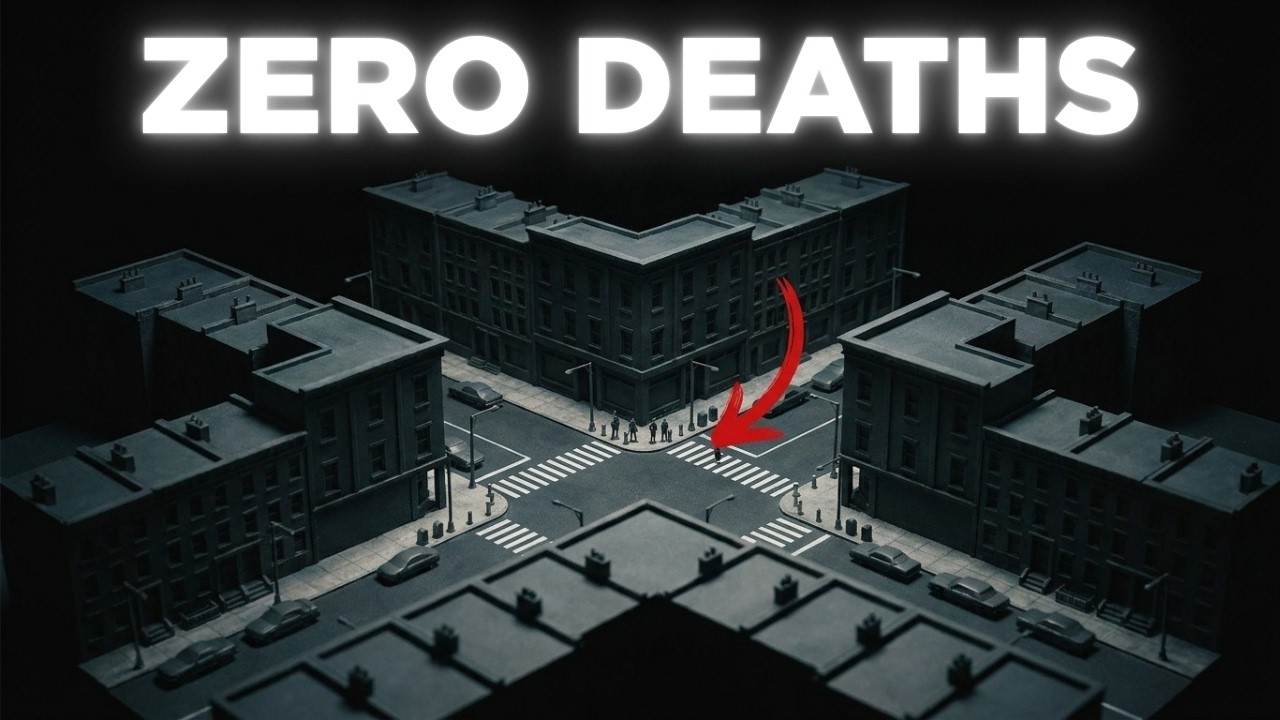
This video explores how Hoboken, New Jersey, achieved a remarkable nine-year streak without traffic fatalities, contrasting it with the continued rise in traffic deaths in many American cities despite formal "Vision Zero" pledges. The core of Hoboken's success lies in low-cost, data-driven infrastructure changes, particularly at intersections, prioritizing pedestrian and cyclist safety over driver convenience. The summary highlights the "daylighting" technique using plastic posts as a key, inexpensive intervention, alongside other measures like leading pedestrian intervals and speed limit reductions. It argues that the primary barrier to replicating this success in other cities is not a lack of knowledge or budget, but a political unwillingness to inconvenience drivers.
Save this permanently with flashcards, quizzes, and AI chat
Chapters
- Many American cities, including Los Angeles and Washington D.C., have adopted "Vision Zero" pledges to eliminate traffic deaths.
- Despite these pledges, traffic fatalities have continued to rise in these cities, often reaching multi-year highs.
- This trend suggests that formal commitments alone are insufficient to address the problem of traffic deaths.
- Hoboken, NJ, achieved nine consecutive years without a single traffic fatality, a record verified by multiple sources.
- The city's success is attributed to simple, inexpensive, and data-informed infrastructure changes, not complex or costly overhauls.
- A key intervention, "daylighting," uses low-cost plastic posts ($20 per corner) to prevent cars from parking too close to intersections.
- This simple act improves sight lines for both drivers and pedestrians, directly preventing collisions caused by poor visibility.
- Hoboken's transportation team meticulously analyzed five years of crash data (2014-2018).
- They discovered that 88% of bicycle and pedestrian crashes occurred specifically at intersections.
- This data led to a focused strategy targeting these high-risk locations, rather than a broad, city-wide approach.
- Pedestrians and cyclists, though a smaller percentage of overall traffic, were disproportionately involved in serious injuries and fatalities.
- Beyond daylighting, Hoboken implemented other evidence-based, affordable measures.
- These include leading pedestrian intervals (giving pedestrians a head start at signals), high-visibility crosswalk repainting, and physical curb extensions.
- The city also reduced its general speed limit from 25 mph to 20 mph, with 15 mph in school zones.
- These improvements were often integrated into routine street maintenance, making them cost-effective.
- Hoboken funds its Vision Zero initiatives, in part, through revenue generated from parking fines and fees.
- This creates a self-sustaining cycle where safety improvements generate the revenue to fund further improvements.
- The primary barrier to replicating Hoboken's success is not budget or engineering, but political resistance to prioritizing pedestrian safety over driver convenience.
- A shift in political calculation, exemplified by a former council member who voted against safety measures but later championed them after a fatality, is necessary.
- While the US sees rising pedestrian deaths, other high-income countries (like Sweden and EU nations) have significantly reduced them.
- European cities have achieved this through similar data-driven, infrastructure-focused approaches and a commitment to Vision Zero principles.
- The US ranks last among peer nations in reducing pedestrian fatalities, indicating a systemic failure rather than a universal car problem.
- Larger American cities face unique challenges like car dependency and bureaucratic structures that hinder progress.
- Hoboken's safety improvements are integrated into routine infrastructure projects, ensuring long-term maintenance and upgrades.
- The city deliberately concentrated safety investments in areas with vulnerable populations (parks, schools, public housing), demonstrating an equity focus.
- While Hoboken has reduced deaths, it still faces challenges with traffic injuries, showing that zero deaths is a difficult but achievable goal, while zero injuries remains unfinished work.
- The key to sustained success is institutionalizing safety improvements beyond individual political champions, ensuring continuity across administrations.
Key takeaways
- Effective traffic safety solutions can be low-cost and simple, often involving minor infrastructure changes like preventing parking at intersections.
- Data analysis is critical: focusing interventions on high-crash locations, particularly intersections, yields the greatest safety improvements.
- Prioritizing pedestrian and cyclist safety inherently means reducing convenience for drivers, and this political trade-off is the main barrier in many US cities.
- Funding safety initiatives through mechanisms like parking revenue can create a self-sustaining model, decoupling improvements from general budget constraints.
- The US's failure to reduce traffic deaths, unlike peer nations, points to policy choices and a lack of political will rather than insurmountable technical or financial challenges.
- Sustained political commitment and integrating safety into routine infrastructure work are essential for long-term success and institutionalizing Vision Zero.
- Equity must be a core consideration in traffic safety, prioritizing improvements in areas with the most vulnerable populations.
Key terms
Test your understanding
- What is 'daylighting' and how does it contribute to traffic safety for a minimal cost?
- Why is analyzing crash data, specifically focusing on intersections, a crucial first step for cities aiming to reduce traffic deaths?
- How does Hoboken's funding model for Vision Zero initiatives create a self-sustaining program?
- What is the primary political barrier preventing many American cities from replicating Hoboken's success, according to the video?
- How does the US approach to traffic safety compare to other high-income countries, and what does this comparison suggest about the root causes of traffic deaths?