8:48
What is Evolution?
Stated Clearly
Overview
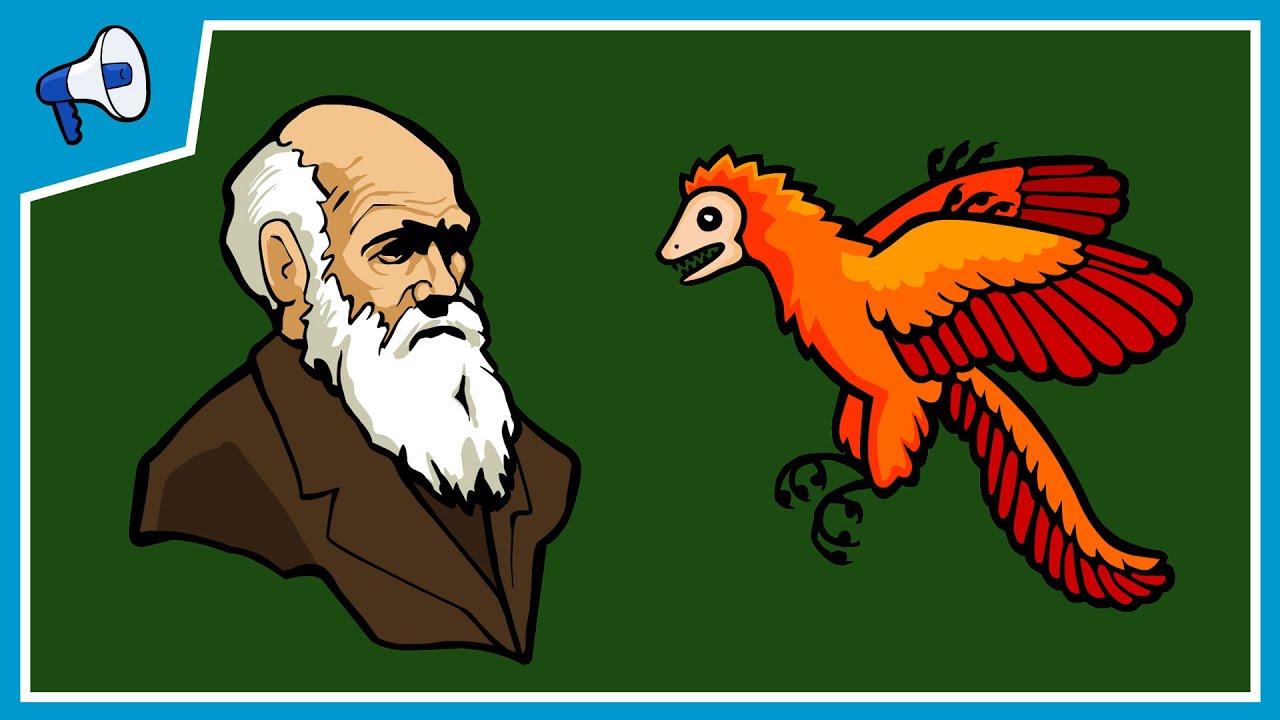
This video explains the biological theory of evolution, defining it as changes in heritable traits within a population over generations. It clarifies that evolution doesn't explain the origin of life but rather its diversification and adaptation. The video illustrates how reproduction, though aiming for copies, introduces variations through DNA mutations and recombination, leading to gradual changes that can accumulate over vast timescales. It also touches upon the concept of common ancestry for all life and introduces natural selection as a guiding force, distinct from random chance.
How was this?
Save this permanently with flashcards, quizzes, and AI chat
Chapters
- Evolution explains how life diversified and adapted after its origin, not how life began.
- Evolution is defined as any change in heritable traits within a population across generations.
- Heritable traits include physical characteristics (like fur color) and instinctive behaviors.
Understanding this core definition is crucial for grasping all subsequent concepts about how life changes over time.
Fur color in mice, spots on butterfly wings, or a dog's greeting behavior.
- Living things reproduce by copying their DNA, passing it to offspring.
- Errors, called mutations, can occur during DNA copying, creating new variations.
- Sexual reproduction combines DNA from two parents, creating unique combinations of traits in offspring.
- These variations, whether from mutation or recombination, are the raw material for evolution.
This explains the fundamental mechanism by which differences arise within a population, which is essential for evolutionary change.
A creature with an extra-long arm due to a DNA mutation, or a badger child inheriting traits from both parents.
- Small changes, accumulating over many generations, can lead to significant differences.
- Artificial selection, like dog breeding, demonstrates how humans can guide evolution by selecting for desired traits.
- This process, over thousands of years, has led to the vast diversity of dog breeds from a common wolf ancestor.
This illustrates how seemingly small, incremental changes can result in the dramatic diversity of life we observe today.
The evolution of hundreds of dog breeds from ancestral gray wolves, with different breeds selected for size, intelligence, or strength.
- Overwhelming evidence from various scientific fields suggests all life on Earth shares a common ancestor.
- The vast differences between species, like a shrew and an elephant, are not purely random but are guided by a process.
- Natural selection, discovered by Darwin and Wallace, is a non-random force that can guide evolution.
- Natural selection acts as a 'breeder' by favoring traits that enhance survival and reproduction in a given environment.
This introduces the concept of universal relatedness and the primary mechanism driving adaptive evolution, setting the stage for further learning.
The evolutionary path from an ancient shrew-like creature to diverse mammals like elephants, guided by natural selection rather than random chance.
Key takeaways
- Evolution is the change in heritable traits within a population over generations, driving life's diversity and adaptation.
- DNA mutations and genetic recombination are the sources of variation upon which evolution acts.
- Gradual changes, accumulating over vast periods, can lead to significant transformations in species.
- All life on Earth is interconnected and likely evolved from a common ancestor.
- Natural selection is a key mechanism that guides evolution by favoring traits beneficial for survival and reproduction.
- Evolutionary change is not entirely random; natural processes shape the direction of adaptation.
Key terms
EvolutionHeritable traitsPopulationGenerationsDNAMutationReproductionArtificial SelectionCommon AncestorNatural Selection
Test your understanding
- How does the video define biological evolution, and what does it explain about life on Earth?
- What are the two primary ways new variations arise in a population, according to the video?
- Explain how small changes accumulating over generations can lead to significant evolutionary differences, using an example from the video.
- What is the significance of the concept of a common ancestor for all life?
- How does natural selection differ from random chance in guiding evolutionary change?