15:37
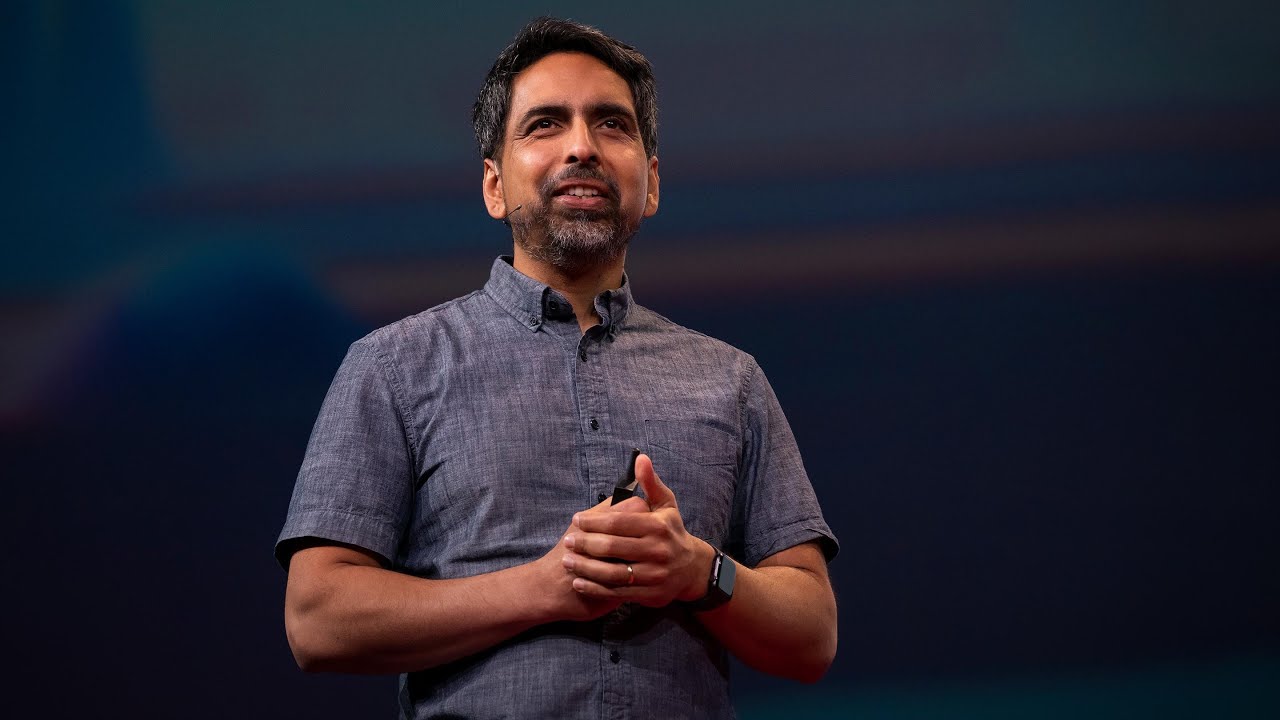
How AI Could Save (Not Destroy) Education | Sal Khan | TED
TED
Overview
Sal Khan argues that AI, rather than destroying education through cheating, presents an unprecedented opportunity for transformation. He proposes that AI can serve as a personalized tutor for every student and an assistant for every teacher, addressing the long-standing "2 sigma problem" of scaling individualized instruction. Khan demonstrates how AI tools like Khanmigo can provide tailored support in math, coding, literature, and writing, while also offering teachers powerful tools for lesson planning and personalized instruction. He emphasizes the need for proactive development of AI guardrails and regulations to ensure AI enhances human intelligence and potential.
How was this?
Save this permanently with flashcards, quizzes, and AI chat
Chapters
- The prevalent fear is that AI tools like ChatGPT will lead to widespread student cheating and undermine learning.
- However, AI can be leveraged to create the biggest positive transformation in education history.
- This transformation involves providing every student with an AI personal tutor and every teacher with an AI teaching assistant.
This chapter reframes the common anxiety around AI in education, shifting the focus from a threat to a profound opportunity for enhancing learning for all.
Headlines suggesting students will use AI to cheat vs. the potential for AI to revolutionize education.
- Benjamin Bloom's '2 sigma problem' highlights that one-to-one tutoring yields a two standard deviation improvement in student learning, but it's not scalable.
- AI personal tutors have the potential to finally scale this effective one-to-one tutoring model to every student.
- This could transform average students into exceptional ones and bring below-average students up to average.
Understanding the '2 sigma problem' provides a historical context for the limitations of traditional education and frames AI's potential to solve a fundamental challenge in educational equity and effectiveness.
Bloom's 1984 study showing a two standard deviation improvement in learning with one-to-one tutoring, contrasted with the difficulty of scaling this method.
- Khanmigo is designed as a tutor, not a cheating tool, with safeguards like conversation recording and AI moderation.
- It guides students through problems by asking probing questions rather than giving direct answers, identifying misconceptions.
- Khanmigo demonstrates advanced capabilities in math, coding, and understanding video context, answering 'why do I need to learn this?' questions.
This chapter showcases the practical application of AI as a tutor, illustrating how it can provide personalized, Socratic guidance that adapts to individual student needs and learning contexts.
Khanmigo helping a student solve a math problem by asking them to explain their reasoning when they make a mistake, or explaining code to a student learning programming.
- AI can act as a personal guidance counselor, academic coach, and career coach, addressing shortages in human support.
- In literature, AI can bring characters to life, allowing students to converse with them to deepen understanding.
- AI facilitates debates and Socratic dialogue, helping students refine arguments and build confidence without fear of judgment.
This section expands the vision of AI's educational impact beyond direct instruction to encompass crucial developmental and critical thinking support, making personalized guidance more accessible.
A student talking to an AI persona of Jay Gatsby to understand the symbolism of the green light in 'The Great Gatsby'.
- AI can collaborate with students on writing tasks, co-creating stories sentence by sentence, making writing more engaging.
- For reading comprehension, AI can ask Socratic questions about texts, prompting deeper analysis of author intent and evidence.
- AI provides personalized feedback on drafts, helping students identify weaknesses and improve their arguments, accelerating writing development.
This demonstrates how AI can enhance, rather than replace, fundamental language arts skills by acting as a writing partner and a sophisticated reading comprehension tool.
An AI co-writing a horror story with a student, or an AI asking a student about the author's intent in Steve Jobs' Stanford speech.
- Teachers can use AI in a 'teacher mode' as a supercharged guide for lesson planning and material preparation.
- AI can help explain answers, suggest teaching strategies, and eventually assist with progress reports and grading.
- This frees up teacher time from administrative tasks, allowing them to focus more on human interaction and personalized student support.
This highlights the significant benefit AI offers to educators, reducing their workload and enabling them to dedicate more energy to the art of teaching and connecting with students.
An AI tool that helps a teacher prepare a lesson on the Spanish-American War, offering explanations and teaching strategies.
- Making AI 'magical' requires significant behind-the-scenes work, not just slapping LLMs onto existing platforms.
- Allowing AI to 'think before it speaks' dramatically improves its accuracy and tutoring capabilities, especially in complex subjects like math.
- A proactive approach with guardrails and regulations is crucial to ensure AI enhances human intelligence and potential, rather than leading to a dystopian future where bad actors have superior AI.
This emphasizes that the responsible and effective implementation of AI in education depends on thoughtful design and a commitment to establishing ethical guidelines and safety measures.
An AI internally generating a thought process to analyze a student's math mistake before responding, which is not shown to the student.
Key takeaways
- AI's potential in education lies in its ability to provide personalized tutoring and teacher assistance at scale, addressing long-standing educational challenges.
- The '2 sigma problem' illustrates the historical gap between effective one-to-one tutoring and scalable education, a gap AI is poised to fill.
- AI tools like Khanmigo can offer sophisticated, Socratic guidance in diverse subjects, fostering deeper understanding and critical thinking.
- AI can serve as a valuable partner in creative processes like writing and a powerful tool for enhancing reading comprehension.
- Empowering teachers with AI assistants can significantly reduce administrative burdens, allowing them to focus on student interaction.
- The development and deployment of AI in education must be guided by intentional design and proactive ethical guardrails to maximize benefits and mitigate risks.
- AI has the potential to not only enhance but also accelerate human intelligence, potential, and purpose.
Key terms
Artificial Intelligence (AI)Personalized TutorTeaching Assistant2 Sigma ProblemStandard DeviationKhanmigoSocratic MethodMisconceptionGenerative AIGuardrailsHuman Intelligence (HI)
Test your understanding
- How does AI aim to solve the '2 sigma problem' in education?
- What are the key differences between how AI tutors like Khanmigo and traditional AI chatbots interact with students?
- Beyond direct instruction, what other crucial roles can AI play in supporting students' academic and personal development?
- How can AI be used to enhance, rather than hinder, students' writing and reading comprehension skills?
- What is the significance of AI 'thinking before it speaks' for its effectiveness as a tutor?