10:40
Art historical analysis (painting), a basic introduction using Goya's Third of May, 1808
Smarthistory
Overview
This video introduces art historical analysis by examining Goya's "The Third of May, 1808." It outlines three primary methods: formal analysis (examining the physical properties like scale, material, light, and composition), subject matter analysis (understanding the narrative or content), and contextual analysis (considering the historical, political, and social circumstances of its creation). The video demonstrates how these methods, when applied to Goya's painting, reveal its powerful anti-war message and its significance within the Romantic art movement.
How was this?
Save this permanently with flashcards, quizzes, and AI chat
Chapters
- Art historians analyze meaning by considering what a work meant to the artist, its original audience, and how its meaning has evolved.
- Formal analysis involves closely observing the physical properties of the artwork, such as scale, material, and use of light and dark (value).
- Subject matter analysis focuses on the narrative or content, identifying stories from history, mythology, or other sources.
- Contextual analysis examines the historical, political, economic, and social environment in which the artwork was created.
Understanding these analytical methods provides a framework for interpreting any artwork, moving beyond a superficial glance to a deeper comprehension of its significance.
The video mentions that formal properties refer to the physical object itself, like the size and material of a painting.
- Goya's painting is large and executed in oil on canvas, indicating significant ambition for the work.
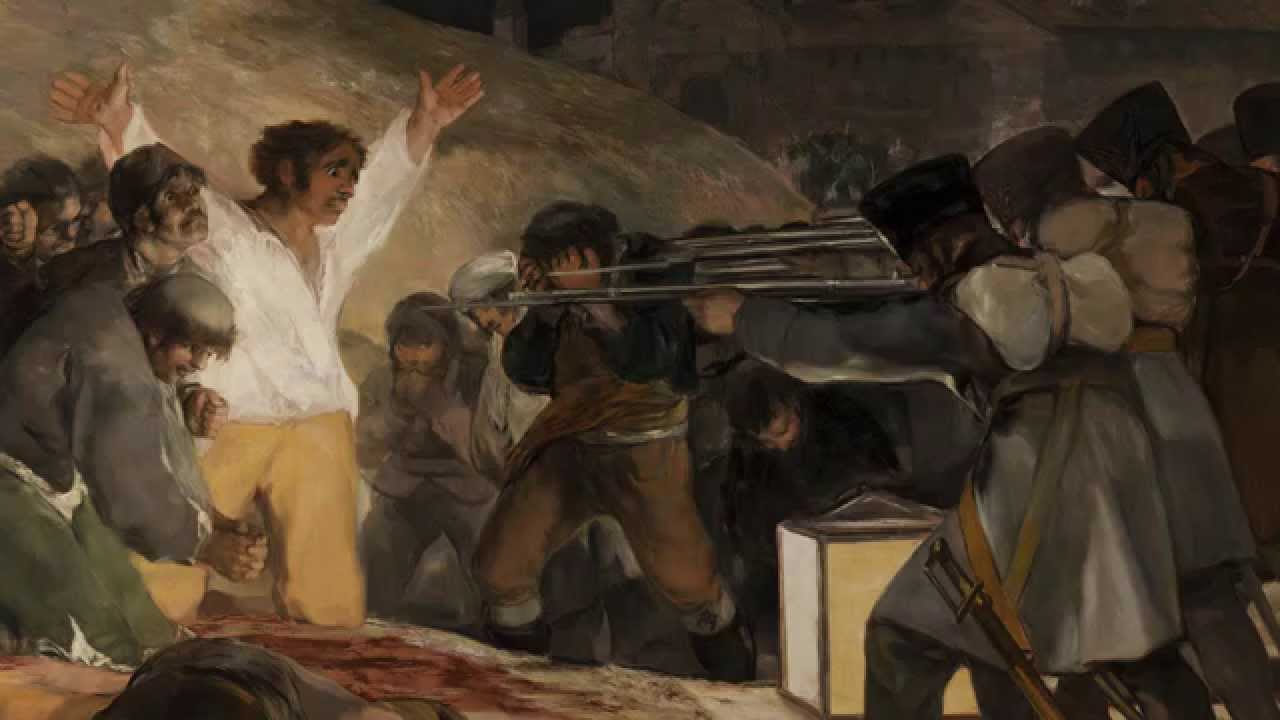
- The dramatic contrast between light and dark (chiaroscuro) divides the canvas and highlights key figures.
- Composition, like stage direction, guides the viewer's eye, emphasizing the central figure in white through placement and contrasting light.
- Goya creates an illusion of depth on the flat surface using receding diagonal lines, diminishing detail in the distance, and scale differences.
- Visible, energetic brushwork, especially on the white shirt, conveys a sense of immediacy, motion, and the artist's presence, characteristic of Romanticism.
Formal analysis reveals how an artist's technical choices—like composition and brushwork—actively shape the viewer's emotional and intellectual response to the subject matter.
The bright highlight and shadow on the man's thumb demonstrate how Goya uses light and dark to create a sense of three-dimensional volume.
- The painting depicts a firing squad executing innocent Spanish civilians.
- The central figure in white, with arms outstretched, is presented as a martyr, reminiscent of Christ's crucifixion.
- The contrast between the humanized victims, whose faces are visible, and the faceless, machine-like soldiers emphasizes the brutality of the act.
- The narrative unfolds through the arrangement of figures: those already dead, those awaiting execution, and the executioners.
Understanding the subject matter allows us to grasp the immediate story being told and the emotional impact Goya intended to convey about violence and innocence.
The figure in white has small marks on his palms, referencing the stigmata, to symbolize his martyrdom.
- The painting commemorates the retribution killings by Napoleon's army in Madrid following a Spanish uprising on May 2nd, 1808.
- Goya's work is a powerful anti-war statement, reflecting the brutality and inhumanity of conflict.
- The painting is a prime example of Romanticism, prioritizing emotional expression and subjective viewpoints over abstract ideals.
- Unlike commissioned works, Goya painted this from personal conviction, highlighting its status as an independent artistic statement.
- The use of historical symbolism (like the stigmata) within a contemporary event bridges past traditions with modern, subjective experience.
Contextual analysis is crucial because it reveals the specific historical events and broader cultural movements that inspired the artwork and shaped its original meaning and impact.
The background events involve Napoleon's invasion of Spain and the subsequent popular uprising and French reprisals, which directly led to the executions depicted.
Key takeaways
- Art historical analysis involves a multi-faceted approach: formal, subject matter, and contextual.
- Formal elements like composition, light, and brushwork are not merely decorative but actively contribute to an artwork's meaning and emotional impact.
- Subject matter can be enhanced by symbolism, drawing on historical or religious references to deepen its message.
- Understanding the historical and social context is essential for grasping an artwork's original significance and the artist's intent.
- Goya's "The Third of May, 1808" is a powerful example of Romantic art, using formal and contextual elements to convey a strong emotional and political message against war.
- The distinction between commissioned art and personally motivated art can reveal insights into the artist's agency and message.
- Illusionistic techniques, like creating depth on a flat surface, are key formal considerations in painting analysis.
Key terms
Formal AnalysisSubject MatterContextual AnalysisChiaroscuroCompositionIllusion of SpaceBrushworkRomanticismMartyrStigmata
Test your understanding
- How does Goya use formal elements like light, composition, and brushwork to convey the emotional intensity of the scene in "The Third of May, 1808"?
- What is the subject matter of Goya's painting, and how does it relate to the historical events of May 1808 in Spain?
- Explain the concept of contextual analysis and why it is important for understanding artworks like Goya's painting.
- What is the significance of the central figure's pose and the symbolism of the stigmata in "The Third of May, 1808"?
- How does the video differentiate between formal analysis, subject matter analysis, and contextual analysis as methods for understanding art?