8:16
Proteins
Osmosis from Elsevier
Overview
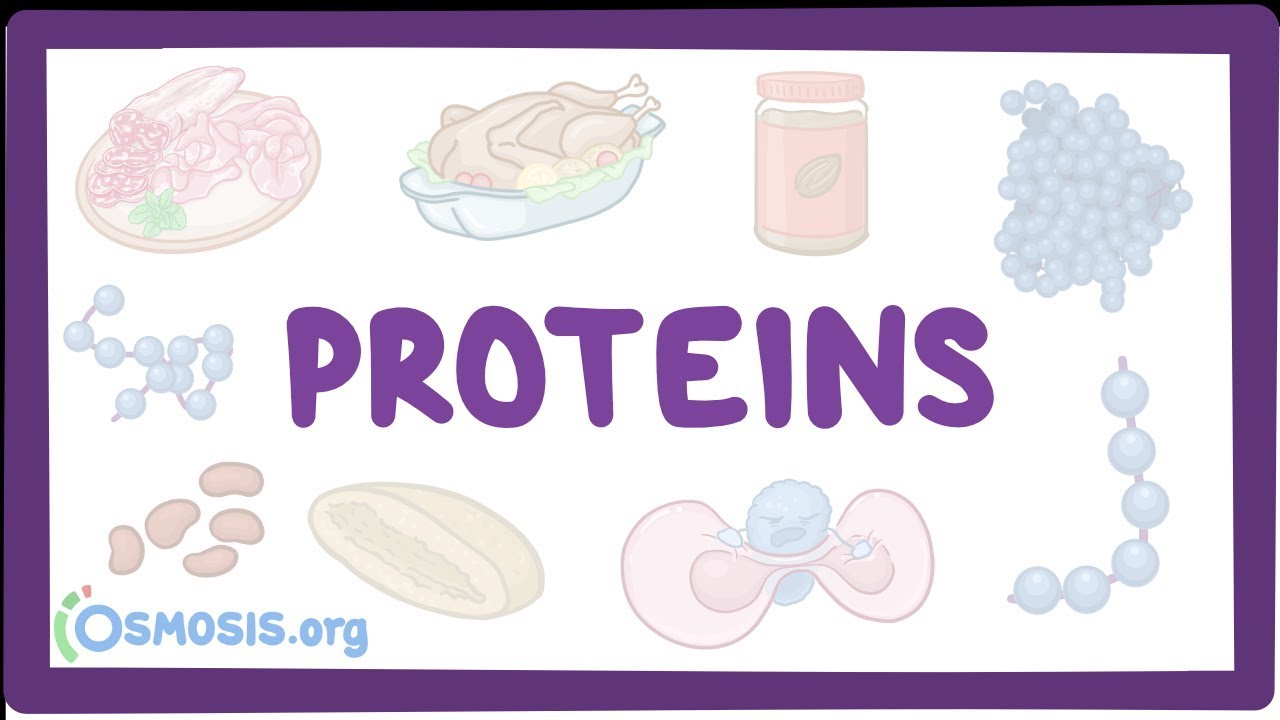
This video explains the fundamental role of proteins in the human body, detailing their structure as chains of amino acids. It categorizes amino acids into essential, non-essential, and conditionally essential, highlighting the importance of obtaining essential amino acids from diet. The video also covers the digestive process of proteins (proteolysis), compares protein content in animal and plant-based foods, and discusses daily protein requirements based on age, sex, and activity level. Finally, it touches upon situations where protein deficiency might occur and the general safety of adequate protein intake.
How was this?
Save this permanently with flashcards, quizzes, and AI chat
Chapters
- Proteins are vital molecules in the body, performing functions like fighting infections and cell division.
- Proteins are constructed from chains of amino acids linked by peptide bonds.
- Each amino acid has a central carbon atom bonded to an amino group, a carboxylic acid group, a hydrogen atom, and a unique sidechain.
- Humans use about 20 different types of amino acids to build all their proteins.
Understanding the basic building blocks of proteins helps in appreciating how the body constructs complex molecules essential for life.
Proteins are like a string of beads, where each bead represents an amino acid, and these strings are then twisted and folded into a specific 3D shape.
- Amino acids are classified based on whether the body can synthesize them.
- Non-essential amino acids (5 types) can be made by the body.
- Conditionally essential amino acids (6 types) can be made by a healthy body but may be needed from diet during stress or illness.
- Essential amino acids (9 types) cannot be made by the body and must be obtained from food.
Knowing the difference between essential and non-essential amino acids is crucial for ensuring adequate dietary intake of the building blocks your body cannot produce on its own.
Histidine, isoleucine, leucine, lysine, methionine, phenylalanine, threonine, tryptophan, and valine are the nine essential amino acids that must be consumed through diet.
- Dietary protein is broken down into amino acids through a process called proteolysis.
- Digestion begins in the stomach with hydrochloric acid denaturing proteins and pepsin breaking them into smaller chains.
- Further breakdown into smaller peptides and individual amino acids occurs in the duodenum with pancreatic enzymes.
- Amino acids are absorbed by intestinal cells, with some used locally and most entering the bloodstream for transport.
This digestive process ensures that the complex proteins we eat are disassembled into their basic components, which the body can then use to build its own proteins.
In the stomach, hydrochloric acid unfolds the protein structure, making it easier for the enzyme pepsin to cut the long amino acid chain into smaller pieces.
- Animal-based foods (eggs, dairy, meat, seafood) generally provide all nine essential amino acids in sufficient amounts.
- Soy is a plant-based food that also provides all nine essential amino acids.
- Most other plant foods (grains, legumes, nuts, seeds) are high in some amino acids but low in others.
- Combining various plant-based foods (like rice and beans) can provide a complete amino acid profile.
- While plant-based foods can be protein-rich, it may require consuming a larger volume to match the protein content of animal-based sources.
Understanding the differences in protein quality and quantity between food sources helps in making informed dietary choices to meet nutritional needs, whether following a plant-based or omnivorous diet.
A cup of tofu contains the same amount of protein as three ounces of steak, and half a cup of lentils provides more protein than an egg.
- Daily protein requirements are often estimated based on the minimum amount needed to prevent nitrogen loss.
- The general recommendation for healthy adults is about 0.8 grams of protein per kilogram of body weight per day.
- Protein needs vary significantly with age, with children and adolescents requiring different amounts than adults.
- Factors like sex, pregnancy, breastfeeding, athletic activity, and age can increase protein requirements.
- Specific health conditions, such as kidney disease, may necessitate adjustments in protein intake.
Knowing your individual protein needs helps you plan your diet effectively to support growth, repair, and overall health.
A female aged 14 or older needs about 46 grams of protein daily, while a male aged 19 and older needs about 56 grams.
Key takeaways
- Proteins are essential for numerous bodily functions and are built from chains of amino acids.
- Nine essential amino acids must be obtained from the diet because the body cannot produce them.
- The digestive system breaks down dietary proteins into amino acids for absorption and use.
- Both animal and plant-based foods can provide adequate protein, but plant-based diets may require careful planning and variety to ensure all essential amino acids are consumed.
- Protein requirements are not one-size-fits-all and depend on age, sex, activity level, and health status.
- While protein deficiency is a concern for some individuals, excessive protein intake is generally not harmful for healthy adults, except in specific medical conditions.
Key terms
ProteinAmino AcidPeptide BondEssential Amino AcidNon-essential Amino AcidConditionally Essential Amino AcidProteolysisDenaturationPepsinOligopeptide
Test your understanding
- What are the basic building blocks of proteins and how are they linked together?
- Why is it important to consume essential amino acids from your diet?
- How does the body digest and absorb protein from food?
- What are the key differences in protein content and completeness between animal and plant-based food sources?
- How do factors like age, sex, and lifestyle influence an individual's daily protein requirements?