1:51:35
Thứ 3 - 345 - Thanh Toán Quốc Tế - Tuần 8 (BẠN QUAY)
Dương Nguyễn
Overview
This video explains various international payment methods, focusing on their mechanisms, advantages, disadvantages, and application scenarios. It covers remittance (mail transfer and telegraphic transfer via SWIFT), documents against payment (D/P), and documents against acceptance (D/A), along with their underlying principles and procedural differences. The discussion emphasizes how each method impacts risk for both importers and exporters, guiding learners on selecting appropriate methods based on factors like trust, transaction value, and the nature of goods or services.
How was this?
Save this permanently with flashcards, quizzes, and AI chat
Chapters
- International payment methods are diverse, including remittance, D/P, D/A, and documentary credits (LC).
- The choice of payment method depends on factors like the relationship between parties, the nature of goods, and other external elements.
- Trust between trading partners influences the perceived safety of a payment method, but doesn't change its inherent nature.
- The level of bank involvement in a transaction directly correlates with its security for both exporter and importer.
Understanding the different payment methods is crucial for mitigating risks and ensuring smooth international trade transactions.
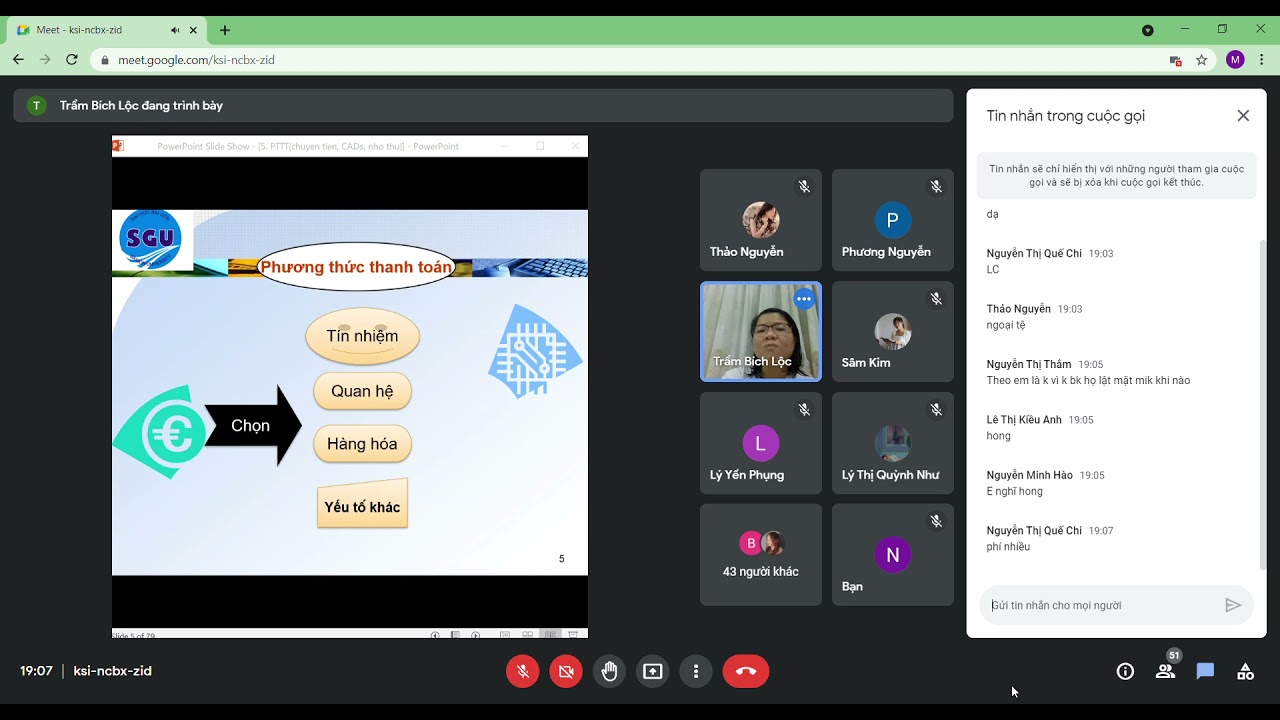
The speaker asks learners what they think of when they hear 'international payment methods,' prompting them to consider concepts like foreign currency and the process of money exchange.
- Remittance involves a customer instructing their bank to transfer funds to a beneficiary.
- Mail Transfer (MT) uses bank drafts, which can be 'on-site' (issued and delivered locally) or 'remote' (issued by a correspondent bank).
- Telegraphic Transfer (TT) is faster and more common, often utilizing systems like SWIFT.
- SWIFT is a secure, global messaging network for financial institutions, facilitating rapid and reliable communication for fund transfers.
This section differentiates between slower mail-based transfers and faster electronic transfers, highlighting the efficiency and security offered by modern systems like SWIFT.
The speaker explains that SWIFT codes are like email addresses for banks, with a specific format (11 characters) identifying the bank, country, location, and branch.
- The 'on-site' mail transfer involves the importer directly handing the bank draft to the exporter.
- The 'remote' mail transfer involves the remitting bank instructing a correspondent bank to issue the draft to the exporter.
- SWIFT transfers are highly secure due to advanced encryption and are virtually impenetrable to hackers.
- There are limits on remittance amounts for residents (e.g., in Vietnam, limits are tied to the value of export/import documents) compared to non-residents.
Understanding the procedural differences and regulatory limits of remittance is essential for compliance and effective fund management in international transactions.
A hypothetical transaction of 1 million SGD from a Vietnamese importer to a Singaporean exporter via SWIFT is detailed, showing how Vietcombank would debit the importer and instruct Citibank New York to credit the exporter's bank.
- Payment can be categorized as advance payment (before shipment), immediate payment (upon receipt of documents/goods), or deferred payment (after shipment/delivery).
- Mixed payment involves a combination of these timings, such as a partial advance payment and the remainder upon receipt of documents.
- Advance payment carries the highest risk for the importer, while deferred payment carries the highest risk for the exporter.
- These payment terms are typically used in situations with high trust, long-standing relationships, or for specific service payments like tourism.
The timing of payment significantly impacts the risk exposure for both buyer and seller, influencing cash flow and security.
A scenario is presented where an importer pays 40% in advance and 60% after receiving documents, illustrating the process of initiating payments at different stages of the transaction.
- In D/P, the importer pays the bank upon presentation of shipping documents to receive them.
- The bank acts as an intermediary, releasing documents only after payment is made.
- This method is less common in practice due to potential issues like the importer opening an account with the exporter's bank and the importer's cash flow commitment.
- It requires a high degree of trust from the importer towards the exporter, as they commit funds before physically receiving the goods.
D/P offers some security to the exporter by ensuring payment before document release, but it still presents risks, particularly regarding the importer's willingness to pay.
The speaker describes a scenario where an importer opens an account at the exporter's bank and deposits 100% of the value, then the exporter presents documents for payment, but the importer might refuse payment if they no longer want the goods.
- In D/A, the importer accepts a bill of exchange (hối phiếu) upon presentation of documents, and pays at a future maturity date.
- The exporter hands over shipping documents and a bill of exchange to their bank, which forwards them to the importer's bank.
- The importer receives the documents (and thus the goods) after accepting the bill of exchange, but payment is deferred.
- This method is risky for the exporter, as the importer might default on payment at maturity, and it's primarily used when the importer has significant leverage or trust is very high.
D/A shifts the risk of non-payment to the exporter, as the importer gains control of the goods before making the final payment.
The process involves the exporter's bank sending a bill of exchange and documents to the importer's bank. The importer accepts the bill, receives the documents, and pays later.
- Documentary collection involves banks facilitating the exchange of documents for payment or acceptance based on instructions from the seller.
- Clean collection typically involves only financial documents (like bills of exchange) without accompanying commercial documents.
- Documentary collection against payment (D/P) and acceptance (D/A) are specific types of documentary collections.
- Clean collection is less secure for the exporter as the importer receives documents without necessarily paying or accepting a bill, relying heavily on trust.
Documentary collection provides a framework for handling documents and payment, but the level of security varies significantly between clean and documentary types.
The speaker explains that clean collection is largely theoretical and rarely used in practice because it offers little security to the exporter, similar to advance remittance.
- In documentary collection, the exporter instructs their bank (remitting bank) to collect payment or acceptance from the importer via a collecting bank.
- The collecting bank presents the documents and bill of exchange to the importer.
- With D/P, the importer pays immediately to get the documents; with D/A, the importer accepts the bill to get the documents and pays later.
- The primary risk in documentary collection lies with the exporter, as the importer might refuse payment or acceptance, leaving the exporter with goods and no payment.
Understanding the roles of the banks and the specific procedures for D/P and D/A within documentary collection is key to managing exporter risk.
The speaker details the process for D/P and D/A, emphasizing that in D/P, the importer pays to receive documents, while in D/A, they accept a bill of exchange. Crucially, in D/P, only copies of commercial documents are released to the importer, not originals, to prevent them from taking the goods without payment.
Key takeaways
- The choice of international payment method is a strategic decision that balances security, cost, and the relationship between trading partners.
- Remittance methods, especially via SWIFT, are efficient for transferring funds but offer limited security for the exporter.
- Documents Against Payment (D/P) requires the importer to pay before receiving documents, offering more security to the exporter than D/A.
- Documents Against Acceptance (D/A) allows the importer to take possession of goods after accepting a bill of exchange, shifting payment risk to the exporter.
- Documentary collection methods (D/P and D/A) rely on banks to handle documents but still expose the exporter to risks if the importer defaults.
- The inherent risk in payment methods like remittance and clean collection means they are best suited for highly trusted parties or internal company transfers.
- Documentary credit (LC), though not fully detailed here, is presented as a more secure method for exporters due to bank guarantees.
Key terms
RemittanceMail Transfer (MT)Telegraphic Transfer (TT)SWIFTBank DraftDocuments Against Payment (D/P)Documents Against Acceptance (D/A)Documentary CollectionBill of Exchange (Hối phiếu)Commercial DocumentsFinancial Documents
Test your understanding
- How does the level of bank involvement in an international payment method affect its security for both the importer and exporter?
- What are the primary differences between Mail Transfer and Telegraphic Transfer (SWIFT), and when would each be most appropriate?
- Compare and contrast the risks faced by an exporter using Documents Against Payment (D/P) versus Documents Against Acceptance (D/A).
- Explain why clean collection is considered less secure than documentary collection for an exporter.
- Under what circumstances would a company choose a remittance method over a documentary collection method for an international transaction?