6:09
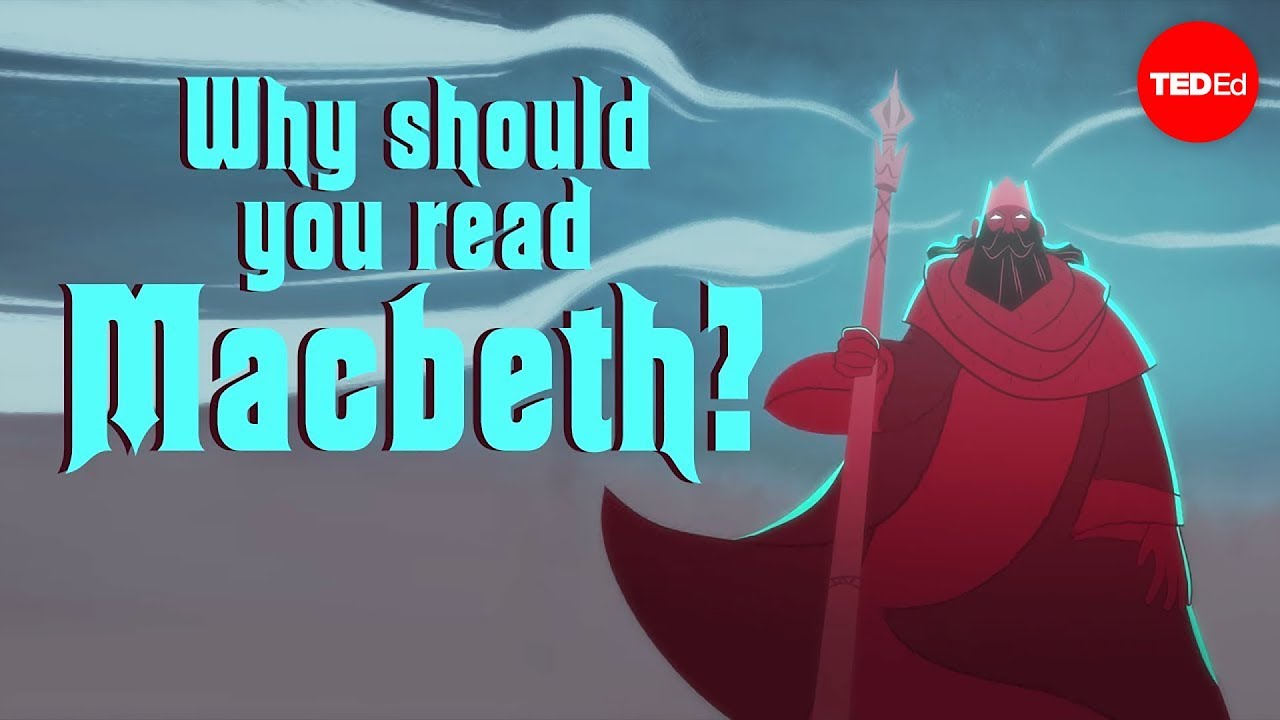
Why should you read "Macbeth"? - Brendan Pelsue
TED-Ed
Overview
This video explores Shakespeare's tragedy, Macbeth, examining its enduring themes of ambition, power, and violence. It delves into the historical context of its creation, Shakespeare's masterful use of language, and the play's lasting cultural impact. The summary highlights how the play's exploration of human nature and political intrigue continues to resonate with modern audiences through various adaptations and interpretations.
How was this?
Save this permanently with flashcards, quizzes, and AI chat
Chapters
- Macbeth is a powerful and famous tragedy by William Shakespeare, known for its themes of witchcraft, ambition, and murder.
- It is Shakespeare's shortest tragedy and one of his most action-packed, first performed around 1606.
- The play explores timeless questions about power, ambition, and violence that were relevant in Shakespeare's time and remain so today.
Understanding Macbeth's core elements and historical context helps appreciate its significance as a dramatic work and its continued relevance to discussions of power and morality.
The play begins with witches, thunder, and a prophecy that Macbeth will become king, setting a tone of supernatural influence and dark ambition.
- Macbeth was written during a politically unstable period in England following Queen Elizabeth I's death and the succession of James VI of Scotland.
- An assassination attempt on King James (the Gunpowder Plot) made questions of royal legitimacy a prominent public concern.
- Shakespeare likely adapted the story from historical chronicles, merging the tale of a 11th-century Scottish king with other noblemen's stories to create a compelling narrative.
Knowing the historical backdrop reveals how Shakespeare strategically used the play to address contemporary political anxieties and comment on the nature of kingship.
The assassination attempt on King James in 1605, shortly before the play's likely writing, would have heightened audience interest in themes of regicide and legitimate rule.
- Shakespeare aimed to capture the attention of a diverse and rowdy audience at the Globe Theatre, where audience participation was common.
- The play opens dramatically with witches and a prophecy to immediately engage the spectators.
- Shakespeare's language is rich with memorable phrases that have become part of common English usage.
This highlights Shakespeare's skill not only as a storyteller but also as a performer who understood how to connect with and manipulate his audience's emotions and expectations.
The famous line 'Fair is foul and foul is fair' from the witches immediately establishes a world where appearances are deceiving and moral order is inverted.
- Macbeth and Lady Macbeth descend into a cycle of murder and betrayal to seize and maintain power.
- The play vividly portrays the psychological toll of guilt, famously shown in Lady Macbeth's 'Out, damned spot!' obsession.
- It explores the corrupting nature of power, the endlessness of violence, and the challenges of political conflict.
These themes are central to the play's enduring power, offering profound insights into human psychology and the destructive consequences of unchecked ambition.
Lady Macbeth's descent into madness, driven by the guilt of her actions, illustrates the psychological price of their ambition.
- Macbeth's language and characters have deeply influenced culture, with many phrases originating from the play.
- The play's themes of power abuse are frequently used to comment on modern political figures and events.
- Numerous adaptations across different media and settings, like films 'Throne of Blood' and 'Scotland, PA,' demonstrate its timeless appeal and adaptability.
The continuous adaptation and reinterpretation of Macbeth underscore its universal themes and its capacity to speak to new generations about fundamental aspects of the human condition.
Akira Kurosawa's film 'Throne of Blood,' set in feudal Japan, and 'Scotland, PA,' set in a modern fast-food hierarchy, show how the core story of ambition and betrayal can be transplanted to vastly different contexts.
Key takeaways
- Shakespeare's Macbeth uses supernatural elements and prophecies to explore the corrupting influence of ambition on human nature.
- The play's historical context, particularly the political climate surrounding King James I, informed its themes of legitimate rule and the dangers of usurpation.
- Effective storytelling, even in Shakespeare's time, required engaging a diverse audience through dramatic openings and memorable language.
- Macbeth serves as a cautionary tale about the psychological consequences of guilt and the destructive cycle of violence fueled by the pursuit of power.
- The play's enduring relevance is proven by its continuous adaptation and its ability to illuminate contemporary issues of power and morality.
- Understanding the interplay between ambition, power, and morality is crucial to grasping the core message of Macbeth.
- Shakespeare's linguistic innovations within Macbeth have left a lasting mark on the English language.
Key terms
TragedyAmbitionPowerViolenceSuperstitionProphecyGuiltRegicideUsurpationAdaptation
Test your understanding
- How did the political climate of early 17th-century England influence Shakespeare's writing of Macbeth?
- What role do the witches and their prophecies play in Macbeth's descent into tyranny?
- Explain how Shakespeare uses Lady Macbeth's character to explore the theme of guilt.
- In what ways does Macbeth continue to be relevant to contemporary discussions about power and leadership?
- How do adaptations of Macbeth, such as 'Throne of Blood' or 'Scotland, PA,' demonstrate the play's universal themes?