30:36
Site Reliability Engineering (SRE) Course 2026 || From Zero to Hero || Visualpath
Visualpath Pro
Overview
This video introduces Site Reliability Engineering (SRE) as a discipline focused on ensuring the reliability, availability, and scalability of software systems. It explains the core responsibilities of an SRE, emphasizing the importance of observability, automation, and managing service level agreements (SLAs), objectives (SLOs), and indicators (SLIs). The course highlights how SRE practices, originating from Google, aim to bridge the gap between development and operations by applying engineering principles to operational tasks, ultimately preventing costly outages, improving customer satisfaction, and enabling faster, more reliable software delivery.
How was this?
Save this permanently with flashcards, quizzes, and AI chat
Chapters
- SRE is responsible for maintaining application uptime and high availability, especially during peak traffic.
- Traditional roles (developer, DevOps, network engineer) are insufficient for managing complex system reliability.
- SREs use principles like SLAs, SLOs, and observability to ensure systems can handle expected and unexpected loads.
- Observability, encompassing monitoring, logging, tracing, and alerting, is crucial for understanding system health.
Understanding the fundamental purpose of SRE helps learners grasp why this role is critical in modern software development and operations.
A Flipkart Big Billion Day sale scenario where traffic increases 5x, potentially overwhelming a system not designed for autoscaling, illustrating the need for SRE.
- SRE practices originated at Google in the early 2000s to address issues with system reliability and complex stakeholder management.
- Before SRE, multiple teams (developers, testers, ops, network) were involved, making issue resolution slow and difficult.
- SRE introduces automation and observability to pinpoint failures and streamline fixes.
- SRE applies engineering principles to operations, automating deployment, scaling, monitoring, and management.
Knowing the history and motivation behind SRE provides context for its principles and practices, explaining why it emerged as a necessary discipline.
A Gmail outage in the early 2000s highlighted the need for a more structured approach to reliability, leading to the development of SRE.
- SREs can set up CI/CD pipelines to automate code fetching, building, deployment, and testing.
- Key observability tools include Prometheus for monitoring, Grafana for visualization, and Jaeger for tracing.
- SREs manage infrastructure, including cloud resources like EKS clusters and deployment tools like Argo CD.
- SREs focus on performance benchmarking, security, and cost optimization, areas potentially outside a typical DevOps role.
This chapter details the practical implementation of SRE, showing how engineers use specific tools and processes to build and maintain reliable systems.
Setting up a CI/CD pipeline that automatically fetches code, builds it, deploys it, runs tests, and provides feedback, integrating tools like Prometheus and Grafana.
- Service Level Agreements (SLAs) are formal contracts with customers guaranteeing a certain level of service, with penalties for breaches.
- Service Level Objectives (SLOs) are internal targets for reliability, often derived from SLAs.
- Service Level Indicators (SLIs) are measurable metrics (e.g., latency, error rate, availability) used to track SLOs.
- Error budgets represent the acceptable level of downtime or failure within a given period, derived from SLOs.
Understanding SLAs, SLOs, and SLIs is fundamental to SRE, as they define the targets for reliability and provide a framework for measuring success and managing risk.
Committing to 99.99% uptime (SLA) means having an error budget of approximately 43 minutes of downtime per 30 days (SLO), measured by metrics like latency and availability (SLIs).
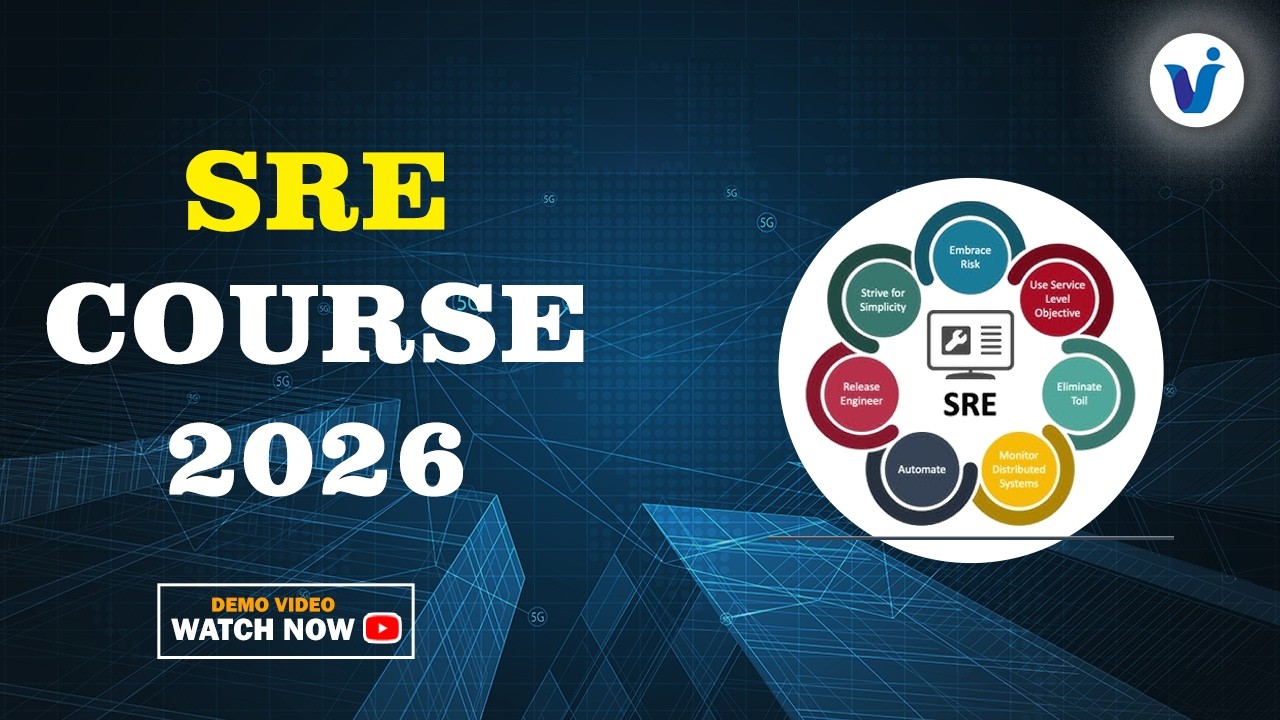
- Embrace risk by accepting that incidents will happen and managing error budgets effectively.
- Prioritize simplicity in system design and automation to ensure maintainability.
- Set explicit and measurable SLOs/SLIs, as unmeasurable goals cannot be improved.
- Conduct blameless postmortems, focusing on system failures rather than individual mistakes.
- Manage toil by automating repetitive, manual tasks to free up engineering time and reduce errors.
These principles guide SREs in building resilient systems, fostering a culture of continuous improvement, and effectively responding to incidents.
Automating a manual process of logging into production, running backup commands, verifying backups, and uploading them to storage, reducing a 15-hour task to 5 minutes.
- DevOps focuses on building CI/CD pipelines and release workflows, while SRE applies engineering to operations.
- SRE responsibilities include reliability, availability, scalability, managing SLAs/SLOs, and error budgets.
- Key SRE practices involve monitoring, observability, incident response, capacity planning, and automation.
- SREs collaborate across teams, ensuring systems are robust, resilient, and performant.
Differentiating SRE from DevOps clarifies the specific focus and unique contributions of SRE within the broader software engineering landscape.
While a DevOps engineer might build the CI/CD pipeline, an SRE engineer focuses on the infrastructure's performance, observability, and cost optimization aspects.
Key takeaways
- Site Reliability Engineering (SRE) is a specialized discipline that applies software engineering principles to infrastructure and operations to ensure system reliability and availability.
- The core goal of SRE is to maintain high uptime and performance, especially under heavy load, by proactively managing risks and automating operational tasks.
- Observability (monitoring, logging, tracing, alerting) is fundamental to SRE, providing the insights needed to understand system behavior and troubleshoot issues.
- SLAs, SLOs, and SLIs form the backbone of SRE, defining service commitments, setting internal targets, and measuring performance against those targets.
- Automation is a key SRE practice; any repetitive manual task is an opportunity to reduce errors and improve efficiency.
- Blameless postmortems are essential for learning from incidents without assigning blame, fostering a culture of continuous improvement.
- SREs are responsible for managing error budgets, which dictate the acceptable level of failure before service commitments are breached.
- While related to DevOps, SRE has a distinct focus on engineering reliability into operations, often involving deeper infrastructure and performance expertise.
Key terms
Site Reliability Engineering (SRE)ObservabilityMonitoringLoggingTracingAlertingService Level Agreement (SLA)Service Level Objective (SLO)Service Level Indicator (SLI)Error BudgetToilBlameless PostmortemCI/CD PipelineAutoscalingHigh AvailabilityUptime
Test your understanding
- What is the primary goal of a Site Reliability Engineer?
- How does observability contribute to maintaining system reliability?
- What is the difference between an SLA, an SLO, and an SLI, and why are they important in SRE?
- How does the principle of 'managing toil' help improve operational efficiency and reliability?
- Why is conducting a 'blameless postmortem' a crucial practice in SRE?