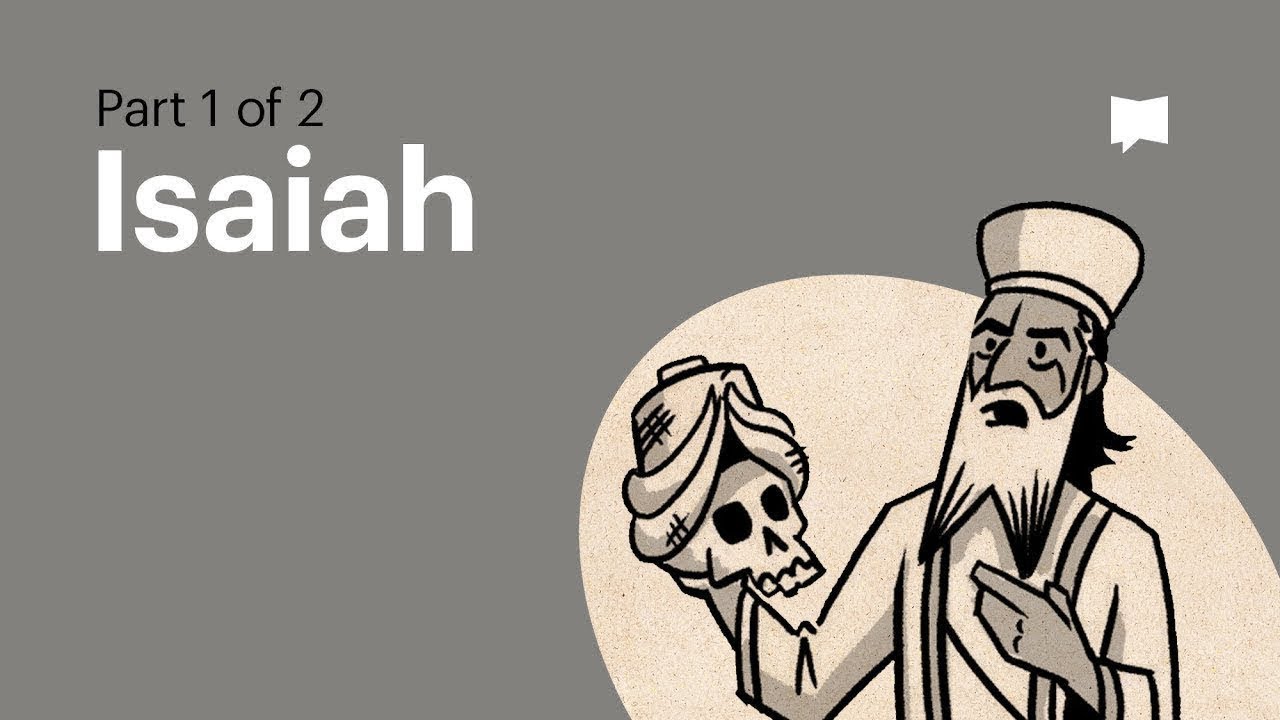
Book of Isaiah Summary: A Complete Animated Overview (Part 1)
BibleProject
Overview
This video provides an animated overview of the first 39 chapters of the Book of Isaiah, focusing on his prophecies concerning judgment and hope for Jerusalem and the nations. Isaiah, a prophet in Jerusalem, warned of impending judgment from empires like Assyria and Babylon due to Israel's corruption and idolatry. However, his message was intertwined with a promise of future restoration and the establishment of God's kingdom through a Davidic king. The summary breaks down Isaiah's message into key themes: the vision of judgment and purification leading to a new Jerusalem, the prophecy of a messianic king (Immanuel) as the 'holy seed,' and the eventual fall of empires like Babylon, culminating in the destruction of Jerusalem and exile, all serving as a prelude to future hope.
Save this permanently with flashcards, quizzes, and AI chat
Chapters
- Isaiah prophesied in Jerusalem during the later Kingdom period, addressing corrupt leaders.
- His message contained warnings of God's judgment, to be executed by empires like Assyria and Babylon, due to Israel's covenant rebellion, idolatry, and oppression.
- This judgment was coupled with a message of hope: God would fulfill covenant promises, sending a Davidic king to establish His kingdom and extend blessing to all nations.
- Chapters 1-39 are structured around Isaiah's warnings of judgment, culminating in Jerusalem's fall and Babylonian exile.
- Within these warnings, a message of hope persists: God's covenant promises would ultimately be fulfilled after the exile.
- The first main section focuses on Isaiah's vision of judgment and hope for Jerusalem, beginning with accusations of covenant rebellion and injustice.
- Isaiah experiences a vision of God's holiness in the temple, realizing his own sinfulness and that of his people.
- A seraph purifies Isaiah with a burning coal, symbolizing atonement and commissioning him for a difficult task.
- Isaiah is tasked with announcing judgment, which paradoxically hardens the unrepentant but signifies a future hope rooted in a surviving 'holy seed' from a felled stump.
- Isaiah confronts King Ahaz, predicting judgment by Assyria but offering hope through a future king named Immanuel ('God with us').
- Immanuel is described as a shoot from the stump of David's family, symbolizing new life and the fulfillment of God's promise to David.
- This king will be empowered by God's Spirit to rule justly, liberate people from oppression, and bring universal peace and harmony.
- Isaiah pronounces judgment on the arrogant empire of Babylon and other surrounding nations for their pride and injustice.
- A series of poems contrasts a corrupt, self-exalted 'lofty city' (an archetype of rebellious humanity) with the future New Jerusalem.
- The New Jerusalem represents God's reign over redeemed humanity, free from suffering, signifying the ultimate triumph of God's justice and peace.
- Isaiah condemns Jerusalem's leaders for seeking military protection from Egypt against Assyria, warning it will fail.
- True salvation lies only in trusting God and repenting, as illustrated by King Hezekiah's story.
- Hezekiah's initial repentance and deliverance from Assyria are contrasted with his later diplomatic folly of displaying Jerusalem's wealth to Babylon, foreshadowing future exile.
Key takeaways
- Isaiah's prophecies contain a consistent dual message of impending judgment for sin and corruption, alongside a promise of future hope and restoration.
- God uses even oppressive empires as instruments of judgment to purify His people and uphold His justice.
- The concept of a 'holy seed' and a future Davidic king (Immanuel) represents the enduring hope for God's covenant faithfulness and the establishment of His kingdom.
- True security and salvation come from trusting in God's promises and repenting, not from political or military alliances with other nations.
- Isaiah's message transcends his own time, offering a vision of ultimate divine justice, the downfall of corrupt powers, and the establishment of a New Jerusalem.
- The destruction of Jerusalem and the Babylonian exile, though devastating, were foretold by Isaiah and served as a purification process leading towards future fulfillment.
Key terms
Test your understanding
- What was the primary message Isaiah delivered to the leaders of Jerusalem regarding their actions?
- How did Isaiah's message combine warnings of judgment with a message of hope?
- What is the significance of Isaiah's vision in the temple and his subsequent purification?
- Who is Immanuel, and why is his coming presented as a significant sign of hope?
- How does the contrast between the 'lofty city' and the 'New Jerusalem' illustrate Isaiah's overarching themes?