32:40
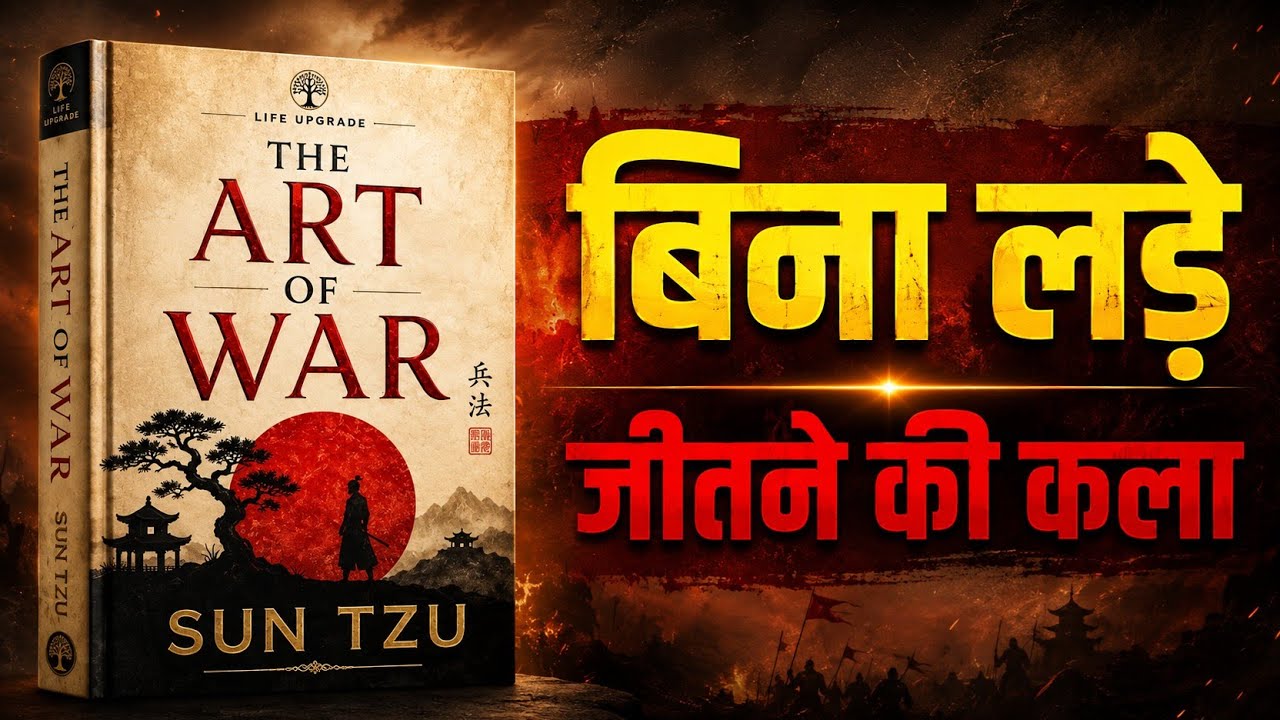
The Art of War | Sun Tzu की 10 खतरनाक रणनीतियाँ | जीवन में जीतने का तरीका
The Book Pedia Hindi
Overview
This video explores the philosophy of winning without fighting, drawing lessons from Sun Tzu's Art of War. It emphasizes strategic thinking, emotional regulation, understanding others, timing, self-awareness, effective communication, managing ego, preparation, energy conservation, adaptability, and self-reliance. The core message is that true victory lies not in defeating others, but in achieving personal goals with minimal conflict and maximum wisdom by controlling one's reactions and focusing energy effectively.
How was this?
Save this permanently with flashcards, quizzes, and AI chat
Chapters
- True strength lies in knowing when to act and when to refrain, not in overpowering others.
- Many conflicts can be won through understanding and strategic inaction rather than direct confrontation.
- Choosing battles wisely means avoiding those that do not contribute to your ultimate goals.
- Reacting to every provocation drains energy and gives others control over your emotions.
Understanding when to disengage from a conflict is crucial for conserving energy and focusing on what truly matters for personal growth and goal achievement.
Ignoring someone provoking you on the street, thus saving your time, attention, and peace, while they remain stuck.
- Victory begins with winning the internal battle against anger, fear, and ego.
- True strength is not in displaying emotions, but in understanding and directing them constructively.
- Pausing before reacting allows for a conscious choice between emotional release and strategic response.
- Awareness of one's emotional triggers prevents others from controlling your reactions.
Controlling your internal emotional state is the foundation for making rational decisions and preventing external provocations from derailing your progress.
When criticized at work, instead of immediately getting angry, pausing to assess the validity of the criticism to find an opportunity for improvement.
- Acting against someone without understanding their reasons is a major strategic error.
- Observe behavior and underlying causes rather than just words to grasp true intentions.
- Recognizing that outward confidence or talkativeness can mask insecurity or hidden agendas is key.
- Asking 'What does this person want from me?' helps in formulating a more effective response.
Comprehending the 'why' behind someone's actions allows for more informed decisions, transforming simple reactions into effective strategies.
When someone opposes your idea, instead of seeing them as an enemy, consider if they fear losing their position or simply lack complete information.
- Knowing what to do is insufficient; knowing *when* to do it is critical for success.
- Opportunities often require patience and waiting for the right moment, like a farmer waiting for harvest.
- Decisions made in the heat of emotion are often less effective than those made with calm consideration.
- Distinguishing between delaying out of fear and waiting strategically is essential.
Timing can determine whether a good decision leads to success or failure, emphasizing the importance of patience and situational awareness.
A farmer doesn't expect crops the day after planting; they prepare the soil, water, and wait for the right season, illustrating strategic patience.
- Everyone has vulnerabilities; the key is not to expose them to those who might exploit them.
- Sharing personal weaknesses indiscriminately can give others leverage to control or manipulate you.
- Strategic silence about plans and personal struggles is often more powerful than constant disclosure.
- Let your results speak for themselves rather than constantly explaining or defending yourself.
Safeguarding your weaknesses is as important as leveraging your strengths, as it prevents others from using them against you.
Not revealing a major life goal to everyone, as some may discourage you or use that information to undermine your efforts.
- Words can initiate or escalate conflicts; choosing them carefully is a powerful skill.
- Responding thoughtfully, rather than reactively, maintains control over conversations and outcomes.
- Silence can be a potent response, prompting reflection in others or avoiding unnecessary escalation.
- The goal of speaking should be clarity and assertion, not belittling others.
Mastering communication, including knowing when to speak and when to remain silent, allows for more effective influence and conflict resolution.
Instead of immediately refuting a criticism, asking 'What is the biggest flaw you see?' can lead to a more constructive dialogue.
- The biggest battles are often fought against one's own ego, not external opponents.
- The need to be right can damage relationships and opportunities more than admitting fault.
- Wisdom involves prioritizing goals over the need for personal validation.
- Being willing to be wrong, listen, and sometimes retreat demonstrates maturity and strategic thinking.
An inflated ego can be a significant obstacle to success, leading to unnecessary conflicts and missed opportunities for growth.
Choosing to incorporate a colleague's useful idea into a project, even if it differs from your own initial thought, rather than insisting on your way.
- True victory is often secured through diligent preparation before the conflict even begins.
- Preparation provides mental stability and confidence, reducing panic in challenging situations.
- Anticipating potential challenges and having alternative plans are hallmarks of a prepared individual.
- Consistent practice and skill development are the foundation of visible success.
Thorough preparation is the bedrock of resilience, ensuring you can navigate difficulties effectively rather than being caught off guard.
A player practicing for months before a competition, ensuring they are ready when the opportunity arises.
- Limited energy and attention must be invested only in activities that align with significant goals.
- Getting bogged down in trivial disputes or external criticisms wastes precious mental resources.
- Prioritize actions that yield the greatest results and ignore distractions that have no bearing on your objectives.
- Conserving energy allows for greater focus on personal development, relationships, and well-being.
Effectively managing your limited energy by focusing on high-impact activities is crucial for making meaningful progress towards your goals.
Choosing to ignore social media criticism that doesn't affect your long-term goals, thereby saving mental energy for productive work.
- When a problem persists, changing your approach or situation is often more effective than persistent confrontation.
- Recognize that not all situations can be directly controlled; adapting your position is key.
- Shifting your strategy or direction is a sign of intelligence, not failure.
- Asking 'What can I change now?' empowers problem-solving.
Flexibility in approach allows you to overcome persistent obstacles by finding new paths forward when direct confrontation proves ineffective.
If a study method isn't working, changing the method instead of continuing to struggle with the same ineffective approach.
- Knowing when to step back is sometimes a more courageous and intelligent move than pushing forward.
- A strategic retreat is not surrender but a calculated decision that the current battle is not the right one.
- Stepping back provides space for reflection, emotional regulation, and finding new perspectives.
- Distinguish between retreating out of fear and retreating as a tactical maneuver.
Understanding when to withdraw strategically can preserve resources, prevent unnecessary losses, and set the stage for a more advantageous future engagement.
Walking away from a heated argument to preserve one's peace, recognizing that continuing the fight is not worth the cost.
- Relying on a single plan or resource is dangerous; always have backup options.
- Developing diverse skills and having contingency plans provides security and resilience.
- Diversifying sources of happiness and success prevents complete devastation if one area fails.
- Having alternatives grants mental freedom and reduces the fear of failure.
Contingency planning through multiple options ensures stability and freedom, preventing a single setback from derailing your entire life.
A freelancer developing multiple income streams rather than relying solely on one client.
- Living according to your own priorities and goals is essential for true self-direction.
- Constantly basing decisions on others' expectations leads to a loss of personal control.
- Clarify your own objectives and values to guide your choices.
- Being autonomous in decision-making, while considering advice, leads to greater fulfillment.
Taking ownership of your life's direction, rather than being swayed by external pressures, is fundamental to achieving genuine success and control.
A person choosing a career path based on their passion and long-term goals, rather than solely on societal expectations or parental pressure.
- The highest form of victory is achieving success without needing to defeat or diminish anyone else.
- True progress is measured against your past self, not against others' achievements.
- Personal growth, self-improvement, and achieving one's potential are the ultimate wins.
- Focusing on building yourself up rather than tearing others down leads to more sustainable and fulfilling success.
Shifting the focus from defeating others to self-improvement creates a more positive, sustainable, and personally rewarding path to success.
Growing your business successfully without actively trying to bankrupt competitors; focusing on your own innovation and customer service.
- A victor's mindset is characterized by maintaining balance, thoughtful action, and strategic patience.
- Challenges are met with composure, understanding that not every problem requires a forceful response.
- Failures are viewed as learning opportunities, not defining characteristics.
- The ultimate competition is internal—becoming a better version of yourself each day.
Cultivating a resilient and self-aware mindset allows you to navigate life's complexities with grace and achieve lasting success.
When facing a setback, learning from it and planning the next step, rather than letting the failure define you.
Key takeaways
- True victory is often achieved by avoiding unnecessary conflicts and focusing energy on strategic goals.
- Emotional self-control is the foundation of wise decision-making and effective strategy.
- Understanding the motivations behind others' actions is crucial for navigating interactions successfully.
- Timing is a critical element in strategy; knowing when to act and when to wait is paramount.
- Protecting your vulnerabilities and not revealing them indiscriminately is a key aspect of self-preservation.
- Effective communication involves not only speaking wisely but also knowing the power of strategic silence.
- Preparation is the bedrock of success, providing stability and confidence in challenging times.
- Focus your limited energy on high-impact activities that align with your most important goals.
- Adaptability and the willingness to change your approach are essential for overcoming persistent obstacles.
- The ultimate competition is with yourself; strive for continuous self-improvement rather than outperforming others.
Key terms
Winning without fightingStrategic inactionEmotional regulationEgo managementUnderstanding motivationsTimingVulnerabilityStrategic retreatContingency planningVictor's mindset
Test your understanding
- What does it mean to 'win without fighting' in the context of personal goals?
- How can understanding your own emotions help you make better strategic decisions?
- Why is it important to understand the underlying motivations of others before reacting to their actions?
- What is the difference between strategic waiting and delaying out of fear?
- How can you protect your vulnerabilities without becoming completely secretive?
- In what situations might strategic silence be more powerful than speaking?
- How does preparation contribute to a 'victor's mindset'?
- Why is it important to conserve and strategically allocate your mental energy?