AMA7
SPA STREAM
Overview
This video introduces the fundamental principles and techniques of basic cardiopulmonary resuscitation (CPR). It explains what CPR is, why it's crucial in life-threatening emergencies like cardiac arrest, and the immediate steps to take to preserve brain function. The content differentiates between CPR administered by trained professionals (including rescue breaths) and hands-only CPR for untrained bystanders. It details the proper technique for chest compressions, emphasizing rate and depth, and introduces the CAB sequence (Compressions, Airway, Breathing) as a mnemonic. The video also touches upon CPR for infants, essential equipment like AEDs and barrier devices, and the importance of personal protective equipment (PPE) for rescuer safety. Finally, it highlights the global guidelines and the life-saving impact of even basic CPR knowledge.
Save this permanently with flashcards, quizzes, and AI chat
Chapters
- CPR (Cardiopulmonary Resuscitation) is a life-saving technique used when a person's breathing or heartbeat has stopped.
- It's critical for victims of sudden cardiac arrest, near-drowning, or heart attacks to restore oxygen flow to the brain.
- Without oxygen, permanent brain damage occurs within 4-6 minutes, and biological death follows within 10 minutes.
- CPR aims to keep the brain alive by manually circulating oxygenated blood until professional help arrives.
- Untrained bystanders can perform Hands-Only CPR, focusing solely on continuous chest compressions.
- Hands-Only CPR involves pushing hard and fast on the center of the chest at a rate of 100-120 compressions per minute.
- Trained professionals typically administer CPR with both chest compressions and rescue breaths.
- Chest compressions are considered the most vital component of CPR, even in hands-only CPR.
- Proper hand placement is on the center of the chest, with one hand over the other.
- Compressions should be about 2 inches (5 cm) deep, using upper body weight.
- Maintain a rate of 100 to 120 compressions per minute.
- Continue compressions until signs of life appear or emergency services take over.
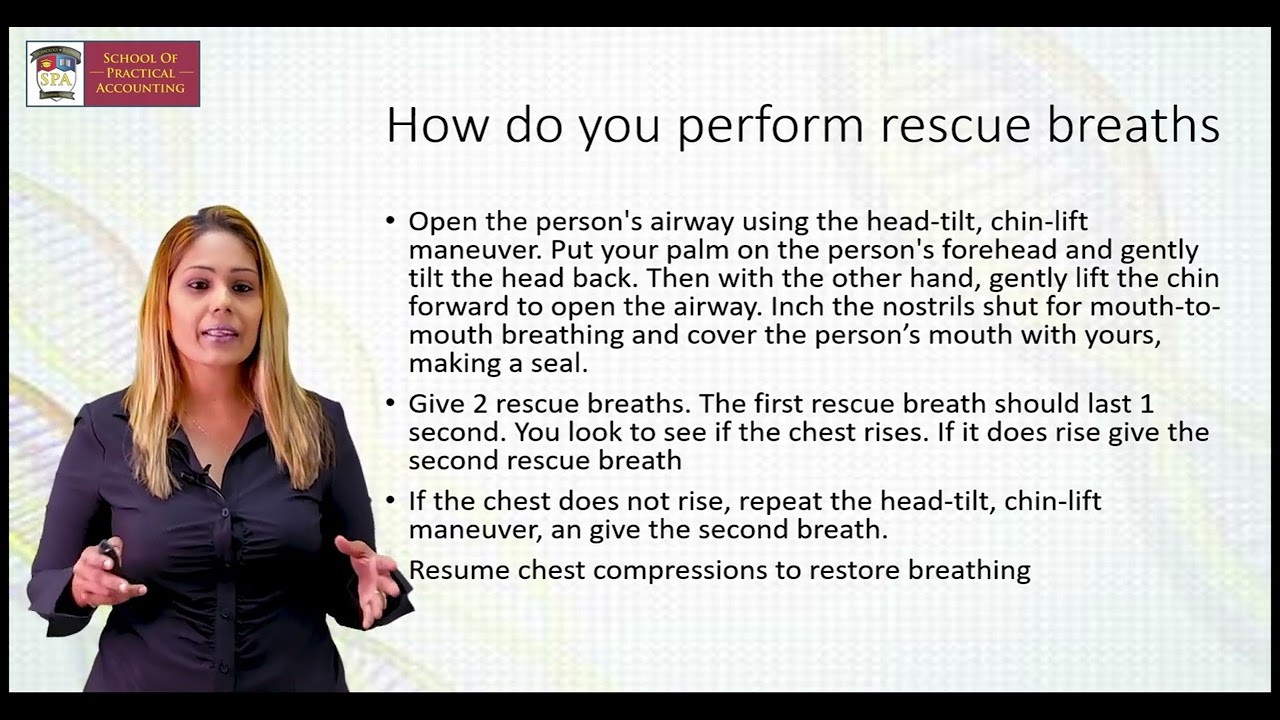
- Rescue breathing, or mouth-to-mouth resuscitation, is performed by trained professionals.
- The airway is opened using the head-tilt chin-lift maneuver.
- Two rescue breaths are given after 30 chest compressions, with each breath lasting about 1 second.
- The goal is to observe chest rise with each breath; if it doesn't rise, re-adjust the airway and try again.
- The American Heart Association recommends the CAB sequence: Compressions, Airway, Breathing.
- Before starting CPR, check for a pulse and breathing for no more than 10 seconds.
- CPR for infants typically involves using the index and middle fingers for compressions.
- Cardiac arrest in infants is often due to respiratory issues like choking, unlike adults where it's often a primary heart issue.
- Key equipment includes CPR masks, barrier devices, gloves, bag-valve masks (BVMs), and Automated External Defibrillators (AEDs).
- AEDs deliver an electric shock to restore a normal heart rhythm.
- Personal Protective Equipment (PPE), such as gloves and masks, is crucial to protect rescuers from bloodborne pathogens.
- Following guidelines from organizations like the American Heart Association ensures standardized and effective care.
Key takeaways
- CPR is a critical intervention to maintain brain oxygenation during cardiac arrest, with time being of the essence.
- Hands-Only CPR is a viable and effective option for untrained individuals, focusing on continuous chest compressions.
- Effective chest compressions require a specific depth (2 inches) and rate (100-120 per minute) to circulate blood.
- The CAB sequence (Compressions, Airway, Breathing) provides a structured approach to CPR for trained professionals.
- While rescue breaths are part of professional CPR, chest compressions are the most crucial element for immediate life support.
- CPR techniques must be adapted for infants, considering common causes of arrest like choking.
- Utilizing equipment like AEDs and PPE enhances the effectiveness and safety of CPR interventions.
Key terms
Test your understanding
- What is the primary goal of CPR in the minutes following a sudden cardiac arrest?
- How does Hands-Only CPR differ from CPR performed by trained professionals?
- What are the recommended rate and depth for performing chest compressions during CPR?
- Describe the steps involved in opening the airway and administering rescue breaths.
- Why is it important for rescuers to use Personal Protective Equipment (PPE) during CPR?