AI-Generated Video Summary by NoteTube
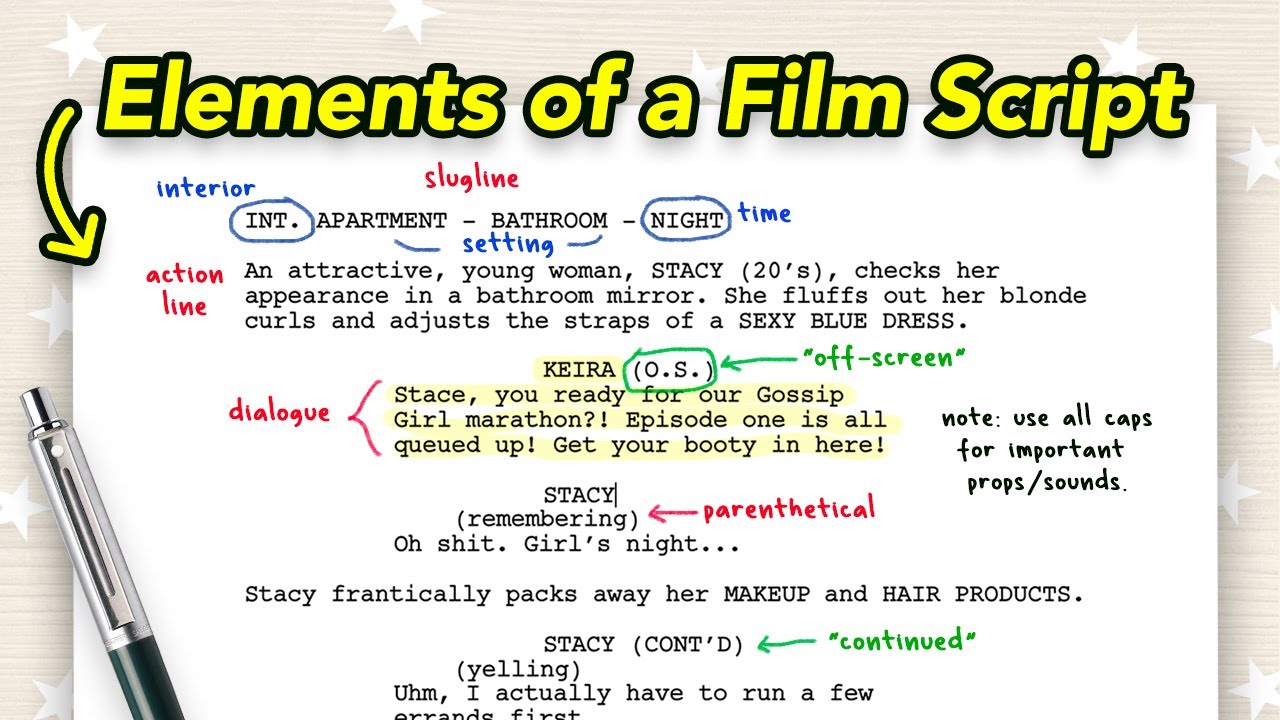
Basic Elements of a Film Script for BEGINNERS! (How To Format, Read and Write a Screenplay!)
Makayla Lysiak
Overview
This video provides a beginner-friendly guide to the fundamental elements of a film script, aimed at aspiring actors and filmmakers. It breaks down the essential components of screenplay formatting, explaining their purpose and usage. Key elements covered include slug lines (scene headers) for setting location and time, action lines for describing what happens and introducing characters, and dialogue formatting. The presenter also clarifies common script abbreviations like VO (voice-over), OS (off-screen), and OC (off-camera), differentiating between them. Parentheticals are explained as concise directions for actors, and transitions are briefly touched upon. The video emphasizes the importance of clear formatting for effective communication within the production team and encourages viewer engagement by asking for their favorite script elements.
This summary expires in 30 days. Save it permanently with flashcards, quizzes & AI chat.
Chapters
- •Film script language can be foreign to newcomers.
- •This video explains terms and lingo used in film scripts.
- •The presenter is a professional actress and helps aspiring actors/filmmakers.
- •Encourages viewers to subscribe for career navigation tips.
- •Slug lines establish the time and setting of a scene.
- •Starts with INT (interior) or EXT (exterior) to specify location type.
- •Followed by the specific setting (e.g., Coffee House, Bedroom).
- •Concludes with the time of day (e.g., DAY, NIGHT).
- •Describe what is happening in the scene and provide details.
- •Character names are capitalized on their first introduction.
- •Character ages or brief descriptions can be included in parentheses.
- •Important props, sounds, or specific actions may be capitalized for emphasis.
- •Character names appear on their own line, followed by dialogue.
- •Abbreviations like VO (Voice Over) indicate how dialogue is delivered.
- •OS (Off-Screen) means the character is not in the immediate space (e.g., another room).
- •OC (Off-Camera) means the character is in the same space but not visible to the camera.
- •Provide specific, concise directions for dialogue or action.
- •Used for tone (e.g., yelling, crying), pauses (e.g., beat), or clarifying context (e.g., re: coffee).
- •Offer direction without taking up a full action line.
- •Transitions (e.g., CUT TO, JUMP CUT) appear at the bottom left of a scene.
- •They help establish tone and pacing.
- •Script formatting can vary based on genre (e.g., multicam comedy vs. drama).
- •Different script types have unique formatting for action lines and dialogue.
Key Takeaways
- 1Slug lines (INT./EXT. LOCATION - TIME) are crucial for setting the scene.
- 2Action lines describe the visual and auditory elements of a scene.
- 3Character names are capitalized only upon their first appearance.
- 4VO, OS, and OC are distinct abbreviations indicating how dialogue is presented.
- 5Parentheticals offer brief, specific direction for actors within dialogue.
- 6Formatting conventions ensure clarity for the entire production team.
- 7Scriptwriting involves specific lingo and structural elements.
- 8Understanding these basics is essential for anyone working in film or television.