1:09:22
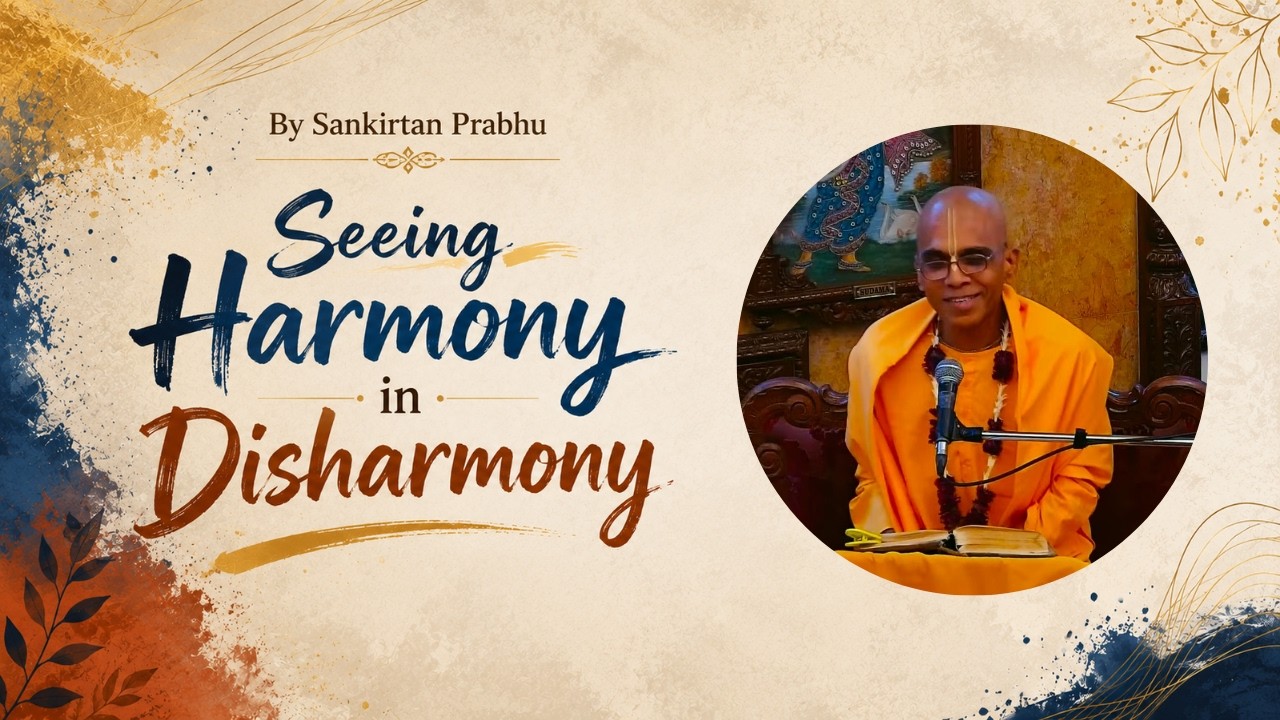
30th June '26 | H.G. Sankirtan Prabhu | S.B. 3.15.33 | ISKCON Chowpatty Mumbai.
Radha Gopinath Media - ISKCON Desire Tree
Overview
This video delves into the concept of "Vaikuntha," the spiritual realm of harmony, contrasting it with the material world's inherent disharmony. It uses the story of the four Kumaras encountering doorkeepers at the Vaikuntha gates to illustrate the qualifications needed for spiritual advancement. The speaker emphasizes that true qualification lies not in external knowledge or actions, but in internal consciousness and devotion to Krishna, highlighting that the material world, despite its imperfections, is a reflection of the spiritual realm and a place for spiritual preparation.
How was this?
Save this permanently with flashcards, quizzes, and AI chat
Chapters
- Vaikuntha signifies a state of complete harmony and freedom from anxiety, unlike the material world which is characterized by constant disharmony and fear.
- Disharmony in the material world arises from the living entity's rebellion against the Supreme Lord and their disconnection from Him.
- Religion, in its true sense, is devotional service and Krishna consciousness, which fosters harmony.
- Even organizations like ISKCON can be considered Vaikuntha if their members live in harmony according to Krishna's principles.
Understanding the fundamental difference between the spiritual and material realms helps learners appreciate the ultimate goal of spiritual life and the nature of true happiness.
ISKCON can be a Vaikuntha if members live in harmony according to Bhagavad Gita principles.
- The four Kumaras are eternally liberated souls who, despite appearing as children, possess profound spiritual understanding and are free to travel anywhere.
- They represent a state of consciousness where everything is seen as Krishna's property, leading to a natural sense of freedom and detachment from material concerns.
- The human form of life is a crucial opportunity to understand our temporary existence and strive for permanent spiritual realization, rather than being fearful of aging and death.
- Simple acts of devotion, like offering a flower or leaf with love, or honoring prasadam, are sufficient for spiritual progress, as emphasized by Srila Prabhupada.
This chapter illustrates that spiritual advancement is accessible through simple devotional practices and a correct understanding of life's purpose, regardless of one's current material circumstances.
Offering a flower, fruit, or Tulsi leaf to Lord Krishna with love and devotion.
- Entering the Kingdom of God requires specific qualifications, similar to obtaining a visa for a foreign country; it's a legal and procedural process, not an infiltration.
- Knowledge and austerities alone are not sufficient; true qualification comes from devotion and the Lord's permission.
- The spiritual world is not a place for personal ambition or creating one's own group; it requires humility and a desire to serve the servant of the servant.
- The consciousness of an individual is paramount; one must cultivate spiritual consciousness to create harmony, rather than bringing material consciousness into a spiritual environment.
This section clarifies that spiritual realization is not automatic but requires a specific internal transformation and adherence to divine principles.
Comparing entry into the Kingdom of God to the process of obtaining a visa and passing security checks at an embassy.
- The story of Jaya and Vijaya, the Vaikuntha doorkeepers, highlights how even in the spiritual realm, apparent 'disharmony' serves a divine purpose, leading to the elevation of souls.
- The doorkeepers' mistake of stopping the four Kumaras, who were advanced devotees, led to their own descent into the material world, but also served to elevate the Kumaras further.
- The Lord's plan is perfect, ensuring harmony even when apparent mistakes occur, and the ultimate goal is to purify consciousness.
- The fragrance of the Lord's divine offerings, like tulsi and flowers, is a subtle yet powerful means of spiritual connection.
This narrative demonstrates that perceived setbacks or conflicts are part of a larger divine plan aimed at spiritual growth and the eventual return of all souls to God.
Jaya and Vijaya stopping the four Kumaras, leading to their own punishment and the Kumaras' continued spiritual journey.
- The most important factor for spiritual advancement is not the place one is in or the service one performs, but the consciousness with which one acts.
- A person with material consciousness, even in a spiritual setting, will manifest material qualities and create disharmony.
- Temples are like universities where people of various qualifications and intentions come, but only those who become serious students of Krishna consciousness truly benefit.
- The ultimate goal is to prepare oneself in this material world, which is a reflection of the spiritual world, to qualify for eternal residence in the Kingdom of God.
This emphasizes that internal transformation and cultivating the right consciousness are essential for experiencing spiritual reality, regardless of external circumstances.
Comparing temples to universities where different people (students, professors, security) enter with different roles and qualifications, but only serious students achieve the ultimate goal.
Key takeaways
- Vaikuntha is a state of perfect harmony achieved through devotion and disconnection from material desires.
- The material world, though temporary and filled with disharmony, serves as a training ground for spiritual realization.
- True spiritual qualification stems from internal consciousness and devotion, not external knowledge or actions.
- Simple devotional practices, performed with love, are sufficient for significant spiritual progress.
- Every event, even apparent mistakes or conflicts, is orchestrated by the Lord for the ultimate spiritual elevation of souls.
- Cultivating spiritual consciousness from within is the key to experiencing harmony and returning to the spiritual world.
- Temples and spiritual gatherings are like universities that prepare individuals for eternal life in the Kingdom of God.
Key terms
VaikunthaMaterial WorldHarmonyDisharmonyDevotional ServiceKrishna ConsciousnessFour KumarasLiberated SoulsConsciousnessKingdom of God
Test your understanding
- What is the fundamental difference between Vaikuntha and the material world?
- How does the story of the four Kumaras illustrate the qualifications needed for spiritual advancement?
- Why is consciousness considered more important than external actions or knowledge in achieving spiritual realization?
- What role does apparent disharmony play in the Lord's divine plan for souls?
- How can one prepare themselves in the material world to qualify for the eternal spiritual realm?