10:56
11 Simple Ways to Organize Any Workshop
MWA Woodworks
Overview
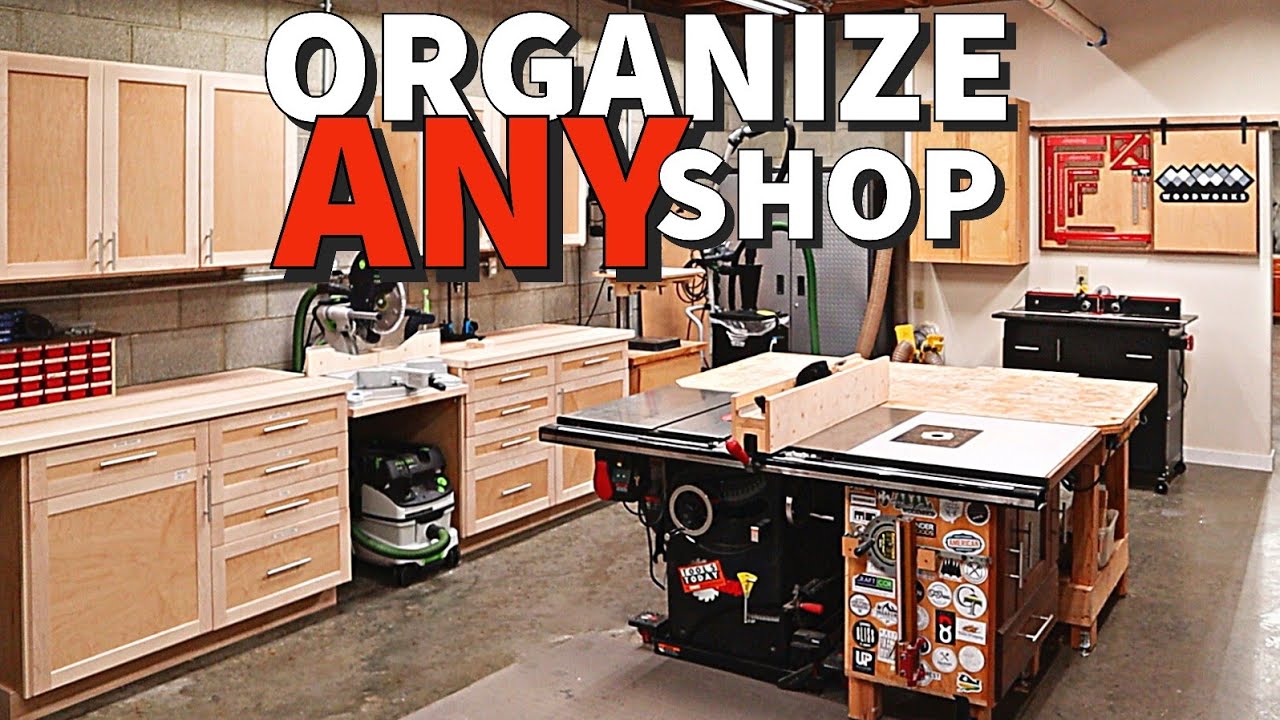
This video provides 11 practical tips for organizing any workshop, emphasizing how disorganization costs time and money. It introduces three fundamental rules: assign a home for everything, group similar items together, and store items near their point of use. The video then details specific strategies like prioritizing frequently used items, utilizing vertical space, labeling unseen items, managing small parts with specialized containers, maximizing space under tools, and organizing lumber scraps. The presenter shares personal examples and custom solutions to illustrate these principles, encouraging viewers to adapt them to their own workspaces.
How was this?
Save this permanently with flashcards, quizzes, and AI chat
Chapters
- Every item in the workshop needs a designated 'home' to prevent it from getting lost or misplaced.
- Group similar items together (e.g., all fasteners, all glues) to easily locate what you need.
- Store tools and materials close to the areas where they are most frequently used to minimize travel time.
These three rules form the bedrock of an efficient workshop, directly reducing time wasted searching for items and preventing duplicate purchases.
Storing all glues and adhesives in one specific cabinet located just a few steps away from the primary assembly area.
- Frequently used items should be stored in easily accessible locations like countertops or upper cabinets.
- Lesser-used items can be stored in less accessible places like bottom drawers or the back of cabinets.
- Utilize pull-out trays or drawers in lower cabinets to improve access to items stored there.
Organizing by frequency of use ensures that your most common tools and materials are always within easy reach, streamlining your workflow.
Keeping marking and measuring tools, along with drivers and bits, in upper cabinets for quick access, while less frequently used items are in lower drawers.
- Labeling is crucial for items stored in cabinets or drawers where they cannot be seen.
- Use clear or visually appealing labels that blend with the workspace while remaining readable.
- Employ small, clear, stackable plastic containers for organizing fasteners like nuts and bolts, allowing for easy identification and portability.
Effective labeling and organized small parts storage prevent confusion and ensure you can quickly identify and retrieve specific components without opening multiple containers.
Using small, clear plastic bins for nuts and bolts, which are stackable and allow you to see the contents and quantity at a glance.
- Transform wasted space under tools and workbenches into functional storage areas.
- Utilize vertical space by installing upper cabinets or storage lofts.
- Consider using wall space effectively with custom racks or organizers.
Maximizing every inch of your workshop space, including often-overlooked areas, significantly increases storage capacity without expanding the physical footprint.
Building storage into the open metal frame of a router table to house all router bits, accessories, and the router itself.
- Create custom storage solutions tailored to your specific tools and materials, such as specialized racks or charging stations.
- Building custom storage can also serve as practice for woodworking skills.
- Implement a system for organizing lumber scraps, using racking for longer pieces and bins or carts for smaller offcuts.
Custom solutions ensure a perfect fit for your unique needs, while a dedicated lumber scrap strategy prevents clutter and promotes material reuse.
A custom-built clamp rack that neatly stores a large quantity of clamps on the wall, or a charging station for drills and drivers.
Key takeaways
- A disorganized workshop is a direct drain on both time and financial resources.
- The core principles of organization are assigning homes, grouping like items, and storing near the point of use.
- Prioritizing accessibility for frequently used items significantly speeds up workflow.
- Labeling is essential for any storage solution where contents are not immediately visible.
- Small parts, like fasteners, require dedicated, organized storage to prevent loss and confusion.
- Maximizing unused space, especially vertical and under-tool areas, is key to efficient storage.
- Custom storage solutions can perfectly address unique organizational challenges and improve workshop functionality.
- A clear strategy for managing lumber scraps prevents clutter and encourages resourcefulness.
Key terms
Workshop organizationStorage solutionsPoint of use storageItem categorizationAccessibility hierarchyLabelingSmall parts organizationSpace maximizationVertical storageLumber scrap management
Test your understanding
- What are the three fundamental rules for organizing any workspace?
- How does storing items near their point of use save time and money?
- Why is labeling important, especially for items stored inside cabinets or drawers?
- What strategies can be employed to maximize storage space in a workshop?
- How should lumber scraps and offcuts be managed to prevent workshop clutter?