13:01
Basic Taxonomy-6 Kingdoms of Life-Classification
MooMooMath and Science
Overview
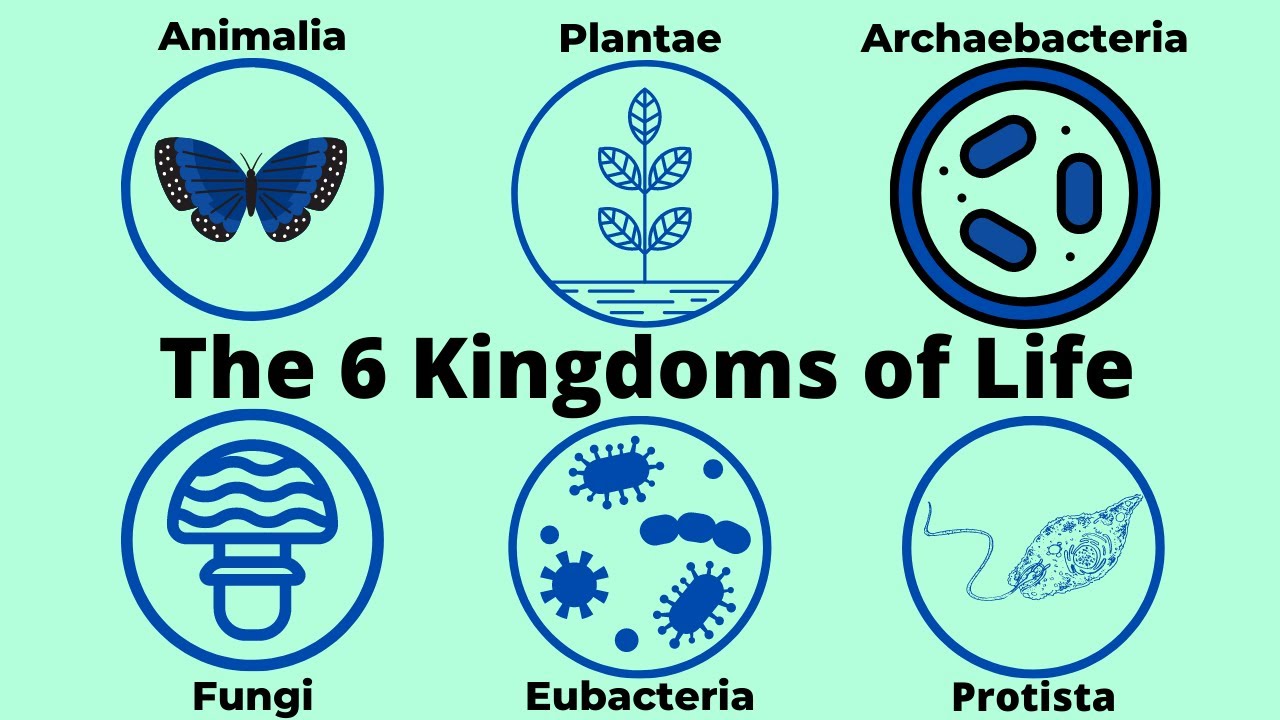
This video introduces the six kingdoms of life used for biological classification: Bacteria, Archaea, Protista, Fungi, Plantae, and Animalia. It explains the key characteristics of each kingdom, including cell structure (prokaryotic vs. eukaryotic), mode of nutrition (autotroph vs. heterotroph), and reproduction. The video highlights the evolutionary shift from a five-kingdom system to a six-kingdom system by separating Monera into Bacteria and Archaea. It provides examples within each kingdom and emphasizes their ecological importance.
How was this?
Save this permanently with flashcards, quizzes, and AI chat
Chapters
- Life is classified into six kingdoms: Bacteria, Archaea, Protista, Fungi, Plantae, and Animalia.
- The previous five-kingdom system has been updated, with Monera now divided into Bacteria and Archaea.
- Classification is based on characteristics like cell type, nutrition, and structure.
Understanding the six kingdoms provides a framework for organizing and studying the vast diversity of life on Earth.
The shift from the five-kingdom Monera to the two kingdoms Bacteria and Archaea.
- Both Bacteria and Archaea are single-celled prokaryotes, meaning they lack a nucleus and membrane-bound organelles.
- They possess cell walls, genetic material, cytoplasm, and ribosomes.
- Bacteria obtain energy through various methods, including sunlight, chemicals, or organic matter.
- Archaea often inhabit extreme environments and have distinct cell walls that make them antibiotic-resistant.
These foundational organisms play crucial roles in ecosystems, from nutrient cycling to decomposition, and some are essential for human life.
Bacteria helping to break down food in our stomachs or aiding the nitrogen cycle.
- Plants are multicellular, eukaryotic organisms that produce their own food through photosynthesis using chlorophyll.
- Plant cells have a cell wall made of cellulose and a large central vacuole for storage.
- They are categorized as vascular (with xylem and phloem for transport) or nonvascular (relying on osmosis).
- Plants can also be classified by the presence (angiosperms) or absence (gymnosperms) of flowers.
Plants form the base of most food chains, providing energy and oxygen essential for nearly all life on Earth.
Angiosperms like fruits and vegetables, and gymnosperms like pine trees.
- Protists are a diverse group of eukaryotic organisms, often considered a 'catch-all' kingdom.
- They can be unicellular or multicellular, aquatic or terrestrial, and exhibit various modes of nutrition (autotrophic or heterotrophic).
- Major groups include animal-like protists (e.g., amoeba, paramecium), plant-like protists (e.g., algae, euglena), and fungus-like protists (e.g., slime molds).
This kingdom bridges the gap between simpler and more complex life forms, showcasing a wide range of evolutionary adaptations.
An amoeba moving using a pseudopod or kelp as a large, multicellular alga.
- Fungi are eukaryotic organisms, including mushrooms, molds, and yeasts, that are primarily heterotrophs.
- They reproduce using spores and often absorb nutrients from decaying matter via hyphae.
- Fungal cell walls are typically made of chitin, unlike plant cell walls.
- Major types include zygomycetes (molds), club fungi (mushrooms), sac fungi (yeast, lichen), and imperfect fungi.
Fungi are vital decomposers, recycling nutrients back into the ecosystem, and many form essential symbiotic relationships with plants.
Bread mold (a zygomycete) or mushrooms (club fungi).
- Animals are multicellular, eukaryotic heterotrophs that obtain energy by consuming other organisms.
- Most animals possess the ability to move.
- The kingdom is broadly divided into vertebrates (with a backbone) and invertebrates (without a backbone).
- Examples range from simple sponges to complex mammals, found across all continents.
Animals represent the most complex forms of life, exhibiting diverse adaptations for survival and interaction within ecosystems.
Invertebrates like jellyfish and arthropods, and vertebrates like fish, birds, and mammals.
Key takeaways
- Biological classification organizes life into hierarchical kingdoms based on shared characteristics.
- Prokaryotic organisms (Bacteria and Archaea) are simpler, lacking a nucleus, while eukaryotes (Protista, Fungi, Plantae, Animalia) have a nucleus.
- Plants are essential producers, converting light energy into chemical energy through photosynthesis.
- Protists are a highly diverse group, often exhibiting traits that blur the lines between other kingdoms.
- Fungi play a critical role as decomposers, breaking down organic matter and returning nutrients to the environment.
- Animals are characterized by their multicellularity, heterotrophic nutrition, and generally, their ability to move.
- Understanding these kingdoms helps us appreciate the interconnectedness and evolutionary history of life on Earth.
Key terms
KingdomProkaryoteEukaryotePhotosynthesisAutotrophHeterotrophCell WallNucleusChitinHyphaeVertebrateInvertebrate
Test your understanding
- What are the defining characteristics that differentiate the six kingdoms of life?
- How do prokaryotic organisms like bacteria differ from eukaryotic organisms in terms of cell structure?
- Why are plants considered the producers in most ecosystems?
- What makes the Kingdom Protista a unique and diverse group?
- How do fungi contribute to the environment, and what is their primary mode of nutrition?
- What are the fundamental traits shared by all organisms within the Kingdom Animalia?