3:13
Where to Place In-Text Citations When Paraphrasing | APA 7th Edition
Smart Student
Overview
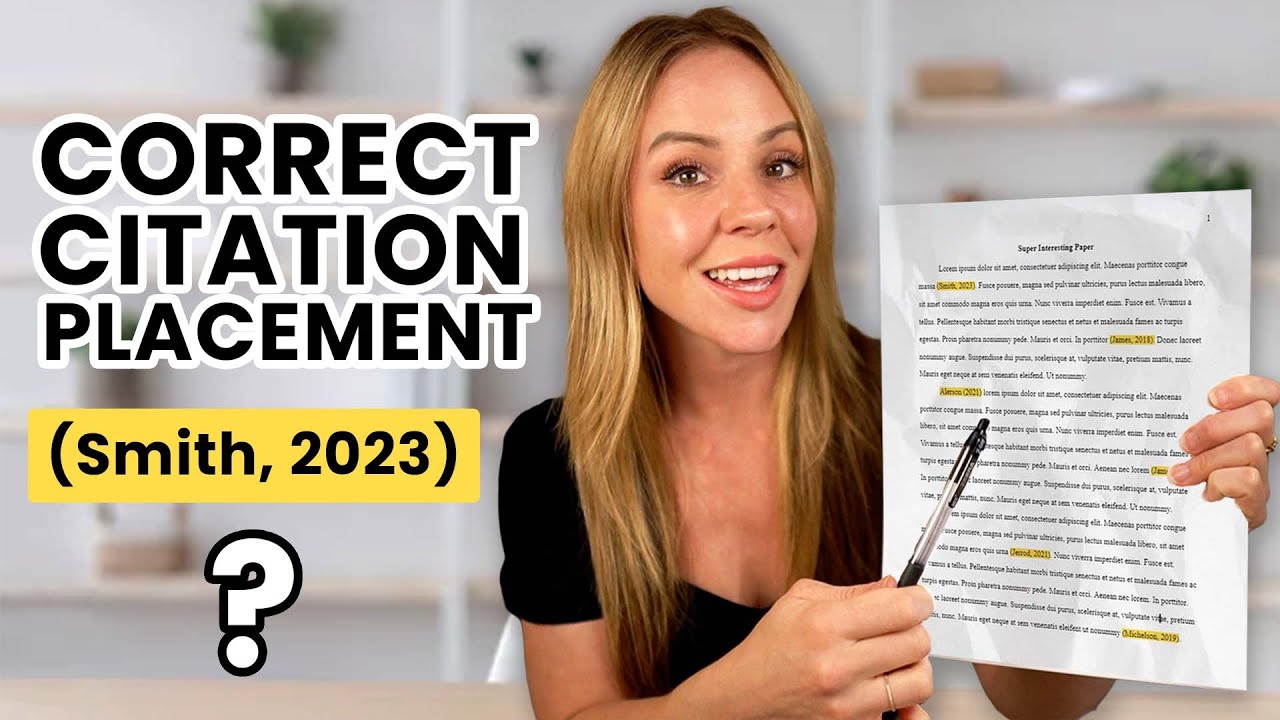
This video explains the proper placement of in-text citations in APA 7th Edition style, focusing specifically on paraphrased content. It outlines two primary rules: cite direct quotes within the quote itself, and cite paraphrased material after its first mention. The video provides several examples illustrating how to apply these rules in various scenarios, such as when a whole paragraph or just a section is paraphrased, when direct quotes are mixed with paraphrasing, and when multiple sources or non-consecutive paraphrased material are used across paragraphs. The core message emphasizes consistently crediting original authors to avoid plagiarism.
How was this?
Save this permanently with flashcards, quizzes, and AI chat
Chapters
- In-text citations are crucial for academic writing to credit original sources and avoid plagiarism.
- There are two main types of source material: direct quotes and paraphrased content.
- Paraphrasing, restating ideas in your own words, should form the majority of your source material.
Understanding the purpose of citations helps maintain academic integrity and builds credibility by acknowledging the work of others.
When you use information from a book or article in your paper, you must cite it.
- For paraphrased material, the citation should appear after the first mention of that information within the text.
- Even if you refer to the same source multiple times, a citation is needed each time you re-introduce the paraphrased content.
- This rule applies consistently, ensuring the reader knows where your ideas end and the source's begin.
Properly placing citations for paraphrased content ensures you are giving credit where it's due and clearly distinguishing your ideas from those of the original author.
If a paragraph contains paraphrased information from a single source, the citation is placed in the first sentence of that paragraph.
- Direct quotes must always be cited immediately within the quoted text itself.
- This means the citation is placed directly after the quotation marks.
- This rule is separate from, but often combined with, the rules for paraphrasing.
Citing direct quotes accurately is essential for avoiding plagiarism and showing respect for the original author's exact wording.
When you copy a sentence verbatim from a source, the citation goes right after that sentence, before the closing quotation mark.
- When a paragraph contains both paraphrased material and a direct quote, combine both citation rules.
- If a paragraph uses paraphrased material from multiple sources, cite each source after its respective information is presented.
- When paraphrased material from a single source spans multiple paragraphs, include a citation at the beginning of each new paragraph where the material continues.
- If paraphrased material from a source is not consecutive, cite it each time a new section of that material begins.
Mastering these complex scenarios ensures clarity for your reader, even when integrating information from various sources or in fragmented ways.
If source A is paraphrased in the first half of a paragraph and source B in the second half, you'll have two separate citations within that paragraph.
Key takeaways
- Always cite your sources to avoid plagiarism and maintain academic integrity.
- Paraphrased material requires a citation after its first mention in the text.
- Direct quotes must be cited immediately within the quoted section.
- When mixing paraphrasing and direct quotes, apply both citation rules accordingly.
- If paraphrased content from one source continues across multiple paragraphs, re-cite it at the start of each new paragraph.
- Consistent citation practices ensure your readers can easily track the origin of information.
- Understanding citation placement is fundamental to responsible academic writing.
Key terms
In-text citationParaphrasingDirect quotePlagiarismAPA 7th EditionSource materialAcademic writing
Test your understanding
- What is the primary purpose of including in-text citations in academic writing?
- How should you cite paraphrased material according to APA 7th Edition rules?
- Where is the citation placed when you use a direct quote from a source?
- What is the recommended citation practice when paraphrased material from a single source spans several paragraphs?
- Why is it important to cite even when you are not directly quoting a source?