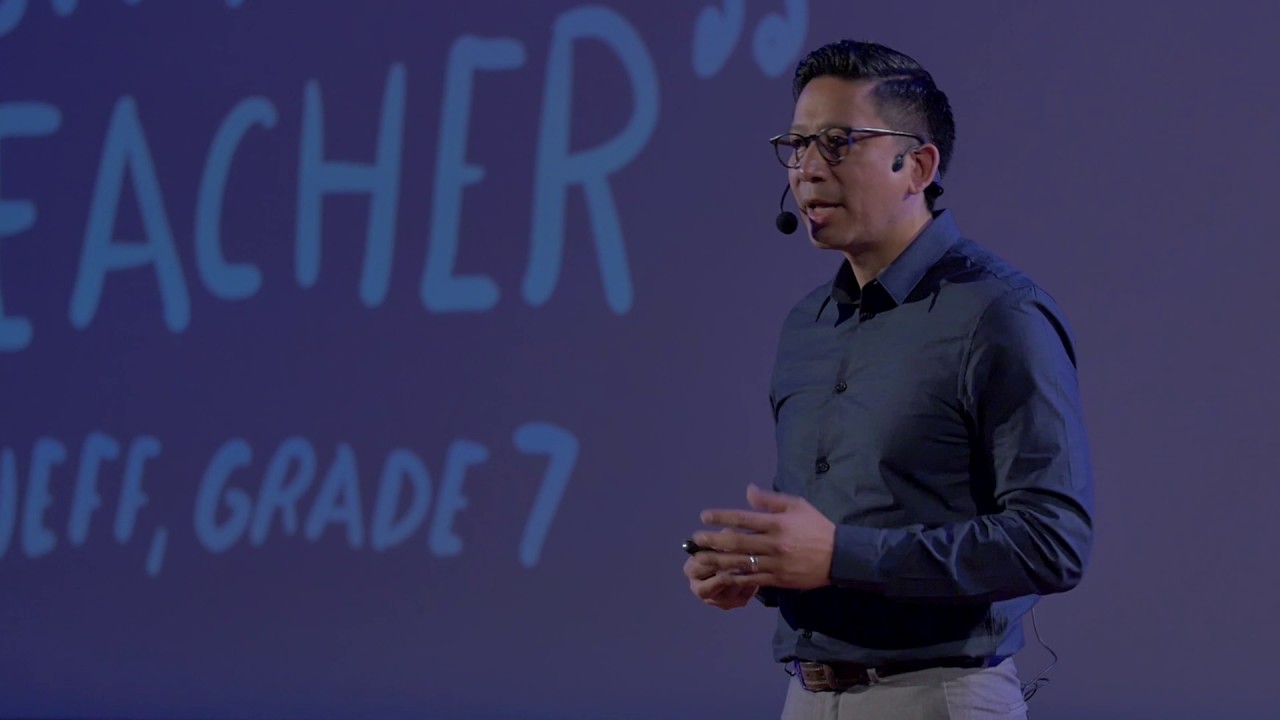
15:06
What makes a good teacher great? | Azul Terronez | TEDxSantoDomingo
TEDx Talks
Overview
This video explores the qualities that elevate a good teacher to a great one, drawing on the author's 24 years of experience and thousands of student responses. Instead of relying on traditional metrics, the speaker emphasizes the importance of listening to students' perspectives. Key themes include the need for teachers to be learners themselves, to understand students' lives outside of school, and to approach teaching with humility and a willingness to take risks. The talk advocates for a shift in educational focus from content expertise to deep understanding of students, highlighting listening as a crucial, yet often neglected, skill.
How was this?
Save this permanently with flashcards, quizzes, and AI chat
Chapters
- The author has spent 24 years trying to understand what makes a good teacher great, collecting thousands of student responses across diverse schools.
- Schools are often afraid to ask students this question, fearing a lack of seriousness or an inability to handle the feedback.
- Student responses, though sometimes cryptic, offer profound insights into effective teaching when truly listened to.
Understanding the root of student perception is crucial for educators to move beyond superficial teaching and connect more deeply with learners.
The initial, perplexing student response: 'A great teacher eats apples.'
- Students use their own language, where 'chill' means calm and not overly serious, reflecting a desire for emotional stability in the classroom.
- Adults often misinterpret common student phrases like 'fine' or 'OK,' missing deeper meanings about their day or feelings.
- Students want teachers to understand their world and perspective, but also to maintain a calm, protective presence.
Recognizing and understanding students' unique communication styles is fundamental to building trust and effective relationships.
The author's experience with his own children, where 'Fine' could mean 'It was pretty good' or 'Don't ask me, you wouldn't understand.'
- A significant student insight is that great teachers love to learn, not just teach.
- Students rarely see teachers learning or struggling with new material, which is a missed opportunity for inspiration.
- Teachers are often hired as content experts, but demonstrating a passion for learning alongside students fosters greater engagement.
Modeling a love for learning and vulnerability in the face of the unknown can profoundly inspire students and make education more authentic.
A teacher saying, 'I don't know exactly what we're going to do today, but I can't wait to learn with you.'
- The idea that 'a great teacher isn't a teacher' suggests that great teaching often happens outside the traditional classroom structure.
- Learning is best achieved through experience and practice, not just theoretical instruction, as illustrated by learning to ride a bike.
- Great teachers acknowledge their lives outside of school and understand that students' lives are also complex and extend beyond academics.
Recognizing teachers as whole individuals with lives beyond their profession, and understanding students' external realities, allows for more empathetic and effective teaching.
Yvette, a student who struggled with homework due to difficult home circumstances (electricity turned off, darkness), highlighting the need for teachers to look beyond academic performance.
- The response 'A great teacher sings' initially baffled the author but led to a breakthrough in understanding.
- Singing the day's agenda, rather than just reading it, transformed the classroom atmosphere from mundane to celebratory.
- Great teachers are willing to be vulnerable, take risks, and step outside their comfort zones, trusting their students' support.
Embracing unconventional methods and showing vulnerability can create memorable learning experiences and foster a stronger connection with students.
The author singing the classroom agenda in an operatic style, resulting in cheers and applause from students.
- Schools prioritize teaching reading, writing, and speaking, but dedicate virtually no formal instruction to listening.
- Listening is a critical skill for success in business and life, yet it is largely ignored in formal education.
- Shifting the focus from content experts to deep understanders of students, coupled with effective listening, could revolutionize education.
Developing and valuing listening skills in both teachers and students is essential for unlocking deeper understanding and transforming the educational landscape.
The absence of 'listening teachers' in schools, despite listening being a fundamental skill for communication and success.
Key takeaways
- True greatness in teaching stems from deeply understanding and connecting with students, not just imparting knowledge.
- Educators should model a love for learning and demonstrate vulnerability by admitting 'I don't know' and learning alongside students.
- Recognizing and respecting students' unique communication styles and life experiences outside of school is vital for effective teaching.
- Great teachers are willing to take risks and be unconventional, using creativity and humility to engage learners.
- Listening is a foundational skill that is severely underdeveloped in traditional education, yet critical for personal and professional success.
- Shifting the educational paradigm to prioritize understanding students over mastering content can lead to profound transformation.
- Asking students directly what makes a great teacher and genuinely listening to their responses can unlock powerful insights for improving education.
Key terms
Great TeacherStudent PerspectiveLearning vs. TeachingVulnerability in TeachingStudent LanguageActive ListeningExperiential LearningEmpathy in EducationContent ExpertiseUnderstanding Students
Test your understanding
- How does the student perception of a 'chill' teacher differ from a typical adult interpretation, and why is this distinction important?
- Why is it significant that students observe teachers as learners, and what are the implications for classroom engagement?
- What does the metaphor 'a great teacher isn't a teacher' imply about the nature of effective learning and instruction?
- How can a teacher's willingness to be vulnerable, as exemplified by 'singing,' foster a more positive and receptive learning environment?
- What are the potential consequences of neglecting formal listening instruction in schools, and how can this be addressed?