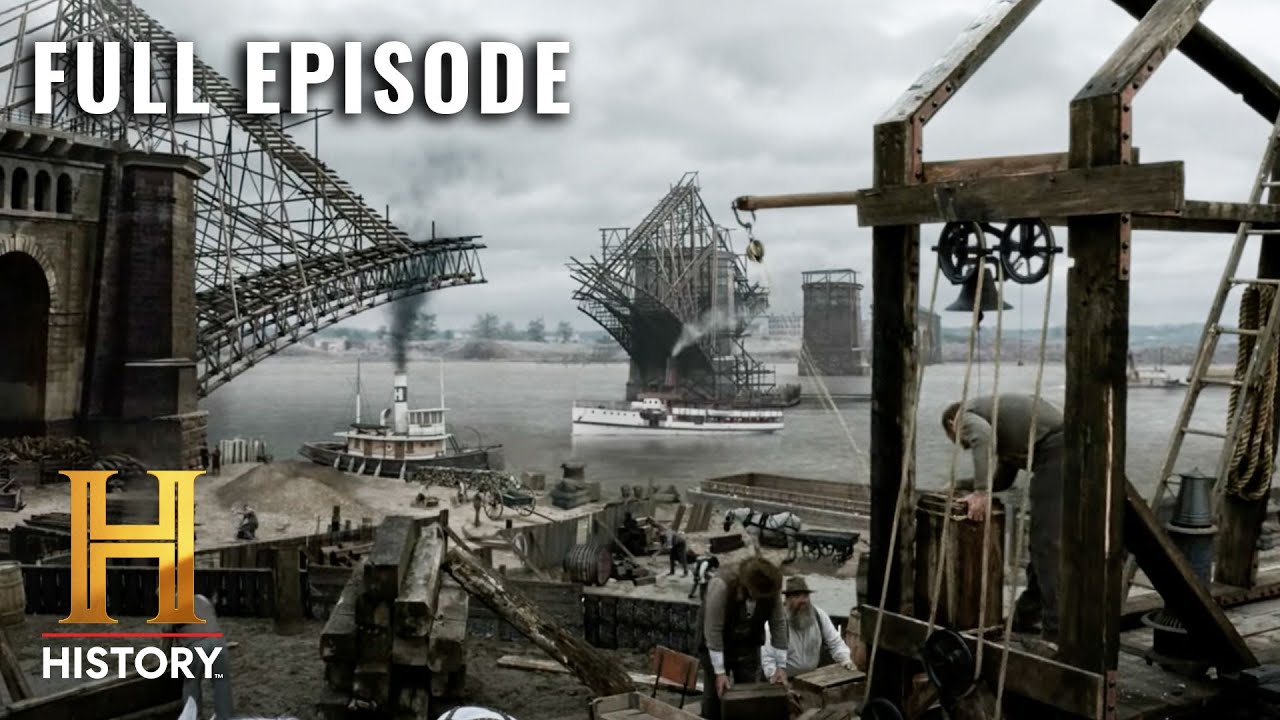
How Steel Forged a US Empire | The Men Who Built America (S1, E3) | Full Episode | History
HISTORY
Overview
This video chronicles Andrew Carnegie's rise to become a titan of industry, focusing on his pivotal role in the development and mass production of steel. It details his early career under mentor Tom Scott, his ambitious gamble on building the first major steel bridge across the Mississippi, and his subsequent establishment of Carnegie Steel. The narrative highlights Carnegie's strategic business decisions, his intense rivalry with John D. Rockefeller, and the labor struggles at his Homestead Steel Works, particularly the violent conflict with workers and the subsequent public outcry. Ultimately, the video illustrates how Carnegie's steel transformed American infrastructure and urban landscapes, solidifying his legacy as a key figure in America's industrial expansion.
Save this permanently with flashcards, quizzes, and AI chat
Chapters
- Andrew Carnegie began working at age 12 to support his family, a stark contrast to his desire for education.
- He was mentored by Tom Scott, who recognized Carnegie's intelligence and ambition, promoting him rapidly within the railroad company.
- Carnegie learned valuable lessons about risk-taking and investment from Scott, particularly in westward expansion.
- Scott's mentorship and confidence in Carnegie significantly boosted the young man's self-assurance.
- Carnegie took on the ambitious project of building the first large-scale railroad bridge across the Mississippi River, a critical link for westward expansion.
- Facing immense engineering challenges and the risk of bridge failure, Carnegie invested his entire fortune into the project.
- The limitations of iron led Carnegie to consider steel, a stronger but previously unproven and expensive material for large structures.
- Carnegie adapted Henry Bessemer's new technology to enable the mass production of steel, a key innovation for the bridge and his future endeavors.
- The ambitious steel bridge project faced significant delays and cost overruns, pushing Carnegie to the brink of financial ruin.
- Carnegie secured crucial last-minute financing by convincing investors of steel's future potential.
- To prove the strength and safety of the steel bridge to a skeptical public, Carnegie orchestrated a publicity stunt involving an elephant parade.
- The success of the stunt generated immense demand for Carnegie's steel, particularly from the railroad industry.
- With newfound demand, Carnegie, with financial backing, built his first large-scale steel plant, capable of massive daily production.
- Carnegie's expansion coincided with a railroad industry downturn, which negatively impacted his primary market.
- John D. Rockefeller exploited the railroads' weakness to negotiate better shipping rates for his oil, leading to the collapse of Carnegie's mentor Tom Scott's business.
- Carnegie, fueled by a desire for revenge against Rockefeller for his mentor's downfall, shifted his focus from railroad steel to structural steel for buildings.
- Carnegie recognized the potential of structural steel for building skyscrapers, a new and rapidly growing market.
- This shift made Carnegie Steel a key player in reshaping American cities vertically.
- To compete with Rockefeller's vast fortune, Carnegie hired Henry Frick, a ruthless businessman known for his aggressive tactics.
- The partnership aimed to increase profits through cost-cutting and eliminating waste, with Frick given significant operational control.
- Carnegie and Frick were members of the South Fork Fishing and Hunting Club, which controlled the South Fork Dam.
- Club members, including Frick, weakened the dam by lowering its height to create a larger lake for recreation, ignoring warnings from Johnstown officials.
- The dam catastrophically failed, causing the devastating Johnstown Flood, which killed over 2,000 people.
- Carnegie, feeling responsible, donated millions to rebuild Johnstown and began a campaign to restore his public image through philanthropy, including building libraries and Carnegie Hall.
- Carnegie aimed to increase profits further by reducing wages and extending working hours at the Homestead Steel Works, leaving him free to pursue philanthropy.
- Henry Frick, acting as chairman, implemented harsh working conditions, including 12-hour days, six days a week, leading to worker exhaustion and dangerous conditions.
- Workers organized into a union to protest the conditions and pay cuts, demanding negotiation.
- Frick, with Carnegie's tacit approval from afar, refused to negotiate and hired the Pinkerton Detective Agency to break the strike, leading to a violent confrontation.
- The Homestead Massacre resulted in public outrage, tarnishing Carnegie's reputation despite his philanthropic efforts.
- Anarchists, seeking retribution for the violence at Homestead, attempted to assassinate Henry Frick, highlighting the growing social unrest.
- While Carnegie battled labor issues and public image problems, John D. Rockefeller continued to amass his oil fortune.
- A new threat emerged with J.P. Morgan and Thomas Edison's work on electricity, signaling a potential shift in industrial dominance.
Key takeaways
- Mentorship and early opportunities can profoundly shape an individual's career trajectory and self-belief.
- Visionary leaders often embrace and adapt new technologies, even when they are unproven, to gain a competitive advantage.
- Overcoming immense financial and technical challenges requires significant risk-taking, perseverance, and strategic financing.
- Public perception and effective marketing are crucial for building trust and demand for new products and industries.
- Intense rivalries can drive innovation and strategic pivots, but also lead to ruthless business practices.
- Philanthropy can be used not only for social good but also as a tool for reputation management and legacy building.
- The pursuit of profit can lead to severe exploitation of labor, resulting in conflict and social unrest.
- Technological advancements and new industries can disrupt established powers, creating new opportunities and threats.
Key terms
Test your understanding
- How did Andrew Carnegie's early experiences and mentorship influence his approach to business and risk-taking?
- What technological innovation allowed Carnegie to mass-produce steel, and why was this critical for his success?
- Describe the strategies Carnegie employed to overcome financial difficulties and gain public acceptance for his steel products.
- What was the primary cause of the conflict between Carnegie Steel and its workers at the Homestead plant, and what were the consequences?
- How did Carnegie's rivalry with John D. Rockefeller shape his business decisions and long-term strategy?