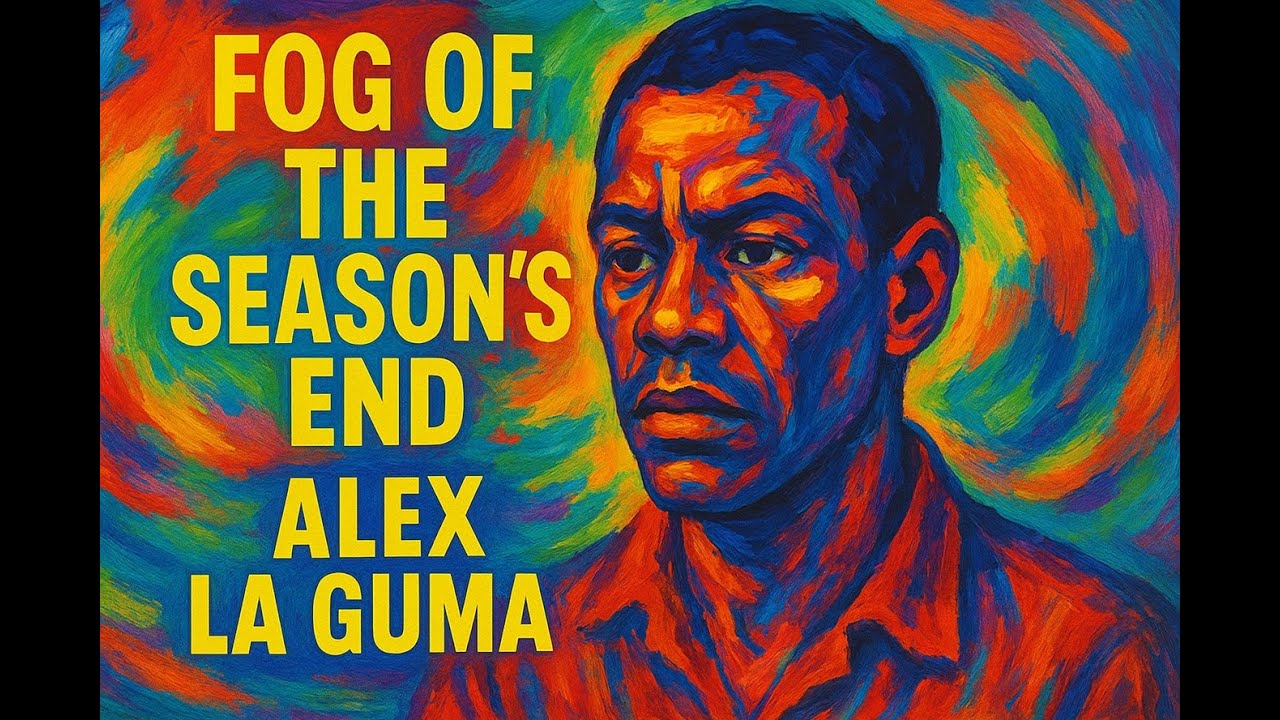
Summary and analysis of In the Fog of the Season’s End by Alex La Guma
John Bosco
Overview
This video summarizes and analyzes Alex La Guma's 1972 novel, "In the Fog of the Season's End." Set in apartheid-era South Africa, the novel focuses on the quiet, determined resistance of underground political activists, moving away from dramatic protests to explore the intimate mental and emotional lives of militants. It highlights themes of revolutionary commitment, the pervasive nature of oppression, loss and memory, the psychological impact of surveillance, and the enduring nature of hope amidst despair. The narrative follows protagonist Bucus, an activist, through dangerous tasks and personal reflections, culminating in a clandestine meeting that symbolizes the persistence of the liberation struggle despite uncertainty and repression.
Save this permanently with flashcards, quizzes, and AI chat
Chapters
- "In the Fog of the Season's End" is a politically charged novel by Alex La Guma, set in apartheid South Africa.
- It focuses on the quiet, organized resistance of underground activists, contrasting with La Guma's earlier works.
- The novel offers an intimate look at the psychological and emotional lives of militants, written from exile.
- The title symbolizes uncertainty, danger, and the indeterminate nature of the liberation struggle.
- The story is set in an unnamed South African city during the 1960s-70s, mirroring Cape Town under apartheid repression.
- Protagonist Bucus is a seasoned, principled activist in the underground liberation movement.
- The narrative follows Bucus through dangerous routine tasks like distributing pamphlets and organizing meetings, under constant threat of arrest.
- The murder of comrade France by security police serves as a pivotal event, strengthening Bucus's resolve.
- The central theme is resistance, portrayed as a disciplined, ideologically grounded, and continuous act, not spontaneous rebellion.
- The struggle is against not just racial injustice but also class oppression and colonial domination.
- Oppression is depicted as mundane and pervasive, embedded in everyday life through segregation, exploitation, and surveillance, rather than just overt brutality.
- The novel highlights the emotional toll and personal sacrifices required of professional revolutionaries.
- France's death is explored as a catalyst for political commitment and a meditation on loss and martyrdom.
- The novel mourns the broader losses and sacrifices of the oppressed people under apartheid.
- An omnipresent police state creates a climate of fear, paranoia, and silence, forcing activists to use coded communication and shifting identities.
- Despite the bleakness, the novel ends with defiant hope, symbolizing revolutionary renewal and the persistence of the movement.
- La Guma uses stream of consciousness, particularly in Bucus's internal monologues, to convey emotional depth and political reflection.
- The prose is dense yet lyrical, using sensory details to create a vivid urban landscape.
- Key symbols include fog (uncertainty, possibility), the season's end (approaching change), and the underground cell meeting (hope, continuity).
- Characters are presented as political types, embodying collective struggle rather than individual heroism.
- The novel concludes with a quiet affirmation of endurance and hope, celebrating the persistent, organized human struggle against injustice.
Key takeaways
- True revolutionary heroism lies in disciplined commitment and endurance, not necessarily in dramatic actions.
- Apartheid's oppression was deeply embedded in the fabric of daily life, affecting every aspect of existence for Black and Coloured South Africans.
- The psychological toll of living under constant surveillance and fear is a significant aspect of the struggle for liberation.
- Grief and loss can be powerful catalysts for strengthening political resolve and commitment to a cause.
- Even in the darkest and most uncertain times (symbolized by fog), hope for change and revolutionary renewal can persist.
- Alex La Guma's novel emphasizes the importance of organized, collective action in resistance movements.
- The novel serves as a tribute to the unsung heroes of liberation struggles who operate from the shadows.
Key terms
Test your understanding
- How does Alex La Guma's portrayal of resistance in "In the Fog of the Season's End" differ from more conventional depictions of political struggle?
- What is the significance of the novel's title, and how does the symbol of fog function throughout the narrative?
- In what ways does the novel illustrate the concept of 'benign oppression,' where injustice is normalized in daily life?
- How does the death of France impact Bucus and the broader movement, and what does it reveal about themes of loss and memory?
- What message does the novel convey through its ambiguous ending, and what does it suggest about the nature of hope in a repressive environment?