13:17
My #1 Model
PJ Trades
Overview
This video details a specific Nasdaq trading strategy called "internal to external liquidity," executed on CPI day. The trader explains how to identify a primary draw on liquidity (Asia high) and uses market structure, specifically a 15-minute fair value gap and a 1-minute BPR gap, to find a low-risk entry. The strategy emphasizes patience, waiting for the market to pull back into a key inefficiency before entering a trade with a tight stop, aiming for a significant profit target. The trader highlights the importance of understanding market manipulation during news events and using specific patterns like inversions and order blocks for confirmation.
How was this?
Save this permanently with flashcards, quizzes, and AI chat
Chapters
- CPI day offers high volatility and trading opportunities.
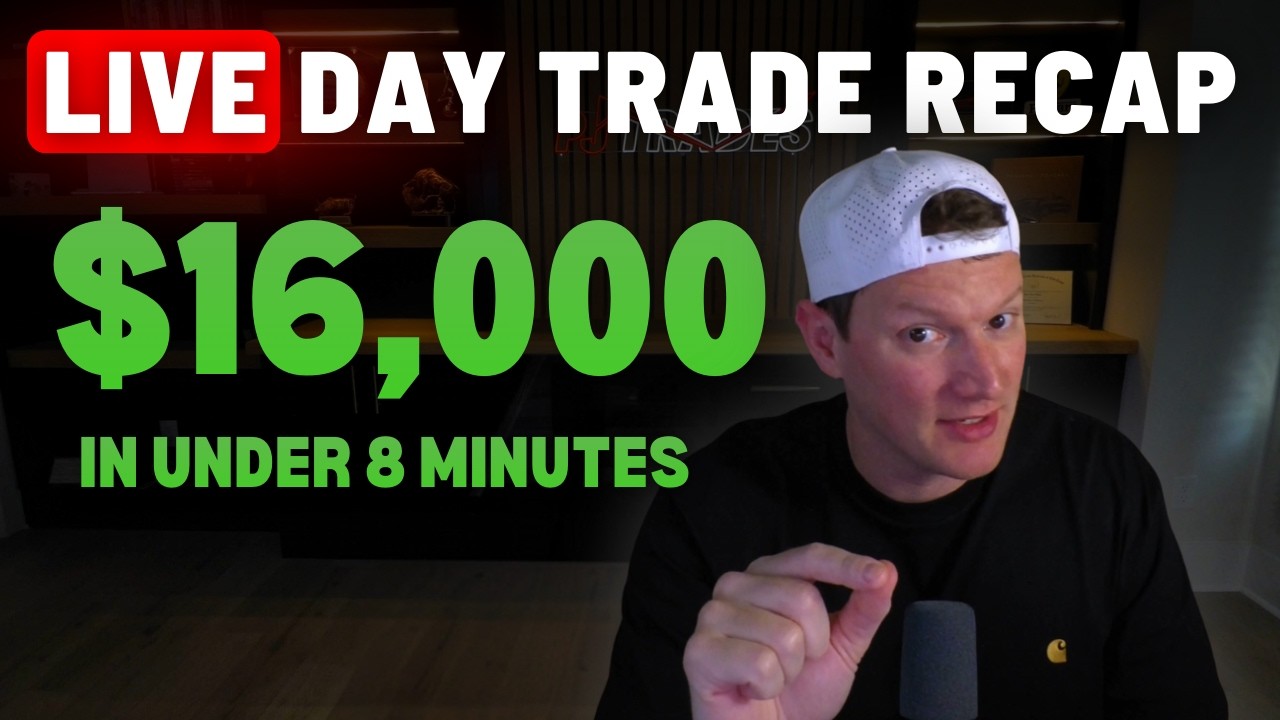
- The trader caught a 125-point Nasdaq winner in 8 minutes.
- Understanding market manipulation during news events is crucial.
- A 'scam wick' can trap breakout traders during news releases.
Understanding the volatility and manipulative tactics during major news events like CPI is essential for traders to avoid early losses and position themselves for profitable trades.
The market made a 'scam wick' to the upside at 8:30 AM during the CPI release, only to reverse sharply downwards, trapping long traders.
- The primary draw on liquidity for the trade was the Asia high.
- Data wicks (like CPI or NFP) can act as short-term liquidity targets.
- Data wicks are often used by 'dumb money' and can be retested.
- Overnight swing highs and lows are considered major liquidity pools, more so than data wicks.
Identifying the correct draw on liquidity is fundamental to predicting market direction and setting realistic profit targets, especially during volatile news events.
The market initially moved to the 'data wick high' after the CPI release, but this was a temporary target, not the main draw on liquidity for the trader's strategy.
- The core strategy is 'internal to external liquidity'.
- This model is only valid if the primary draw on liquidity (e.g., Asia high) remains unmitigated.
- The market must first move internally (e.g., during news) before targeting an external liquidity pool.
- Patience is required to wait for the market to pull back into a specific inefficiency.
This model provides a structured approach to trading, ensuring that trades are taken only when specific conditions are met, increasing the probability of success.
Because the Asia high was not taken out by the initial CPI news, it remained the valid external draw on liquidity for the 'internal to external' trade setup.
- A large, unmitigated 15-minute fair value gap (FVG) served as the key area of interest.
- This gap represents a significant inefficiency the market is likely to revisit.
- The trader specifically targeted the 'consequent encroachment' (midpoint) of this gap for entry.
- Smaller 'breakaway gaps' are less significant than larger, unmitigated session gaps.
Fair value gaps are critical areas of imbalance that often act as magnets for price, providing specific zones for potential entries and exits.
The trader waited for the Nasdaq to pull back into the midpoint of a large 15-minute fair value gap that formed earlier in the session.
- Confirmation was sought on lower timeframes (1-minute and 30-second).
- An 'inversion fair value gap' (IFVG) on the 1-minute chart provided initial bullish signal.
- A bearish order block on the 1-minute needed to be cleared for stronger confirmation.
- A 30-second 'breaker block' formation after piercing the order block signaled a change in the state of delivery (CiSD).
Using lower timeframes for entry confirmation helps refine the trade setup, ensuring a high-probability entry with a tight stop loss.
The market cleared a bearish order block on the 1-minute chart, creating a small 30-second breaker block, which signaled a shift to bullish momentum.
- A 1-minute Balanced Price Range (BPR) gap formed, acting as support.
- A BPR gap is created by overlapping FVG and inversion gaps.
- The trade entered as price pulled back into the BPR gap, holding it as support.
- A tight 39-point stop loss was used below the BPR gap.
- The trade executed a 'three-drive' pattern for exit confirmation.
Understanding and utilizing BPR gaps as support or resistance zones is key to managing risk and confirming entries during pullbacks.
The price pulled back into the 1-minute BPR gap, found support, and then initiated a strong move to the upside, leading to the profitable exit.
Key takeaways
- Identify the primary draw on liquidity (e.g., Asia high) before looking for trade setups.
- Understand that market news events often create 'scam wicks' to trap traders.
- The 'internal to external' liquidity model requires the external target to remain unmitigated.
- Large, unmitigated fair value gaps on higher timeframes (like 15-minute) are critical areas for price to revisit.
- Lower timeframe confirmations, such as inversion gaps and breaker blocks, refine entry precision.
- BPR gaps can act as crucial support or resistance zones during trade execution.
- Patience and discipline are essential to wait for high-probability setups like the internal to external model.
Key terms
CPI DayDraw on LiquidityAsia HighData WickScam WickInternal to ExternalFair Value Gap (FVG)Consequent EncroachmentInversion Fair Value Gap (IFVG)Bearish Order BlockChange in the State of Delivery (CiSD)Balanced Price Range (BPR) Gap
Test your understanding
- What is the primary draw on liquidity the trader identifies for this specific trade, and why is it important?
- How does the 'internal to external' trading model utilize market inefficiencies and liquidity?
- Why is a large, unmitigated 15-minute fair value gap considered a critical element in this trading strategy?
- What lower timeframe confirmations does the trader look for after price enters the 15-minute fair value gap?
- How can understanding 'scam wicks' and 'data wicks' help a trader avoid losses during news events like CPI?