45:40
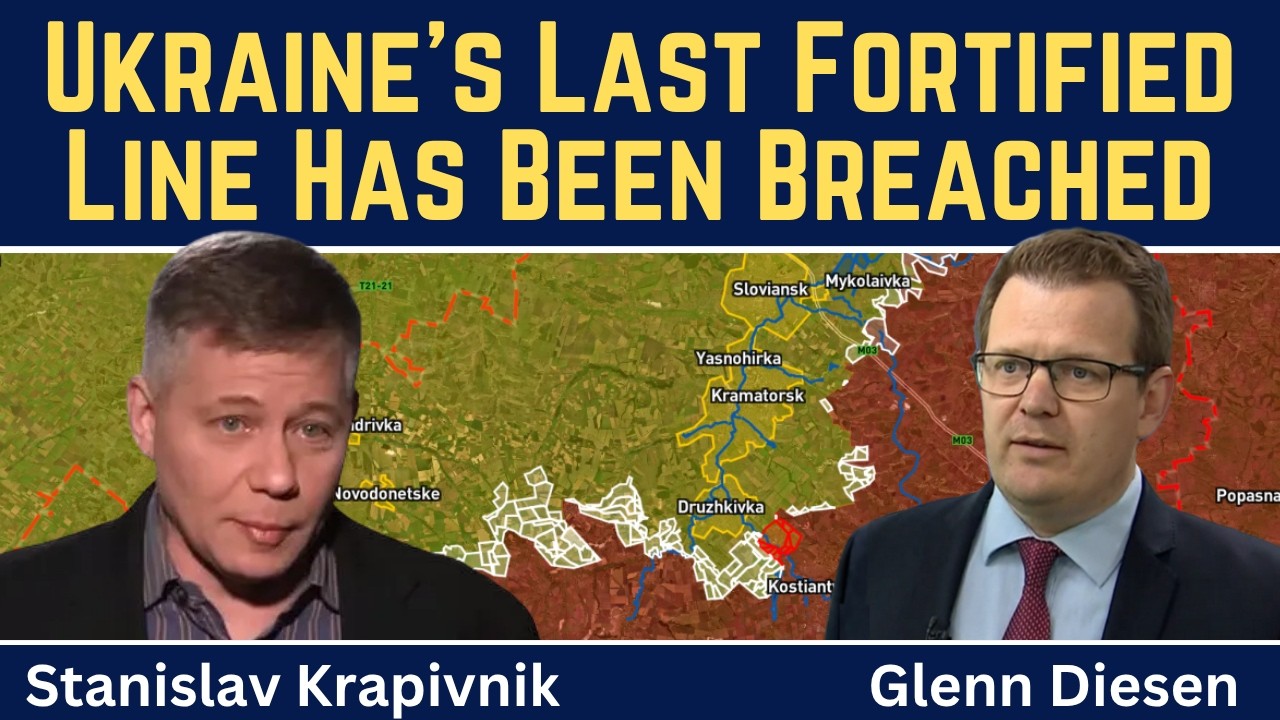
Stanislav Krapivnik: Ukraine's Last Fortified Line Has Been Breached
Glenn Diesen
Overview
This video discusses the current state of the conflict in Ukraine, focusing on the breach of Ukraine's last major fortified line in Donbas and its strategic implications. The analysis highlights Russia's advancements, Ukraine's manpower and logistical challenges, and the potential for a wider collapse of Ukrainian defenses. It also delves into the broader geopolitical context, critiquing Western military strategy and industrial capacity compared to Russia's, and forecasting severe winter conditions that will exacerbate Ukraine's infrastructure and energy problems, potentially leading to mass displacement and further instability.
How was this?
Save this permanently with flashcards, quizzes, and AI chat
Chapters
- Ukraine's last significant fortified defensive line in Donbas has been breached with the fall of the city of Doropole.
- Doropole was a key logistics hub, and its capture signifies that Russian forces have moved beyond the main fortifications.
- The breach opens up multiple strategic avenues for Russian forces, including potential encirclements of major Ukrainian cities like Zaporizhzhia and Kharkiv.
- Ukraine lacks sufficient troops to defend against advances on multiple fronts in the open terrain west of the former fortification line.
The fall of this fortified line represents a critical turning point, potentially leading to a rapid collapse of Ukrainian defenses and significant territorial gains for Russia.
The fall of Doropole, which was not heavily fortified itself but served as a deep rear logistics point for the main fortification line.
- The terrain west of the former defensive line is largely open fields with scattered tree lines and villages, offering few natural defensive positions.
- Dry autumn weather has allowed for continued military movement, but the onset of winter, including fog and potential mud, will impact operations.
- Russian forces possess air and artillery supremacy, making it difficult for Ukrainian troops to establish and hold defensive positions.
- Ukrainian infantry on the front lines are often poorly trained and motivated, making them vulnerable to well-trained and motivated attacking forces, especially when drone surveillance is reduced by weather.
These factors create a highly unfavorable environment for Ukraine, limiting its ability to establish stable defenses and increasing its vulnerability to Russian advances.
The difficulty of establishing defensive lines in open fields, which makes Ukrainian positions easily identifiable and targetable by Russian artillery and aviation.
- The breach allows Russia to potentially encircle major Ukrainian cities like Kharkiv by advancing from the south.
- The fall of key cities and the disruption of logistics could lead to the isolation of Ukrainian forces and a broader collapse.
- Russia appears to be targeting critical infrastructure, including bridges, to further isolate Ukrainian-held territories, particularly around Kyiv.
- The long-term strategy may involve degrading Ukraine's ability to sustain its war effort and its infrastructure through attrition and targeted strikes.
Understanding Russia's strategic objectives, such as isolating key areas and degrading infrastructure, is crucial for assessing the future trajectory of the conflict.
The targeting of bridges, making them unusable for heavy equipment, which significantly hampers Ukrainian logistics and troop movement.
- The West, particularly NATO, is criticized for lacking the manufacturing and logistical capacity to sustain a protracted war effort.
- Russia's production of artillery shells and tanks significantly outpaces that of NATO countries.
- Western military leadership is described as incompetent, relying on outdated tactics and failing to adapt to modern warfare, particularly in areas like minefield breaching.
- The reliance on US support for any major conflict is seen as unrealistic, given the potential human cost for American forces.
This analysis suggests a fundamental imbalance in military-industrial capabilities, questioning the West's ability to sustain a long-term conflict against Russia.
Russia producing over a thousand battle tanks annually, while NATO's combined production would take decades to match.
- Winter conditions in Ukraine will severely strain its energy infrastructure, with cities like Kyiv facing potential widespread power and heating outages.
- The damage to bridges and the European diesel shortage will make it difficult to supply generators and maintain essential services.
- The destruction of agricultural infrastructure and reduced crop yields in Ukraine and Europe could lead to widespread hunger and instability.
- Mass displacement of civilians from Ukraine due to harsh conditions and lack of resources is expected, creating a refugee crisis.
The impending winter and ongoing infrastructure damage pose an existential threat to Ukraine's civilian population and its ability to function as a state.
The eastern third of Kyiv potentially becoming uninhabitable due to damaged bridges, fuel shortages for generators, and the inability to provide essential services.
- The war and its economic fallout are expected to create significant hunger and potential conflict in Africa and other regions.
- This could lead to a cascading refugee crisis, with displaced populations seeking refuge in Europe, which itself faces internal instability.
- Western leadership is perceived as detached from reality, prioritizing economic gain over strategic sense, potentially leading to prolonged conflict.
- Internal political crises in countries like Poland highlight the growing instability within Europe, possibly leading to martial law or authoritarian measures.
The conflict's repercussions extend far beyond Ukraine, threatening global food security, creating mass migration, and destabilizing European political systems.
The potential for widespread hunger in Africa and Europe leading to increased conflict and a surge of refugees towards the EU.
Key takeaways
- The breach of Ukraine's main defensive line in Donbas signifies a critical shift, enabling deeper Russian advances.
- Ukraine faces severe logistical and manpower challenges, exacerbated by terrain and Russian military superiority.
- Western military strategy is criticized for its lack of adaptability and industrial capacity compared to Russia's.
- Winter conditions will critically impact Ukraine's infrastructure, leading to potential humanitarian crises and mass displacement.
- The conflict's economic and social consequences, including food shortages and refugee flows, pose significant threats to global stability.
- Internal political instability is rising within Europe, potentially leading to more authoritarian measures.
- The war is driven by complex geopolitical factors and economic interests, suggesting a prolonged and difficult path ahead.
Key terms
Fortified lineLogistics hubStrategic encirclementAir and artillery supremacyAttrition warfareIndustrial capacityMinefield breachingInfrastructure damageRefugee crisisGeopolitical instability
Test your understanding
- What are the primary strategic implications of the breach of Ukraine's last fortified line in Donbas?
- How do the terrain and weather conditions in Ukraine's western regions impact defensive capabilities?
- Why is Western military and industrial capacity considered insufficient to sustain a long-term conflict according to the analysis?
- What are the projected consequences of the upcoming winter on Ukraine's infrastructure and civilian population?
- How might the conflict's effects on food security and displacement lead to broader geopolitical instability?