16:05
The Breakup of Yugoslavia
WonderWhy
Overview
This video explains the formation and eventual dissolution of Yugoslavia, a country that existed for most of the 20th century. It details the initial unification after World War I, its re-establishment as a socialist federation after World War II, and the underlying ethnic tensions that simmered beneath the surface. The summary highlights the role of key figures like Tito and Milošević, the economic decline in the 1980s, and the rise of nationalism, which ultimately led to a series of brutal wars and the country's fragmentation into independent states.
How was this?
Save this permanently with flashcards, quizzes, and AI chat
Chapters
- Yugoslavia was formed in 1918 from the union of the Kingdom of Serbia, the Kingdom of Montenegro, and territories from the Austro-Hungarian Empire.
- Initially named the Kingdom of Serbs, Croats, and Slovenes, it was later renamed the Kingdom of Yugoslavia.
- The kingdom was occupied by Axis powers during World War II, leading to its collapse.
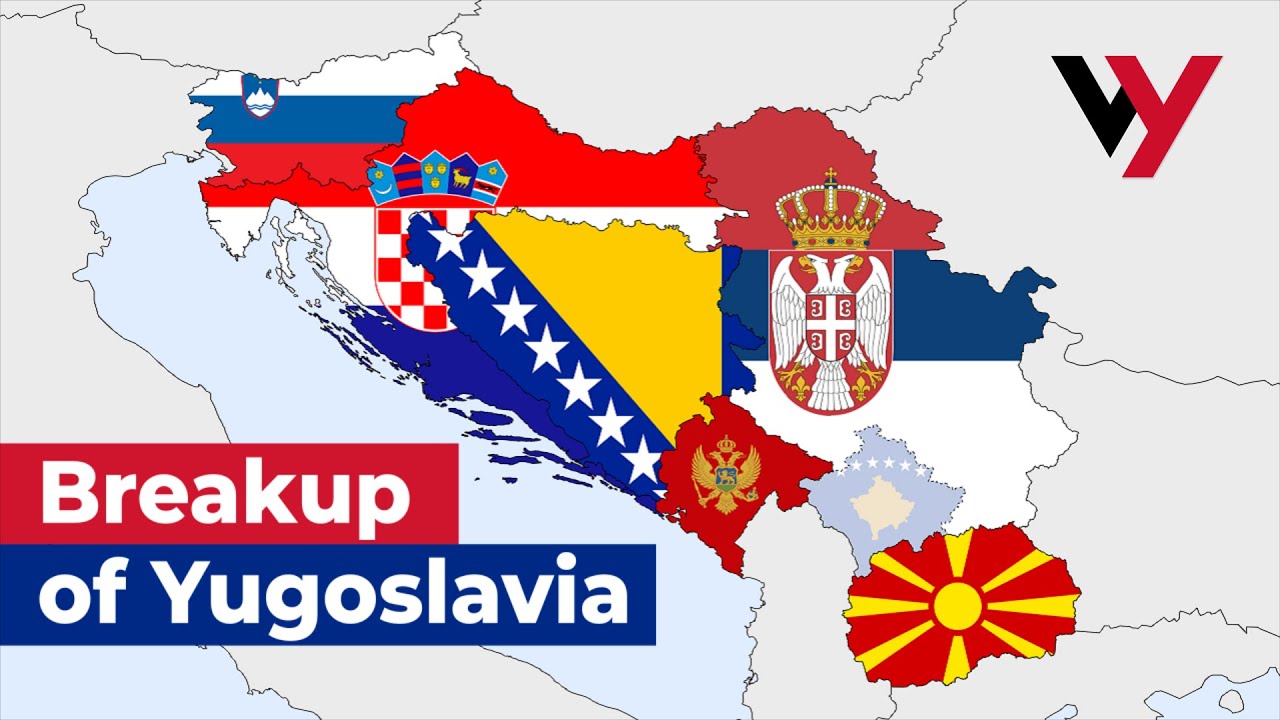
- After WWII, Yugoslavia was re-established as a socialist federation of six republics: Slovenia, Croatia, Bosnia and Herzegovina, Serbia, Montenegro, and Macedonia.
Understanding the historical origins of Yugoslavia is crucial for grasping the complex ethnic and political landscape that contributed to its eventual breakup.
The initial unification of diverse South Slavic peoples under one banner after the devastation of World War I.
- Yugoslavia remained neutral during the Cold War and co-founded the Non-Aligned Movement.
- Despite ethnic tensions, President Josip Broz Tito promoted 'Brotherhood and Unity' and suppressed nationalism, often forcefully.
- Tito's death in 1980 marked a turning point, allowing underlying ethnic and nationalist sentiments to resurface.
Tito's leadership temporarily masked deep-seated ethnic divisions; his death removed the central authority that had kept these tensions in check.
Josip Broz Tito's policy of 'Brotherhood and Unity' aimed at fostering inter-ethnic harmony, even if enforced.
- The 1980s saw economic decline, rising ethnic tensions, and growing nationalism.
- Slobodan Milošević rose to power in Serbia, seeking to centralize control and reduce the autonomy of Serbia's provinces, Vojvodina and Kosovo.
- Milošević's supporters used protests ('Rallies of Truth') to replace leaders in Kosovo, Vojvodina, and Montenegro, consolidating Serbian influence.
- The abolition of Kosovo's autonomy in 1989, despite its ethnic Albanian majority, sparked significant unrest, including a miners' strike.
The shift in power dynamics within Serbia, driven by Milošević's nationalist agenda, directly challenged the federal structure and alienated other republics.
The 'Rallies of Truth' used by Milošević's supporters to oust political leaders in Kosovo and Vojvodina, effectively creating a Serbian voting bloc.
- Disagreements over the structure of Yugoslavia—centralization versus republic autonomy—led to the walkout of Slovenian, Croatian, and Macedonian delegates from the League of Communists.
- Following the dissolution of the League of Communists, multi-party elections were held, leading to nationalist governments in several republics.
- Slovenia and Croatia declared independence on June 25, 1991, triggering the Yugoslav Wars.
- The Yugoslav Army's intervention in Slovenia (the Ten-Day War) was brief, but its involvement in Croatia escalated, supporting Serb rebels.
The failure to reconcile differing visions for Yugoslavia's future, coupled with the assertion of independence by key republics, irrevocably fractured the country.
Slovenia and Croatia's joint declaration of independence in June 1991, which directly challenged the federal authority.
- The Croatian War of Independence saw the Yugoslav Army and Serb rebels fighting against the Croatian government, with significant territorial gains by Serb forces.
- The Bosnian War, the bloodiest conflict, erupted after Bosnia and Herzegovina's referendum on independence, boycotted by Bosnian Serbs who declared their own republic (Republika Srpska).
- Attempts at peace, like the Carrington Plan and Vance-Owen Plan, failed due to disagreements over territorial division and ethnic rights.
- International intervention, including NATO airstrikes, became necessary to address escalating violence, such as the Srebrenica Massacre and the siege of Sarajevo.
The ensuing wars were characterized by brutal ethnic cleansing and widespread atrocities, highlighting the devastating consequences of unresolved national and ethnic conflicts.
The Srebrenica Massacre, where thousands of Bosnian Muslim men and boys were killed by Bosnian Serb forces, despite the town being a UN 'Safe Area'.
- The Dayton Accords in 1995 ended the Bosnian War, establishing a unified Bosnia and Herzegovina divided into two entities.
- Croatia launched military offensives in 1995 to retake Serb-controlled territories, leading to a mass exodus of Serbs.
- The conflict in Kosovo between ethnic Albanians and Serbia continued into the late 1990s, leading to NATO intervention and Kosovo's eventual declaration of independence.
- Serbia and Montenegro eventually separated, forming two independent states, marking the final dissolution of the Yugoslav entity.
The legacy of Yugoslavia's breakup continues to shape the region, with unresolved issues like Kosovo's status posing ongoing challenges to lasting peace.
The Dayton Peace Accords, which brought an end to the Bosnian War by establishing a complex power-sharing agreement.
Key takeaways
- The artificial unity of Yugoslavia, imposed by external forces and maintained by strong leadership, could not overcome deep-seated ethnic and nationalist divisions.
- Economic hardship and political instability in the 1980s exacerbated existing ethnic tensions, creating fertile ground for conflict.
- The rise of nationalist leaders like Slobodan Milošević played a pivotal role in escalating tensions and driving the push for secession and war.
- The breakup of Yugoslavia was not a single event but a series of interconnected conflicts, each with its own triggers and devastating consequences.
- International intervention, while sometimes necessary, often struggled to resolve the complex ethnic and political issues at play.
- The legacy of the Yugoslav Wars includes widespread human rights abuses, mass displacement, and a lasting impact on the geopolitical landscape of the Balkans.
- Despite the violent dissolution, the successor states have largely achieved peace and are pursuing independent development, though challenges remain.
Key terms
YugoslaviaSocialist Federal Republic of YugoslaviaJosip Broz TitoNon-Aligned MovementBrotherhood and UnitySlobodan MiloševićLeague of CommunistsRallies of TruthKosovoVojvodinaSerbsCroatsBosniaksSloveniaCroatiaBosnia and HerzegovinaMontenegroMacedoniaYugoslav WarsTen-Day WarCroatian War of IndependenceBosnian WarSrebrenica MassacreDayton AccordsRepublika SrpskaHerzeg-BosniaKosovo Liberation Army
Test your understanding
- What were the primary ethnic groups within Yugoslavia, and how did their relationships evolve over time?
- How did the leadership of Josip Broz Tito attempt to manage ethnic tensions, and what happened after his death?
- What role did Slobodan Milošević and Serbian nationalism play in the lead-up to the Yugoslav Wars?
- What were the main reasons for the failure of peace plans like the Carrington Plan and the Vance-Owen Plan?
- How did the international community's involvement, including NATO, impact the course of the Yugoslav Wars?