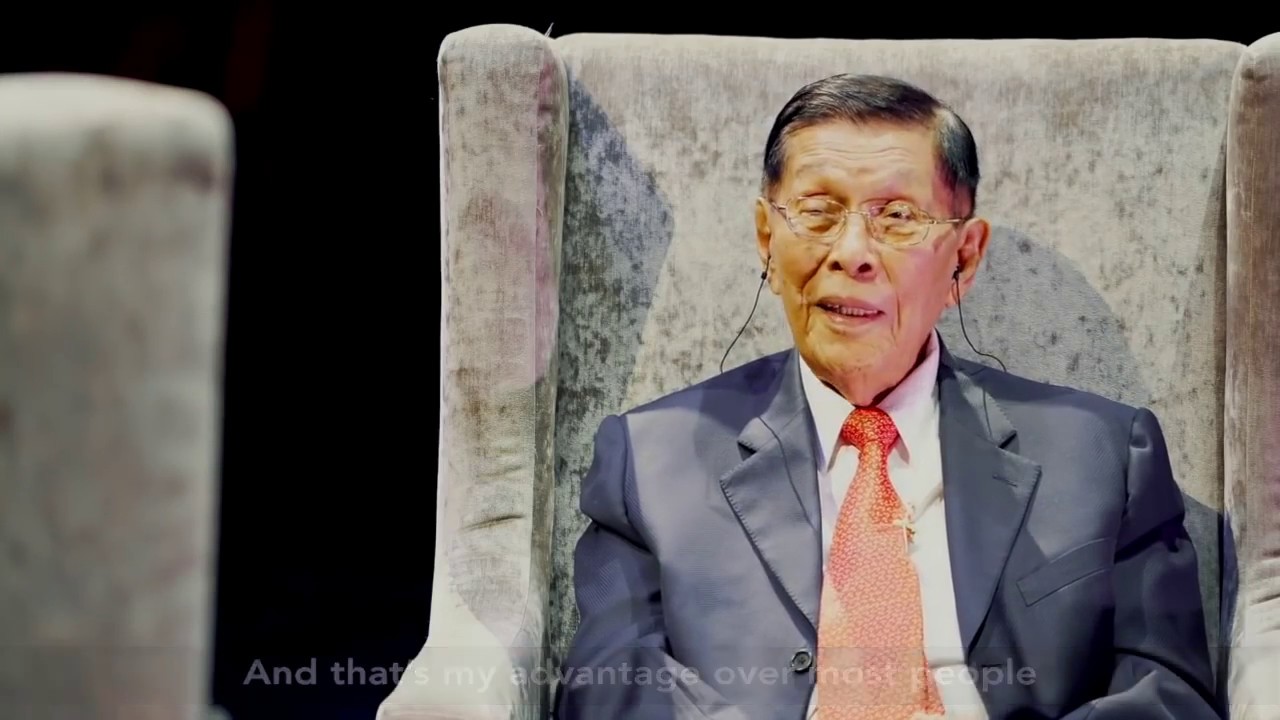
ENRILE A WITNESS TO HISTORY Episode 1 | Bongbong Marcos
Pinas Ang Ina Nyo
Overview
This video features a conversation with a witness to Philippine history, discussing the events leading up to and during the declaration of Martial Law under Ferdinand Marcos. The speaker, who is 95 years old, aims to correct historical distortions and provide a different perspective than what is commonly presented to younger generations. The discussion covers the socio-political climate of the time, including the presence of oligarchies, communist insurgency, separatism, and high criminality, arguing that these factors necessitated the declaration of Martial Law as a measure of state defense. It also touches upon nation-building efforts, infrastructure projects, and the expansion of education during the Marcos administration, contrasting it with the governance of subsequent administrations.
Save this permanently with flashcards, quizzes, and AI chat
Chapters
- The speaker, having witnessed history from the American era to the present, aims to counter the widespread distortion of historical narratives.
- Exercises like this conversation are important for gradually revealing the truth about past events.
- The speaker challenges the common narrative about Martial Law, particularly regarding the number of people killed and the reasons for arrests.
- Younger generations, often referred to as 'millennials,' have a different approach to history and seek to understand the decisions made during the Marcos administration.
- The country was experiencing significant unrest, including separatism in Mindanao, a strong Communist Party, rising drug problems, landlordism, and high criminality.
- The armed forces were significantly outmatched by the number of firearms in civilian hands and the size of private armies.
- There was a perceived collusion between the Liberal Party and the New People's Army, aiming for a coalition government.
- The government assessed the communist insurgency as the largest security problem, necessitating a strong response.
- Contrary to common belief, the country was peaceful and safe during the initial period of Martial Law, with people able to move freely.
- Arrests were primarily for violating criminal law or attacking the state, not for political or religious beliefs.
- Critics of President Marcos, like Jose Diokno and Jovy Salonga, continued to voice their opinions and were largely not arrested or were released.
- The speaker argues that the state has a right to defend itself against those who attack it.
- The Marcos administration prioritized 'nation-building,' a concept seemingly lost in later governance.
- A comprehensive national plan covered infrastructure, agriculture, energy, and education.
- Key initiatives included expanding irrigation, electrification (including geothermal energy), establishing state universities to make education accessible, and implementing land reform.
- The proposed establishment of a nuclear plant, later derailed, was part of this development agenda.
- Powerful oligarchies controlled various sectors of the economy and media, often hindering national programs.
- President Marcos spoke out against these oligarchs who were not supporting the national program.
- The limitations imposed by the political situation and the president's limited powers before Martial Law are discussed.
- The opposition, including members of the Security Council, allegedly obstructed the Armed Forces' ability to act and refused a coalition government offer.
- The 'Javita massacre' and the Plaza Miranda bombing in 1971 are presented as key events that destabilized the political structure.
- The speaker, a victim of the Plaza Miranda bombing, notes that the event was blamed on the Marcos regime despite being attributed to the Communist Party.
- The government was facing a dual threat from Muslim separatists (MNLF) and the communist insurgency.
- President Marcos hesitated to declare Martial Law, waiting until after his re-election in 1971 and allowing the 1971 elections to proceed despite the violence.
- The speaker was asked to study the president's powers under the commander-in-chief provision as early as December 1969.
- President Marcos delayed the declaration, hoping to avoid it, but the situation worsened.
- The legislature's inability to pass a law proclaiming Martial Law due to opposition obstruction is mentioned.
- Proclamation 1081, placing the Philippines under Martial Law, was finally issued on September 21, 1972.
Key takeaways
- Historical narratives are often contested, and understanding events requires examining multiple perspectives and challenging dominant accounts.
- The declaration of Martial Law in the Philippines was influenced by a complex interplay of factors, including widespread criminality, insurgency, separatism, and the influence of powerful oligarchies.
- The Marcos administration implemented significant nation-building initiatives in infrastructure, agriculture, education, and energy, aiming for national development.
- The speaker argues that arrests during Martial Law were primarily for criminal acts or threats to the state, not for political dissent, and that critics remained vocal.
- The state has a right and a responsibility to defend itself against internal threats, which was a key justification for Martial Law.
- Key events like the Plaza Miranda bombing significantly escalated political tensions and contributed to the climate that led to Martial Law.
- The decision to declare Martial Law was a protracted process, not an immediate reaction, reflecting the president's initial hesitation and the worsening security situation.
Key terms
Test your understanding
- What were the primary socio-political conditions that the speaker identifies as contributing factors to the declaration of Martial Law?
- How does the speaker's account of arrests and freedoms during Martial Law differ from commonly held beliefs?
- What specific nation-building and development initiatives are highlighted as achievements of the Marcos administration?
- Why does the speaker believe that understanding the role of oligarchies was important in the context of the decision to declare Martial Law?
- What events does the speaker identify as critical escalations that directly preceded the declaration of Martial Law?