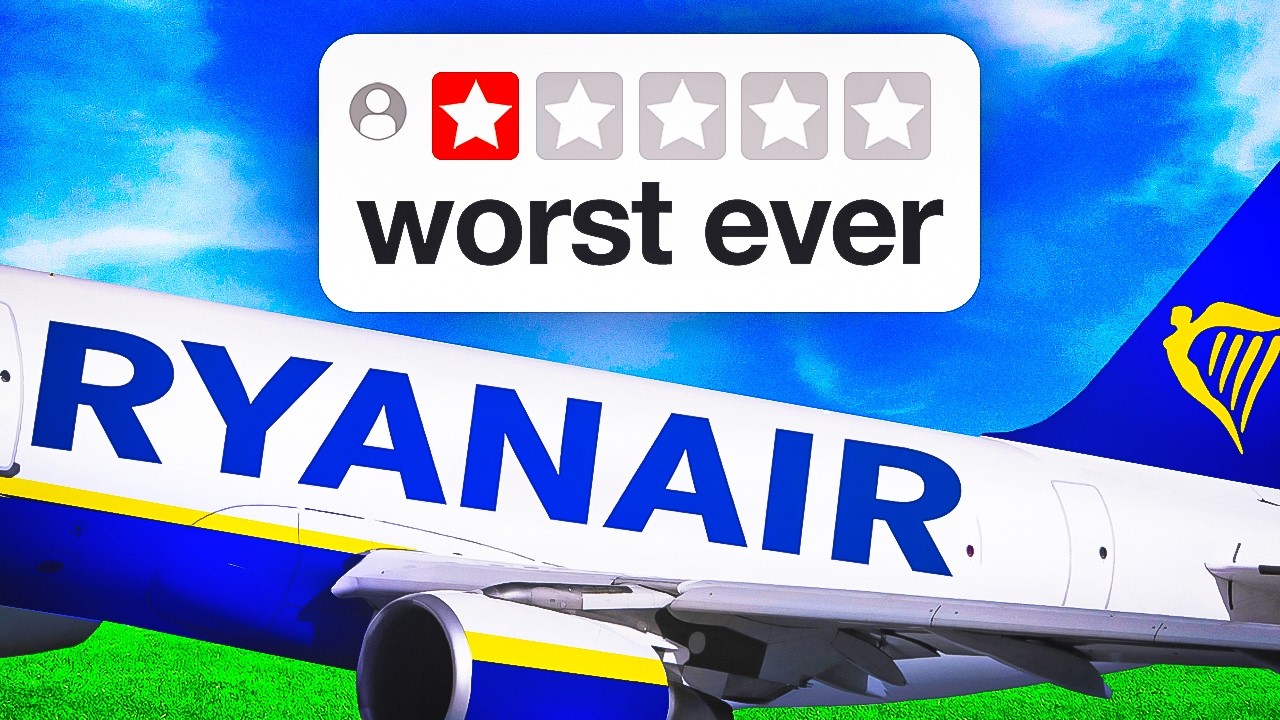
The Most HATED Airline In The World
MagnatesMedia
Overview
This video explores the business model of Ryanair, Europe's largest airline, known for its extremely low fares and often criticized for its numerous fees and customer service approach. It details how Ryanair achieves high profit margins despite low prices by meticulously cutting costs in every aspect of its operations, from online-only booking and baggage fees to using secondary airports and optimizing aircraft turnaround times. The summary also touches on the controversial marketing strategies employed by CEO Michael O'Leary, who used outrageous statements to generate free publicity, and how the airline leverages its 'hated' reputation to its advantage, ultimately making air travel accessible to millions.
Save this permanently with flashcards, quizzes, and AI chat
Chapters
- Ryanair is Europe's largest airline, flying millions annually with fares as low as $9.99.
- Despite low prices, the airline is infamous for hidden fees, schedule changes, and poor customer service.
- Behind the scenes, Ryanair operates with remarkable efficiency and high profit margins.
- The airline's journey from a single plane to its current scale is a case study in business strategy.
- Ryanair's CEO Michael O'Leary, tasked with turning around the struggling airline, studied Southwest Airlines in America.
- Southwest's model was characterized by extreme efficiency, akin to a fast-food operation like McDonald's.
- Processes from pre-flight checks to passenger boarding and in-flight services were optimized for cost and speed.
- This study inspired Ryanair's transformation into an ultra-low-cost carrier.
- Tickets are exclusively sold online to eliminate travel agent commissions and streamline booking.
- Ancillary fees for services like seat selection, luggage, and changes are a major revenue stream, often exceeding ticket prices.
- The airline avoids government taxes on airfare by taxing these add-on services instead.
- Operational costs are slashed by using secondary airports, charging for online check-in failures, and using bus boarding instead of jet bridges.
- Planes are configured for maximum passenger capacity (around 200 seats) with non-reclining, basic seats to reduce maintenance and cleaning costs.
- Safety information is printed on seatbacks to eliminate seat pockets, speeding up cleaning.
- Flight attendants often perform cleaning duties, reducing staffing costs.
- All onboard services, including food and water, are for sale, turning expenses into revenue streams.
- Ryanair utilizes secondary airports located further from city centers to secure lower landing and takeoff fees.
- These smaller airports often become dependent on Ryanair, offering significant discounts.
- Flights are scheduled during off-peak times to further negotiate lower airport charges.
- Aircraft turnaround times are minimized to just 30 minutes, allowing for more flights per day and increased revenue.
- CEO Michael O'Leary intentionally made outrageous statements (e.g., charging for toilets, removing seats) to generate free publicity.
- This strategy saved the company millions in marketing and advertising costs.
- Ryanair embraces its 'stingy' reputation, using it to reinforce its low-cost brand identity.
- The airline actively trolls passengers on social media, turning complaints into viral memes that attract attention and customers.
Key takeaways
- Profitability can be achieved through radical cost-cutting and operational efficiency, even with extremely low base prices.
- Ancillary fees and add-on services are crucial revenue streams that can significantly subsidize low base fares.
- Strategic partnerships with secondary airports and optimizing aircraft utilization are key to reducing operational expenses.
- Embracing and even amplifying a negative reputation can be a powerful, low-cost marketing strategy.
- Customer perception of service can be secondary to affordability for a significant market segment.
- Every aspect of a business, from booking to post-flight, can be re-engineered for maximum cost efficiency.
Key terms
Test your understanding
- How does Ryanair's strategy of selling tickets exclusively online contribute to its low-cost model?
- What are the primary ways Ryanair generates revenue beyond the base ticket price?
- Why does Ryanair choose to fly to secondary airports, and what are the implications for passengers?
- Explain how Michael O'Leary's controversial statements served as a marketing strategy for Ryanair.
- How does Ryanair's approach to customer service and complaints differ from traditional airlines, and why is this effective for their business model?