6:35
The Fender Rhodes Electric Piano. How it works, a short history, and why it is fantastic.
DACAPO Productions
Overview
This video explores the Fender Rhodes electric piano, detailing its historical development from a therapeutic tool during WWII to its iconic status in music. It explains the unique mechanism by which the Rhodes produces sound – striking metal tines with hammers, which are then amplified electromagnetically, differentiating it from acoustic pianos. The video also touches upon the evolution of different Rhodes models, like the Piano Bass, Suitcase Piano, and Stage Piano, highlighting their design changes and portability.
How was this?
Save this permanently with flashcards, quizzes, and AI chat
Chapters
- Harold Rhodes created a portable piano using aircraft parts during WWII to help wounded soldiers, which resembled a xylophone.
- This therapeutic instrument, the Army Core lap piano, led Rhodes to pursue further development of keyboard instruments.
- The first commercial home instrument was the 'Pre-Piano', which Leo Fender found too heavy and disliked its sound.
Understanding the Rhodes' origins reveals its unique therapeutic and portable design roots, setting it apart from traditional instruments from its inception.
The 'Army Core lap piano' made from B-17 bomber wing tubing.
- Leo Fender acquired the Rhodes company, leading to the creation of the 'Piano Bass', a compact keyboard with a design similar to Fender's guitar amps.
- The 'Suitcase Piano' (1965) integrated the keyboard, amplifier, and speakers into a single unit.
- The 'Stage Piano' (MK1, 1969) removed the speaker cabinets, making it more portable and easier to connect to external sound systems.
This period saw the instrument evolve into more practical and portable forms, solidifying its signature look and sound that would become influential in various music genres.
The Fender Rhodes Stage Piano (MK1) was designed for easier transport and connection to PA systems.
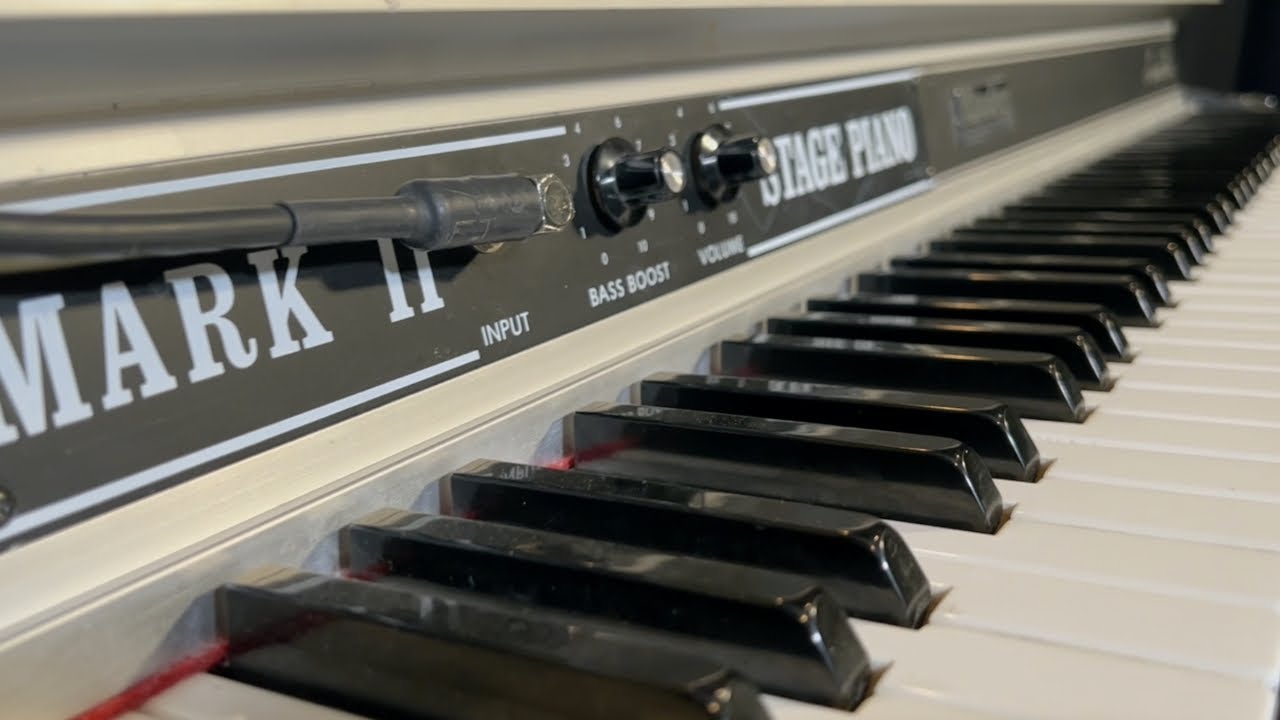
- The Mark II (1979) offered a sound virtually identical to the MK1, with aesthetic updates like a sleek black design and a flat harp cover.
- The Mark II became a highly sought-after instrument for keyboardists.
- The Rhodes company underwent several ownership changes, eventually being sold to Roland.
The Mark II represents a refinement of the classic Rhodes sound and design, cementing its place as a beloved instrument, while its later sale marks the end of an era for the original company.
The Mark II's aesthetic updates included a removable music rack and a flat harp cover for stacking another keyboard.
- Unlike acoustic pianos that strike strings, Rhodes hammers strike metal 'tines' (thin metal rods).
- These vibrating tines are detected by electromagnetic pickups, similar to electric guitars.
- The electrical signal from the pickups is sent to an amplifier, converting mechanical vibration into an audible sound.
- Each hammer and tine is precisely matched for its specific note, with hammer tips designed for piano-like feel.
Understanding this unique electro-mechanical process explains the Rhodes' distinctive warm, bell-like tone and its characteristic 'bark' or 'thump' when played forcefully.
Electromagnetic pickups, consisting of magnets wound with wire, capture the vibration of the metal tines and convert it into an electrical signal.
- The video features a demonstration of the Fender Rhodes Mark II Stage Piano.
- The recording setup uses a microphone (TLM-103) aimed at the instrument and amplified through a bass guitar amp to capture hammer action and pedal nuances.
- This recording method highlights the instrument's dynamic range and the physical sound of its mechanics.
The demonstration allows listeners to directly experience the characteristic sound of the Rhodes piano, showcasing its musicality and the impact of the recording technique on its perceived tone.
Recording the Rhodes with a microphone and a bass guitar amp to emphasize hammer noise and pedal sounds.
Key takeaways
- The Fender Rhodes piano originated from a therapeutic device designed for wounded soldiers during WWII.
- Leo Fender's involvement led to the instrument's iconic design, integrating it with guitar amplifier aesthetics.
- The Rhodes produces sound by striking metal tines with hammers, which are then amplified electromagnetically, creating its unique tone.
- The evolution from the Suitcase Piano to the Stage Piano prioritized portability for musicians.
- The Mark II model refined the classic Rhodes sound and design, becoming a highly desirable instrument.
- The recording method used in the video aims to capture the full sonic character, including mechanical sounds, not just the direct electrical output.
Key terms
Fender RhodesHarold RhodesArmy Core lap pianoPre-PianoPiano BassSuitcase PianoStage PianoMark IITinesElectromagnetic pickupHarp cover
Test your understanding
- How did Harold Rhodes' initial therapeutic instrument differ from a traditional piano in its sound production?
- What were the key design differences and advantages of the Fender Rhodes Stage Piano compared to the Suitcase Piano?
- Explain the fundamental mechanism by which a Fender Rhodes electric piano generates sound, and how it differs from an acoustic piano.
- What made the Mark II Fender Rhodes a significant instrument, and what were its main differences from the Mark I?
- Why might a musician choose to record a Fender Rhodes with a microphone and amplifier rather than using a direct input (DI)?