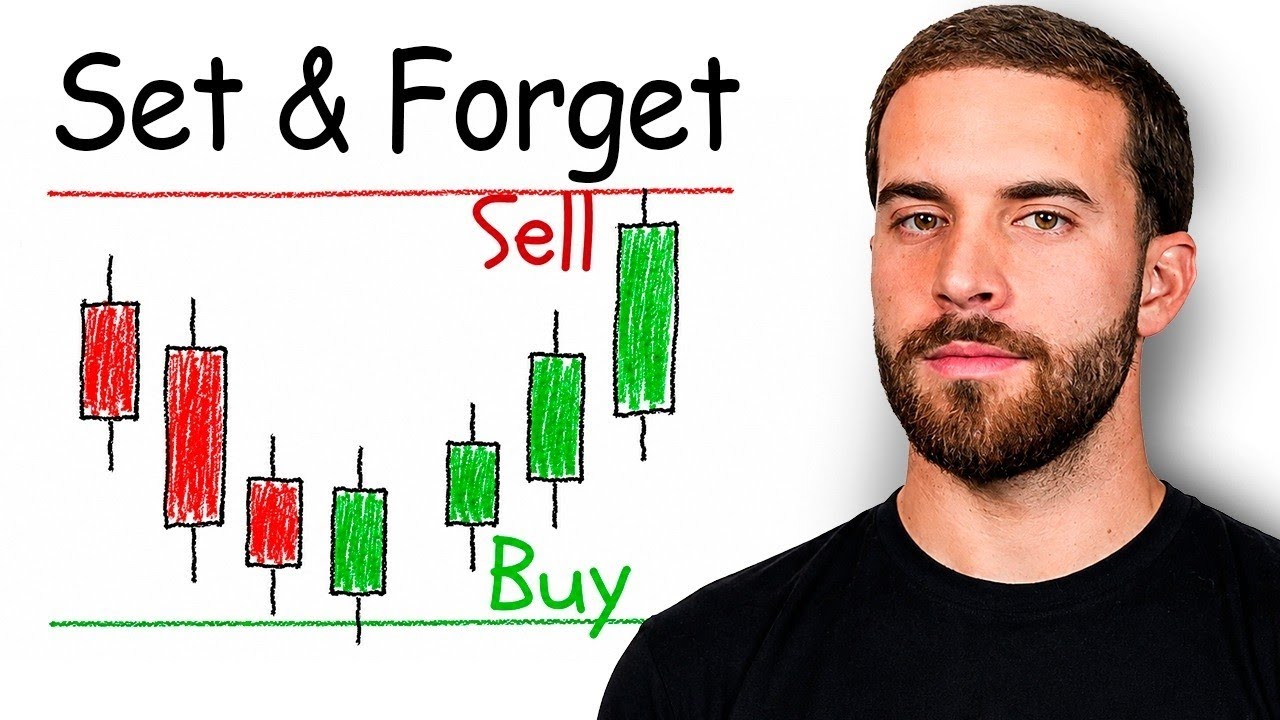
How Trading Dumb Made Me a Millionaire Trader (You Can Too)
fxalexg
Overview
This video advocates for a simplified trading strategy, dubbed the 'idiot strategy,' to achieve consistent profitability. The core principle is to strip away complexity and focus on a single, repeatable approach: one currency pair, one time frame, one trading session, and one entry signal. The presenter argues that most traders fail due to information overload and overcomplication, leading them to deviate from a functional strategy. By adhering strictly to a simple, well-defined method and avoiding 'shiny object syndrome,' traders can overcome common pitfalls and build a solid foundation for success, mirroring the speaker's own journey from a non-traditional background to a profitable trader.
Save this permanently with flashcards, quizzes, and AI chat
Chapters
- Many traders fail because they overcomplicate strategies with too much information and external factors.
- A successful trading approach can be extremely simple: one pair, one time frame, one entry signal, and one trading session.
- Sticking to a single, simple strategy allows for consistency and mastery, which is more effective than a complex, fragmented approach.
- The 'idiot strategy' works because it's simple and often overlooked by traders seeking more complex solutions.
- Be aware of numerous trading strategies but do not get distracted by them.
- Accept that your chosen strategy is sufficient and avoid constantly searching for 'better' ones.
- Focus on mastering your single strategy rather than building a 'Frankenstein' of multiple approaches.
- Consistency comes from sticking to one method, not from adding more variables.
- Select one currency pair and commit to it to understand its behavior deeply.
- For beginners, Euro/USD is recommended due to its high liquidity, low trading costs (spreads/commissions), and predictable patterns.
- Choose a single time frame to analyze the market; avoid correlating multiple time frames (top-down analysis) for simplicity.
- The 4-hour time frame is suggested as a balance between strong confirmation (higher time frames) and faster trade execution (lower time frames).
- Trade during specific market sessions to capitalize on volatility and liquidity.
- The London session is generally recommended for pairs like Euro/USD because it benefits from the overlap with the New York session, offering maximum volatility.
- Avoid trading during low-volume sessions (e.g., Sydney/Tokyo for EUR/USD) where market movement is slow and costly.
- Stick to your chosen session; do not force trades outside of optimal volatility periods.
- A single, consistent entry signal is necessary to trigger trades within your chosen parameters.
- Bullish and bearish engulfing candlesticks are recommended as reliable entry signals.
- An engulfing candle is one that completely 'eats' the previous candle(s), indicating strong momentum in its direction.
- The more previous candles an engulfing candle engulfs, the stronger the signal.
- Combine the chosen pair, time frame, session, and entry signal into a single, repeatable trading plan.
- The core of this strategy involves patience and waiting for the specific setup to appear.
- Understanding market structure (e.g., bearish trend) helps identify the direction for trades.
- The 'art of doing nothing' means letting trades develop without interference, trusting the process until the target or stop-loss is hit.
Key takeaways
- Consistent profitability in trading stems from disciplined execution of a simple, repeatable strategy, not from complex analysis.
- Overcomplication and information overload are primary reasons traders fail; simplicity is a strength.
- Commitment to a single trading pair, time frame, session, and entry signal is essential for developing expertise.
- Avoiding 'shiny object syndrome' means resisting the temptation to constantly seek new strategies and instead mastering one.
- Trading during high-volatility sessions like London/New York overlap maximizes opportunities for trades to reach targets efficiently.
- The 'art of doing nothing' in trading refers to the discipline of letting trades play out without unnecessary intervention.
- Learning from mistakes and seeking mentorship are vital for growth, especially when starting from a non-traditional background.
Key terms
Test your understanding
- Why is a simple trading strategy often more effective than a complex one?
- How can a trader avoid 'shiny object syndrome' when choosing a trading strategy?
- What are the recommended components for a simplified trading approach (pair, time frame, session, entry)?
- How does trading during specific sessions, like the London session, benefit a trader?
- What is the significance of an engulfing candlestick as an entry signal, and how does its effectiveness vary?