29:19
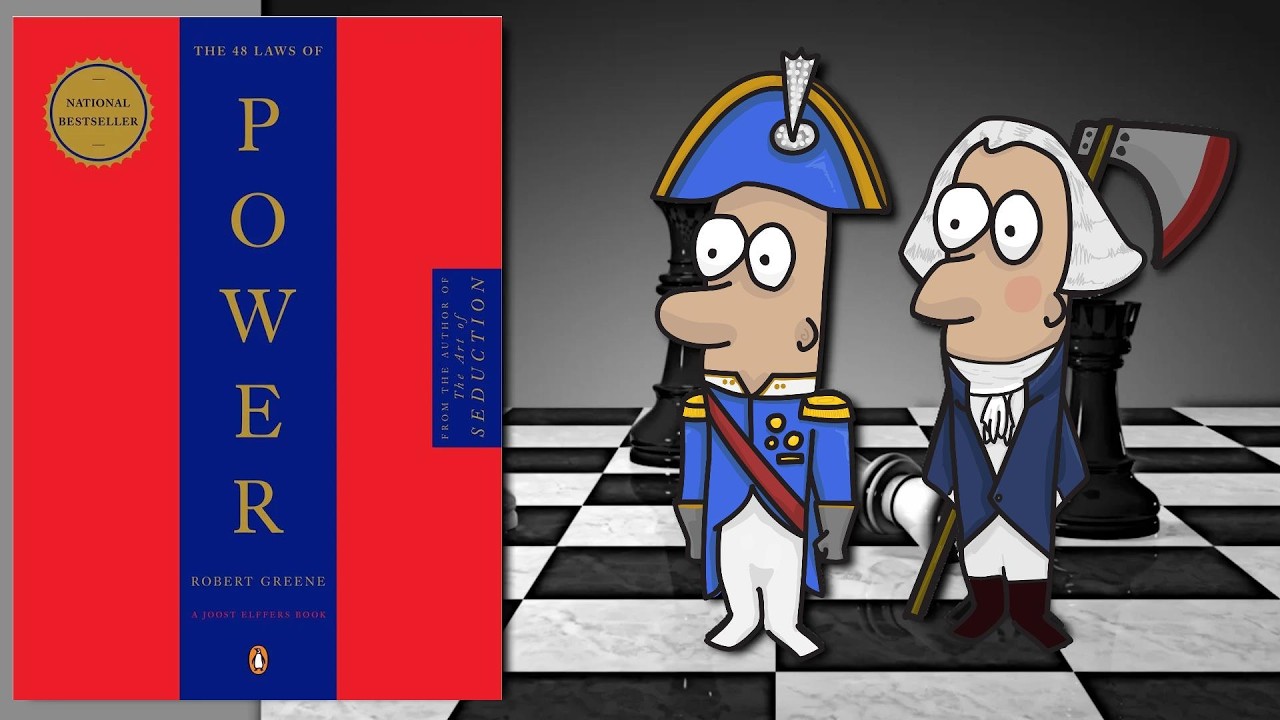
The 48 Laws of Power (Animated)
illacertus
Overview
This video explores Robert Greene's "The 48 Laws of Power," presenting each law with historical examples and practical applications. It delves into strategies for gaining and maintaining power, emphasizing manipulation, reputation management, strategic action, and understanding human psychology. The laws cover a wide range of tactics, from concealing intentions and using others' work to mastering timing and adapting to change, all framed within a historical context to illustrate their enduring relevance in navigating social and political landscapes.
How was this?
Save this permanently with flashcards, quizzes, and AI chat
Chapters
- Never outshine superiors; avoid making them feel insecure about their position.
- Be cautious with friends, as their familiarity can breed contempt or betrayal; former enemies can be more loyal.
- Conceal your true intentions and motivations to maintain an air of mystery and control.
- Always say less than necessary to avoid revealing too much and to maintain an aura of power.
These initial laws establish the fundamental understanding that power dynamics often rely on perception, discretion, and managing relationships carefully, rather than direct confrontation or overt displays of superiority.
Nicolas Fouquet's downfall after appearing more brilliant than King Louis XIV illustrates the danger of outshining a master.
- Guard your reputation meticulously, as it precedes you and influences how others perceive and interact with you.
- Court attention at all costs, as being noticed, even through controversy, is crucial for influence.
- Get others to do the work for you by leveraging their talents and taking credit for their efforts.
- Make others come to you by using bait and controlling the terms of engagement.
This section highlights the importance of external perception and the strategic use of others' resources and efforts to advance your own position without expending excessive personal energy.
Erwin Rommel's reputation for cunning strategy demoralized his WWII opponents, demonstrating the power of a carefully cultivated image.
- Win through actions rather than arguments; demonstrate your point rather than debating it.
- Avoid association with unhappy or unlucky people, as their negativity can be contagious and detrimental.
- Keep people dependent on you by being indispensable, ensuring your value and security.
- Use selective honesty to disarm others and gain their trust when they least expect it.
Effective power relies not just on what you do, but how you communicate and manage your social environment, including carefully choosing your associations and employing psychological tactics.
Count Victor Lustig's tactic of returning money to Al Capone, appearing honest when expected to be deceitful, disarmed Capone and earned him a reward.
- When asking for help, appeal to others' self-interest rather than their sense of duty or past favors.
- Act as a friend but work as a spy, gathering information subtly through conversation.
- Crush your enemies totally; leaving them alive invites future retaliation.
- Use absence to increase respect and honor; give others time to miss your presence.
Navigating power requires understanding that relationships are often transactional and that strategic deception and calculated withdrawal can be powerful tools.
The Athenians allied with the Corcyrans because the Corcyrans appealed to their mutual self-interest (combined navy against Sparta), not past debts.
- Cultivate an air of unpredictability to keep others off balance and unable to anticipate your moves.
- Isolation is dangerous; maintain connections to reality and avoid being easily manipulated.
- Do not offend the wrong person, as you never know who holds power or influence.
- Do not commit to any one person or cause; maintain flexibility and independence.
Maintaining power involves keeping others guessing and avoiding situations where you can be easily cornered or controlled, emphasizing flexibility and careful assessment of risks.
Pablo Picasso's unpredictable decision to stop working with his art dealer, Paul Rosenberg, confused Rosenberg and led to a better deal for Picasso.
- Use the surrender tactic to transform weakness into power by choosing battles wisely and fighting another day.
- Concentrate your forces and resources on a single objective for maximum impact.
- Play the perfect courtier by being charming, helpful, and appearing neutral, gaining influence without direct authority.
- Recreate yourself by consciously choosing your identity and shedding imposed roles.
Effective power players understand how to leverage perceived weaknesses, focus their efforts, and master the art of subtle influence and self-reinvention.
Charles Maurice de Talleyrand-Périgord, the perfect courtier, subtly influenced Napoleon's downfall while remaining charming and seemingly neutral.
- Keep your hands clean by using scapegoats or others to carry out unpleasant tasks.
- Play on people's need to believe by offering comforting narratives or solutions, then exploiting their faith.
- Enter action with boldness; hesitation can be fatal, while confidence inspires others.
- Plan all the way to the end, considering all possible outcomes and consequences before acting.
Mastering power involves understanding and exploiting psychological vulnerabilities, both in others and by carefully planning your own actions to ensure success.
Cesare Borgia used Remirro de Orco to perform brutal actions, then made him a scapegoat to maintain his own clean image.
- Make your accomplishments seem effortless to enhance their mystique and your perceived genius.
- Get others to play with the cards you deal by presenting choices that all favor you.
- Play to people's fantasies by offering them what they desire, even if it's an illusion.
- Discover each person's 'thumbscrew'—their weaknesses—and use it to your advantage.
- Act like a king to be treated like one; project an aura of authority and self-worth.
Power is often maintained through carefully constructed illusions and by understanding the deep-seated psychological needs and desires of others.
Harry Houdini made his death-defying stunts look easy, masking the immense preparation involved and enhancing his image as a master magician.
- Master the art of timing; know when to act and when to lay low for maximum effect.
- Disdain things you cannot have; feigning indifference removes their power over you.
- Create compelling spectacles to capture attention and belief, often by appealing to emotion over logic.
- Think as you like, but behave like others to avoid drawing negative attention or envy.
Success in power dynamics hinges on understanding the opportune moment, managing perceptions, and blending in while subtly influencing outcomes.
Joseph Fouché's ability to switch sides at precisely the right moment allowed him to survive numerous political upheavals.
- Stir up waters to catch fish; create chaos or false alarms to expose enemies' weaknesses.
- Despise the free lunch; be wary of gifts, as they often come with hidden obligations or strings attached.
- Avoid stepping into a great man's shoes; forge your own path rather than living in someone else's shadow.
- Strike the shepherd and the sheep will scatter; target the leader to dismantle the group.
These laws focus on proactively disrupting opponents, understanding the true cost of 'free' things, establishing personal identity, and strategically targeting leadership.
Louis XIV strategically gifted valuable paintings to his detractors, securing their loyalty and increasing the financial burden on those who opposed him.
- Work on the heart and mind of others by being kind, agreeable, and humble to win their favor.
- Disarm and infuriate with the mirror effect; adopt the values and behaviors of those you interact with to gain their trust and admiration.
- Preach change but never reform too quickly; introduce changes gradually to avoid resistance and anxiety.
- Never appear too perfect; flaws make you more relatable and less threatening, preventing envy.
True power lies in influencing emotions and thoughts, fostering connection through shared identity, managing societal change effectively, and maintaining a degree of vulnerability.
Alcibiades charmed different groups by adopting their values and behaviors, making him seem like one of them and disarming their resistance.
- In victory, learn when to stop; pushing too far can lead to losing everything.
- Assume formlessness; be adaptable like water, changing your shape to fit circumstances rather than resisting change.
The ultimate mastery of power involves knowing when to cease action to preserve gains and embracing constant adaptability to survive and thrive in a changing world.
The Spartans' rigid adherence to their ways led to their defeat against the adaptable Athenians, illustrating the danger of inflexibility.
Key takeaways
- Power is often gained and maintained through strategic perception management, not just direct action.
- Understanding and leveraging human psychology, including desires, fears, and needs, is crucial for influence.
- Reputation is a powerful asset that must be carefully cultivated and protected.
- Strategic communication involves saying less than necessary and winning through actions rather than arguments.
- Adaptability and unpredictability are key to keeping opponents off balance and maintaining control.
- Appealing to others' self-interest is more effective than appealing to their sense of duty or past favors.
- True mastery involves knowing when to act, when to wait, and when to stop to preserve gains.
Key terms
Outshine the MasterReputationCourt AttentionLeverageConceal IntentionsSelective HonestyCrush TotallyUnpredictabilityScapegoatMirror EffectFormlessness
Test your understanding
- How can understanding Law #1, 'Never Outshine the Master,' help an individual navigate workplace dynamics?
- Why is maintaining a strong reputation, as emphasized in Law #5, critical for long-term power and influence?
- Explain how Law #12, 'Use Selective Honesty to Disarm Your Victim,' can be applied in a negotiation scenario.
- What is the strategic advantage of 'assuming formlessness,' as described in Law #48, when facing significant change?
- How does Law #42, 'Strike the Shepherd and the Sheep Will Scatter,' suggest a leader should approach dismantling an opposing organization?